Cruise Booking Step by Step: Secure Your Ideal Voyage Easily

Feeling lost as you scroll through endless cruise options for your first getaway? Sorting through thousands of choices can drain your energy fast, especially with so many ships, lines, and destinations now available across Europe. Fortunately, with a focus on a tech-driven booking approach, you can ditch the overwhelm and confidently narrow your search. This guide shows you how to compare the features that actually matter, use digital tools effectively, and turn decision fatigue into excitement for your upcoming cruise adventure.
Table of Contents
- Step 1: Explore And Compare Cruise Options
- Step 2: Select And Personalize Your Itinerary
- Step 3: Review Pricing And Track Real-Time Deals
- Step 4: Complete Booking And Confirm Details
Quick Summary
| Key Point | Explanation |
|---|---|
| 1. Identify Your Deal-Breakers | Determine your budget, preferred destinations, and travel companions to effectively narrow down your cruise options. |
| 2. Compare Specific Features | Look at onboard atmosphere, dining options, and activities to match your travel style with the right cruise line. |
| 3. Monitor Pricing Trends | Track cruise prices over time, noting fluctuations to secure the best deal before booking. |
| 4. Personalize Your Itinerary | Customize your cruise experience by selecting excursions and activities that align with your interests and energy levels. |
| 5. Review Booking Details Carefully | Double-check all passenger information, cabin choices, and cancellation policies to avoid issues later in your cruise planning. |
Step 1: Explore and compare cruise options
Right now, you’re probably feeling overwhelmed by how many cruise options exist. The good news? You don’t need to compare them all. You need to compare the right ones for your specific situation.
Start by identifying your deal-breakers and must-haves. Ask yourself these key questions:
- What’s your budget range for the entire trip?
- Which destinations genuinely excite you?
- How long can you realistically take off work?
- Do you prefer smaller, intimate ships or larger vessels with more activities?
- Are you traveling solo, with a partner, or as a family?
Once you’ve answered these, you’ll naturally narrow down your options from thousands to dozens. This is where comparison becomes manageable.
The cruise industry has experienced massive growth, with 31.7 million passengers worldwide choosing cruises in recent years. This means more ships, more routes, and more variety than ever before. But it also means you need a smart filtering strategy.
When comparing options, you’ll want to look at how different cruise lines handle specific features. Understanding cruise line differences helps you match your personality and travel style to the right operator. Some lines focus on luxury and exclusivity. Others prioritize families with massive entertainment programs. Still others cater to adventure seekers with active ports and exploration opportunities.
Compare these specific elements across your shortlisted options:
- Onboard atmosphere and vibe (formal, casual, adventure-focused)
- Dining quality and variety
- Entertainment and activities available
- Port schedules and destinations
- Cabin sizes and room categories
- Price per night including fees
Filter by your non-negotiables first, then compare everything else—this saves you hours and prevents decision fatigue.
Take notes as you explore. Create a simple spreadsheet or use a comparison tool to organize what you’re finding. Most first-time cruisers make their decision by comparing 3-5 options, not by analyzing 50.
As you’re evaluating different cruise lines, pay attention to how modern comparison tools can accelerate your research by showing prices, itineraries, and reviews side by side.
Here’s how the main types of cruise lines typically differ:
| Cruise Line Type | Atmosphere | Typical Passenger Profile | Common Destinations |
|---|---|---|---|
| Luxury | Formal, elegant | Couples, seasoned travelers | Mediterranean, South Pacific |
| Family-Oriented | Casual, lively | Families with children | Caribbean, Alaska |
| Adventure/Expedition | Active, discovery-focused | Adventure seekers | Antarctica, Galápagos |
| Mainstream/Mega Ships | Flashy, entertainment | Groups, solo, all ages | Bahamas, Mediterranean |
Pro tip: Visit the official cruise line websites and check their current promotions first, then cross-reference prices on comparison platforms to confirm you’re seeing the best available rate for your specific dates.
Step 2: Select and personalize your itinerary
You’ve narrowed down your cruise line. Now comes the fun part—making this voyage truly yours. Your itinerary isn’t set in stone the way you might think. While the port stops themselves are fixed due to logistics and contracts, you have surprising control over how you experience them.
Start by reviewing the complete port schedule and timing. Look at which days you’ll be at sea versus docked. Consider how much time you’ll have at each destination. Some ports offer only a few hours while others provide a full day or overnight stay. This timing matters because it affects what shore excursions become realistic for you.
Next, think about your onboard experience. You can personalize your cruise through multiple channels that cruise lines actively encourage:
- Choose your cabin type based on budget and needs
- Select your dining preferences and restaurant assignments
- Reserve onboard activities and shows in advance
- Book shore excursions that match your interests
- Arrange spa treatments or wellness activities
- Sign up for specialty dining venues
The beauty of customizing your itinerary within fixed routes is that you can balance what the cruise offers with what excites you personally. Some travelers want packed schedules with activities every hour. Others prefer leisurely days reading by the pool.
Your itinerary becomes personalized not through changing ports, but through choosing how you spend time at each location and onboard.
When selecting shore excursions, be honest about your travel style. Are you an adventurer wanting hiking and snorkeling? A history enthusiast seeking guided museum tours? Someone who prefers relaxing beach time? Most ports have 10+ excursion options, so you’ll find what fits.
Don’t overcommit your itinerary. Many first-time cruisers book excursions at every port and exhaust themselves. Leave breathing room to discover local restaurants, wander independently, or simply rest.
Check what dining and activity options your chosen cruise line includes versus what costs extra. This affects both your budget planning and your ability to personalize your onboard experience throughout the voyage.
Pro tip: Book shore excursions directly through your cruise line rather than third-party websites, as the cruise company can delay the ship if your official excursion runs late, but won’t wait for independent bookings.
Step 3: Review pricing and track real-time deals
Cruise pricing isn’t static. Prices fluctuate based on demand, season, fuel costs, and how far out you’re booking. This is where patience and attention can save you hundreds of dollars. Your goal here is to understand the baseline price and then monitor it strategically.
Start by noting the current quoted price for your chosen cruise. Write it down or screenshot it. This becomes your reference point. Most cruise lines publicly display pricing on their websites, and third-party booking platforms show comparable rates across multiple operators.
Understanding how cruise price tracking works helps you make informed decisions about when to book. Some travelers book immediately and lock in their rate. Others wait strategically, knowing prices often drop 30 to 90 days before departure as lines fill remaining inventory.
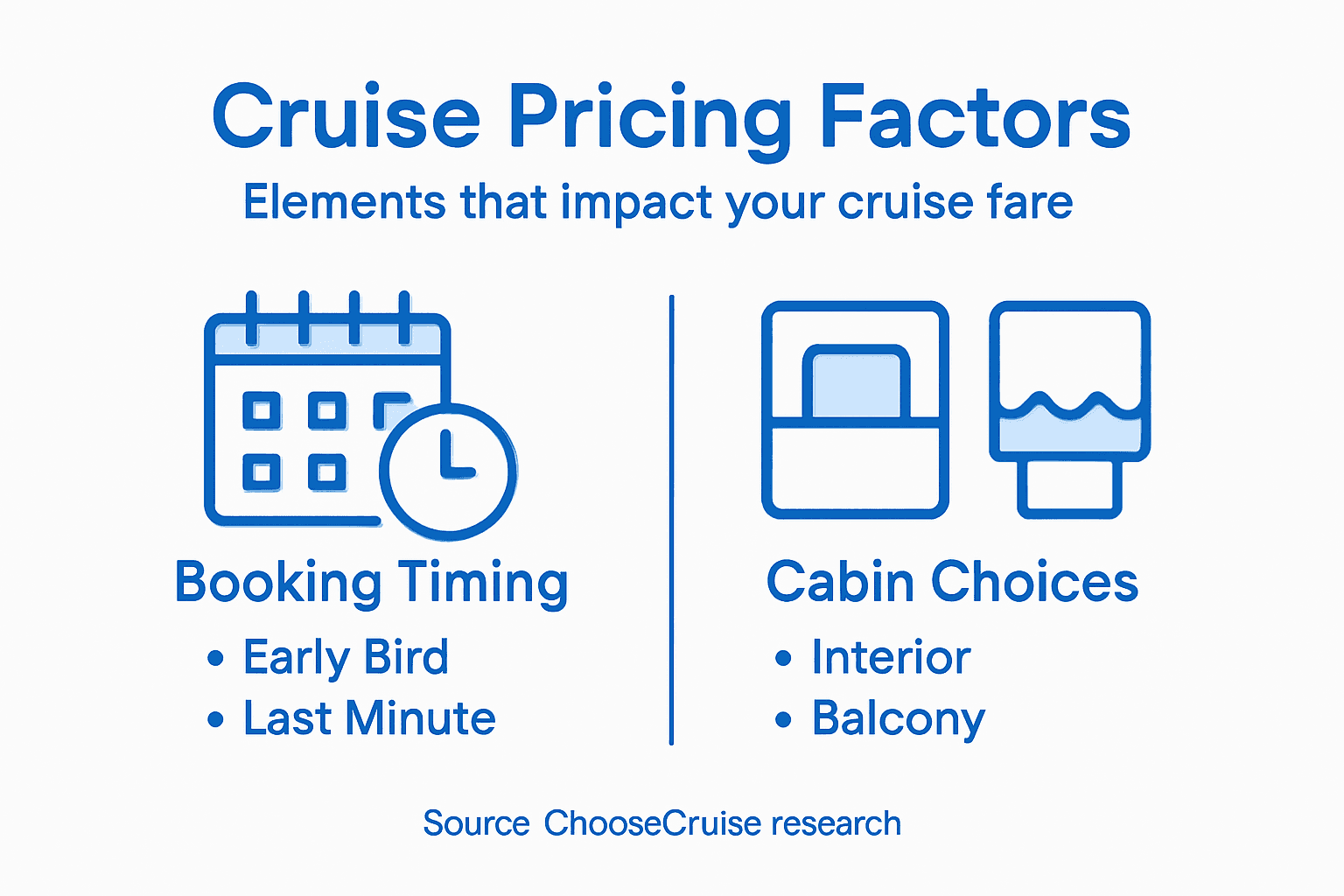
Here’s what typically affects cruise pricing:
- Booking timing (advance bookings versus last-minute deals)
- Cabin category and location onboard
- Travel season and demand levels
- Fuel surcharges and operational costs
- Promotional periods and flash sales
- Competitor pricing and market conditions
Price tracking reveals patterns—some cruises drop consistently 60 days out, while others hold steady until final weeks.
Set up price alerts if your chosen cruise line or booking platform offers them. These notifications alert you when prices change for your specific itinerary. You’ll want alerts set to your email or phone so you catch deals quickly.
Compare pricing across multiple sources. The official cruise line website, major travel booking platforms, and travel agencies sometimes show different prices for identical sailings. Don’t assume the first price you see is the best available.
When you spot a significant price drop, act thoughtfully. A $200 decrease matters, but not if it forces you to book a departure date that disrupts your plans. Balance savings with your actual schedule needs.
Know your cruise line’s price guarantee policies. Some lines offer a set window where if prices drop after you book, they’ll credit the difference. Others don’t. This affects your risk calculation.
Pro tip: Track prices for 2-3 weeks before making your final booking decision—this gives you enough data to spot real drops versus normal daily fluctuations.
Key factors influencing cruise pricing are summarized below:
| Pricing Factor | How It Impacts Price | Example or Note |
|---|---|---|
| Booking Timing | Early often cheaper, last-minute may drop | Prices drop 60-90 days prior |
| Cabin Type | Higher categories price higher | Suites > Balconies > Inside |
| Travel Season | High demand raises prices | Holidays cost more |
| Promotions | Sales afford discounts | Holiday, repositioning sales |
Step 4: Complete booking and confirm details
You’ve made your decision. Now it’s time to lock in your reservation and ensure everything is correct before you commit payment. This step requires attention to detail because errors here can create headaches later.
Begin by reviewing your selected cruise one final time. Verify the departure date, destination ports, cabin category, and number of passengers. Confirm that your chosen cabin location matches your preferences and budget. Some travelers prioritize balcony cabins while others prefer inside cabins to save money. Make sure you’re getting what you actually want.
Next, enter your passenger information accurately. Full names must match exactly as they appear on your passport or travel documents. Misspelled names create serious problems at check-in. Double-check spelling on every passenger, especially children with unusual names or middle initials you might typically omit.
When completing your cruise booking, you’ll need to provide these key details:
- Passenger names and dates of birth
- Contact information and email address
- Payment method and billing address
- Emergency contact information
- Any special requirements or dietary needs
- Preferred dining times and restaurant selections
Review cancellation policies carefully before finalizing. Different cruise lines offer varying flexibility. Standard policies may charge 100% if you cancel fewer than 60 days before departure. Some offer free cancellation up to a certain date. Others provide travel insurance options that protect your investment.
Read the fine print on cancellation and refund policies now, not when you need to cancel later.
Check for additional fees beyond the base cruise fare. Gratuities, onboard dining packages, beverage packages, and specialty activities often cost extra. Understanding your total commitment prevents surprises later.
Before submitting payment, use a secure, password-protected connection. Never book on public WiFi. Verify that the website shows a padlock icon indicating encryption. This protects your credit card and personal information from potential theft.
After booking, you’ll receive a confirmation email with your booking reference number. Save this number. You’ll need it for check-in, account modifications, and customer service inquiries. Screenshot or print your confirmation for your records.
Pro tip: Register for your cruise line’s online account immediately after booking so you can manage your reservation, select dining preferences, and book excursions before you arrive at the port.
Simplify Your Cruise Booking Journey with Confidence
Feeling overwhelmed by countless cruise options and complex itinerary choices is common among travelers eager to find their ideal voyage. This step-by-step guide highlights key pain points such as narrowing down options, personalizing your itinerary, and tracking fluctuating cruise prices. It also emphasizes the importance of comparing cruise line features and carefully reviewing pricing and booking details to avoid last-minute surprises.
At ChooseCruise, we understand the emotional challenge of decision fatigue and the desire for a personalized experience without hours of research. Our platform offers AI-powered recommendations, real-time price tracking, and interactive itineraries designed specifically for first-time cruisers, families, and savvy travelers. Navigate confidently through options with a streamlined process and never miss a deal thanks to our cutting-edge tools.
Discover how effortless cruise planning can be by starting your search with ChooseCruise. Experience a smarter, faster booking journey that puts you in control of your perfect voyage today. Visit ChooseCruise now and take the first step toward your dream cruise vacation.
Frequently Asked Questions
How do I compare different cruise options efficiently?
Start by identifying your deal-breakers and must-haves, such as budget and preferred destinations. Focus on filtering options based on your travel preferences to narrow thousands of choices down to a manageable few.
What details should I personalize in my cruise itinerary?
You can personalize your itinerary by selecting cabin types, dining preferences, and onboard activities. Make sure to reserve shore excursions that align with your interests to enhance your overall experience.
How can I track cruise pricing effectively?
Monitor prices by noting the current quoted rate and setting up price alerts when available. This strategy allows you to identify patterns in pricing fluctuations, helping you to potentially save money if you wait for a drop.
What should I double-check before finalizing my cruise booking?
Verify all passenger information, especially names and dates of birth, along with the cruise details like departure date and chosen cabin. Erroneous information can lead to issues during check-in, so ensure everything is accurate before payment.
How can I ensure my payment is secure when booking a cruise?
Use a secure, password-protected internet connection when submitting payment and look for the website’s padlock icon. This protects your personal and financial information from potential theft.
What are common additional fees I should consider when booking a cruise?
Be aware that gratuities, specialty dining, and onboard activities often incur extra costs outside of the base cruise fare. Understanding these potential expenses allows for more accurate budget planning before your trip.
Recommended
Related reading
7 Smart Ways to Save on Cruises for Modern Travelers
Discover 7 smart ways to save on cruises with easy, practical tips designed for today’s digital cruise travelers. Learn to maximize value and minimize costs.
Understanding Why Choose River Cruises for Travel Fun
Discover why choose river cruises as your next adventure. Explore their benefits, unique experiences, and how they enhance travel enjoyment.
Understanding the Best Cruise Lines for Beginners
Discover the best cruise lines for beginners, understanding what they offer and why they matter for first-time cruisers.