Cruise Fare Types Explained: Smarter Booking Choices

Booking a cruise from a European port can seem exciting until unexpected costs start popping up at every turn. For tech-savvy first-timers, the complexity behind cruise fares goes far beyond the price you see online. From basic cabins to upgrade packages and hidden fees, even seasoned travelers struggle to decode what is actually included. This guide breaks down cruise fare types and dispels common misconceptions so you can confidently compare options and avoid financial surprises on your next vacation.
Table of Contents
- Cruise Fares Defined And Common Misconceptions
- Major Cruise Fare Types And Distinctions
- What’s Included In Each Fare Category
- Upgrade Options, Add-Ons, And Flexibility
- How Dynamic Pricing And Fees Affect Costs
- Common Booking Mistakes To Avoid
Key Takeaways
| Point | Details |
|---|---|
| Understand Total Costs | The advertised cruise fare is often just a starting point; ensure to budget for additional expenses such as port fees and specialty dining. |
| Familiarize with Fare Types | Different fare types offer varying levels of flexibility and inclusions; consider potential change fees and cancellation penalties before booking. |
| Review Fare Inclusions | Not all cruise fares include the same services; check what each fare category covers to avoid unexpected charges. |
| Avoid Common Mistakes | Be aware of hidden costs and always compare comprehensive pricing before making reservations to ensure you are fully informed. |
Cruise fares defined and common misconceptions
Cruise fares are significantly more complex than simple ticket prices, involving multiple layers of costs that many travelers misunderstand. Understanding cruise fare complexities requires breaking down the typical components and revealing common misconceptions that can catch first-time cruisers off guard.
Most travelers assume that the advertised cruise fare represents the total cost of their vacation, but this is rarely true. Cruise fares typically include the basic cabin accommodation and some onboard services, but exclude numerous additional expenses. The price you initially see is often just the starting point for your total vacation spending.
Common misconceptions about cruise pricing include:
- Believing all advertised prices are guaranteed and final
- Assuming the listed fare covers all onboard expenses
- Thinking last-minute deals always represent the best value
- Expecting included meals to cover all dining options
Cruise lines are known for their complex pricing strategies that can include unexpected fees. While the base fare might seem attractive, travelers must budget for additional costs like port fees, gratuities, specialty dining, alcoholic beverages, shore excursions, and onboard activities.
Cruise fare pricing is rarely straightforward - always read the fine print and understand what is and isn’t included in your base rate.
Additional expenses can quickly transform an apparently budget-friendly cruise into a much more expensive vacation. Most cruise lines break down their pricing into several key categories:
- Base cruise fare (cabin accommodation)
- Port charges and taxes
- Gratuity/service fees
- Optional onboard packages
- Shore excursion costs
Pro-Tip: Always calculate the total expected cost, including all potential additional fees, before booking to avoid unexpected financial surprises.
Major cruise fare types and distinctions
Cruise fare types are far more nuanced than most travelers realize, with fare categories revealing complex pricing strategies that significantly impact travel budgeting. Understanding these distinctions can help travelers make more informed booking decisions and potentially save substantial money.
Cruise fare types typically fall into several distinct categories, each with unique characteristics and pricing structures:
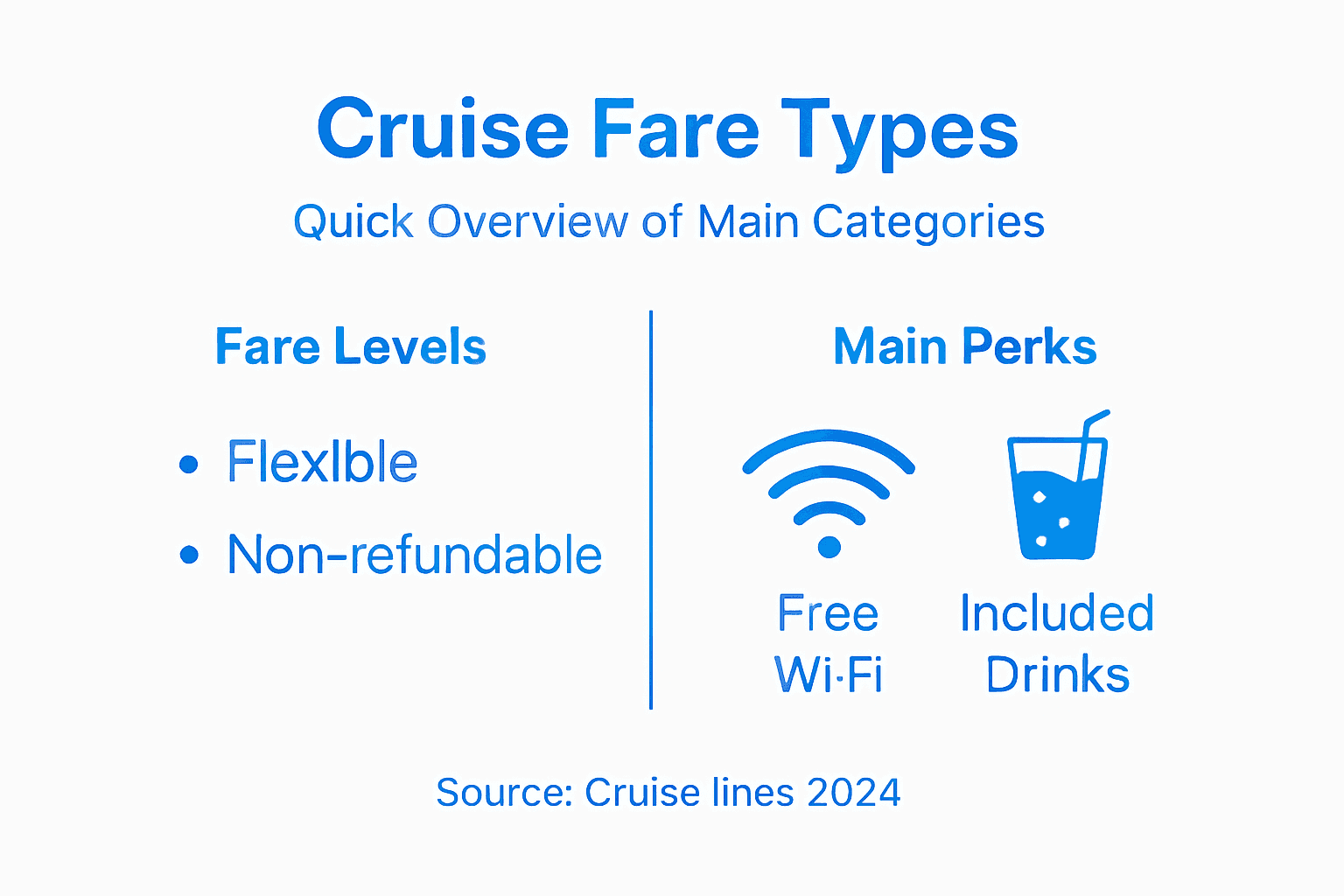
- Flexible fares: Highest price point, maximum trip modification options
- Semi-flexible fares: Moderate price, limited change capabilities
- Non-refundable fares: Lowest price, most restrictive modification rules
- Promotional fares: Special pricing with specific booking conditions
The complexity of cruise fare structures means that the cheapest option isn’t always the most economical choice. Travelers must carefully consider the trade-offs between upfront costs and potential future change or cancellation expenses.
Cruise fare pricing is a strategic game - understanding the rules can save you significant money.
Most cruise lines structure their fares around these key differentiators:
- Refundability options
- Cabin location and type
- Included amenities and services
- Cancellation and modification penalties
- Advance booking requirements
These variations allow cruise lines to offer pricing that accommodates different traveler needs, from budget-conscious passengers to those seeking maximum flexibility. Fare types mirror sophisticated pricing models that balance customer attraction with revenue optimization.

Pro-Tip: Always calculate the total potential cost, including potential change fees and cancellation penalties, before selecting a specific fare type.
What’s included in each fare category
Cruise fare categories are far from uniform, with significant variations in included services creating a complex landscape for travelers to navigate. Understanding what’s actually covered in each fare type can prevent unexpected expenses and help you make more informed booking decisions.
Fare category inclusions typically break down into several distinct levels:
- Basic fare: Cabin accommodation, standard meals, basic entertainment
- Mid-tier fare: Includes basic fare items plus some additional perks
- Premium fare: Comprehensive package with extensive onboard amenities
- All-inclusive fare: Nearly everything covered, minimal extra charges
The most fundamental differences between fare categories revolve around the breadth and depth of included services. While basic fares provide minimal coverage, premium options dramatically expand the traveler’s onboard experience.
Not all cruise fares are created equal - the details matter more than the initial price tag.
Most fare categories include these core elements, with increasing levels of comprehensiveness:
- Accommodation
- Standard dining options
- Basic entertainment
- Access to common areas
- Standard onboard activities
Premium and all-inclusive fare categories often add significant value through additional inclusions like:
- Complimentary alcoholic beverages
- Specialty restaurant access
- Gratuities
- Shore excursion credits
- Onboard credit
- Upgraded wi-fi access
Pro-Tip: Always create a detailed spreadsheet comparing exact inclusions across different fare categories to identify the most cost-effective option for your specific travel needs.
Here’s a breakdown of typical cruise fare levels and what they generally provide:
| Fare Level | Main Inclusions | Who It Suits |
|---|---|---|
| Basic Fare | Cabin, standard meals, basic entertainment | Budget travelers |
| Mid-Tier Fare | Basic plus select perks (e.g., credits) | Value-focused cruisers |
| Premium Fare | Expanded amenities and onboard services | Comfort and convenience seekers |
| All-Inclusive Fare | Nearly all expenses covered | Worry-free, luxury-focused |
Upgrade options, add-ons, and flexibility
Cruise travelers have multiple paths to customize their experience through strategic fare upgrades and add-on options. Understanding these flexibility mechanisms can transform a standard booking into a personalized travel experience.
Upgrade strategies offer travelers several compelling options:
- Cabin level upgrades
- Dining package enhancements
- Beverage package additions
- Onboard credit purchases
- Travel protection expansions
Most cruise lines structure their upgrade options with increasing levels of complexity and value. The goal is to provide travelers with tailored experiences that match their specific preferences and budget constraints.
Flexibility isn’t just about changing dates - it’s about crafting your ideal cruise experience.
Typical upgrade categories typically include:
- Cabin location improvements
- Room category shifts
- Meal plan expansions
- Entertainment package additions
- Shore excursion enhancements
Premium fare types often provide more comprehensive upgrade opportunities and booking flexibility, allowing travelers to:
- Modify travel dates with minimal penalties
- Select preferred cabin locations
- Add comprehensive travel insurance
- Customize dining and entertainment packages
- Access priority boarding and disembarkation
Pro-Tip: Request a comprehensive list of available upgrades directly from your cruise line before finalizing your booking to maximize potential customization options.
How dynamic pricing and fees affect costs
Cruise pricing is a complex landscape where dynamic pricing algorithms reshape travel costs dramatically. Travelers must understand how these sophisticated systems can impact their total vacation expenses, often creating significant price variations within short timeframes.
Dynamic pricing strategies fundamentally transform how cruise fares are calculated:
- Real-time demand tracking
- Seasonal price adjustments
- Inventory-based pricing shifts
- Last-minute deal modifications
- Advanced booking incentives
The core mechanism of dynamic pricing relies on continuously adjusting fares based on multiple complex variables. Cruise lines use advanced algorithms that monitor booking patterns, seasonal trends, and overall market conditions to optimize their pricing strategies.
Price fluctuations are not random - they’re meticulously calculated economic decisions.
Key factors influencing dynamic pricing include:
- Current booking volume
- Destination popularity
- Time until sailing date
- Competitor pricing
- Seasonal travel demand
Travelers should be aware that hidden fees can substantially increase total cruise costs, including:
- Port charges
- Mandatory gratuities
- Specialty dining fees
- Beverage package costs
- Shore excursion expenses
- Onboard service charges
Pro-Tip: Use price tracking tools and set up price alerts to capture the most advantageous booking windows and potential fare reductions.
The following table summarizes how dynamic factors influence overall cruise costs:
| Dynamic Factor | Impact on Cruise Fare | Timing Relevance |
|---|---|---|
| Booking Volume | Higher demand increases prices | Ongoing |
| Seasonal Trends | Peak seasons raise base fares | Holidays, summer trips |
| Competitor Pricing | Triggers price adjustments | Varies by market |
| Time Until Sailing | Last-minute drops or spikes | Close to departure |
| Destination Popularity | Sought-after routes cost more | Varies by cruise |
Common booking mistakes to avoid
Navigating cruise bookings requires careful attention, as common pricing errors can significantly impact travel plans. First-time cruisers often fall into predictable traps that can transform an exciting vacation into a financial headache.
Booking mistakes frequently emerge in several critical areas:
- Ignoring total cost beyond base fare
- Overlooking cancellation policies
- Failing to compare comprehensive pricing
- Booking without understanding included services
- Neglecting travel insurance options
Most travelers make assumptions about cruise pricing that can lead to unexpected expenses. The advertised fare represents just the starting point of potential costs, with numerous additional charges waiting to surprise unprepared passengers.
Not all cruise fares are created equal - the details matter more than the headline price.
The most common booking pitfalls include:
- Assuming all fares include the same services
- Booking without understanding change fees
- Selecting cabins without considering location
- Ignoring seasonal pricing variations
- Purchasing unnecessary add-ons
Travelers should be particularly wary of:
- Hidden port charges
- Mandatory gratuity fees
- Specialty dining costs
- Beverage package expenses
- Shore excursion pricing
- Onboard activity charges
Pro-Tip: Create a comprehensive spreadsheet tracking all potential cruise expenses, including base fare, taxes, fees, and estimated onboard spending to get a true picture of total vacation cost.
Unlock Smarter Cruise Booking with ChooseCruise
Understanding the complexities of cruise fare types, hidden fees, and dynamic pricing can feel overwhelming. You want to avoid common pitfalls like unexpected expenses and restrictive cancellation policies while finding the best value. The key challenge is making sense of flexible, semi-flexible, and all-inclusive fares so you can book confidently without surprises.
ChooseCruise is designed specifically for travelers like you who want clarity and control. Our platform offers AI-powered recommendations, real-time price tracking, and a user-friendly booking experience that simplifies complicated pricing strategies. Whether you are a first-time cruiser or a seasoned traveler seeking flexible upgrades and smarter fare choices, we help you navigate every detail with ease.
Discover how to turn confusing fare structures into clear, personalized options that fit your budget and preferences.
Start planning your next cruise smarter today with ChooseCruise. Explore tailored fare options, avoid hidden fees, and secure exclusive real-time deals that put you in control. Don’t let fare confusion hold you back. Visit https://choose-cruise.com now and book with confidence.
Frequently Asked Questions
What are the different types of cruise fares available?
Cruise fares fall into several categories, including flexible fares, semi-flexible fares, non-refundable fares, and promotional fares. Each type has unique pricing structures and modification rules.
What is typically included in a cruise fare?
A basic cruise fare usually includes cabin accommodation, standard meals, and basic entertainment. Higher-tier fares may offer additional perks such as specialty dining, premium beverages, and more extensive onboard amenities.
How can I avoid unexpected expenses when booking a cruise?
To avoid unexpected expenses, always read the fine print of the cruise fare, calculate the total expected costs including taxes and fees, and compare inclusions across different fare categories.
What are common booking mistakes to avoid when selecting a cruise fare?
Common mistakes include assuming all fares include the same services, overlooking cancellation policies, not comparing comprehensive pricing, and neglecting to consider the implications of upgrade options.
Recommended
Related reading
7 Smart Ways to Save on Cruises for Modern Travelers
Discover 7 smart ways to save on cruises with easy, practical tips designed for today’s digital cruise travelers. Learn to maximize value and minimize costs.
Understanding Why Choose River Cruises for Travel Fun
Discover why choose river cruises as your next adventure. Explore their benefits, unique experiences, and how they enhance travel enjoyment.
Understanding the Best Cruise Lines for Beginners
Discover the best cruise lines for beginners, understanding what they offer and why they matter for first-time cruisers.