Beginner Cruise Packing Tips for First-Time Cruisers
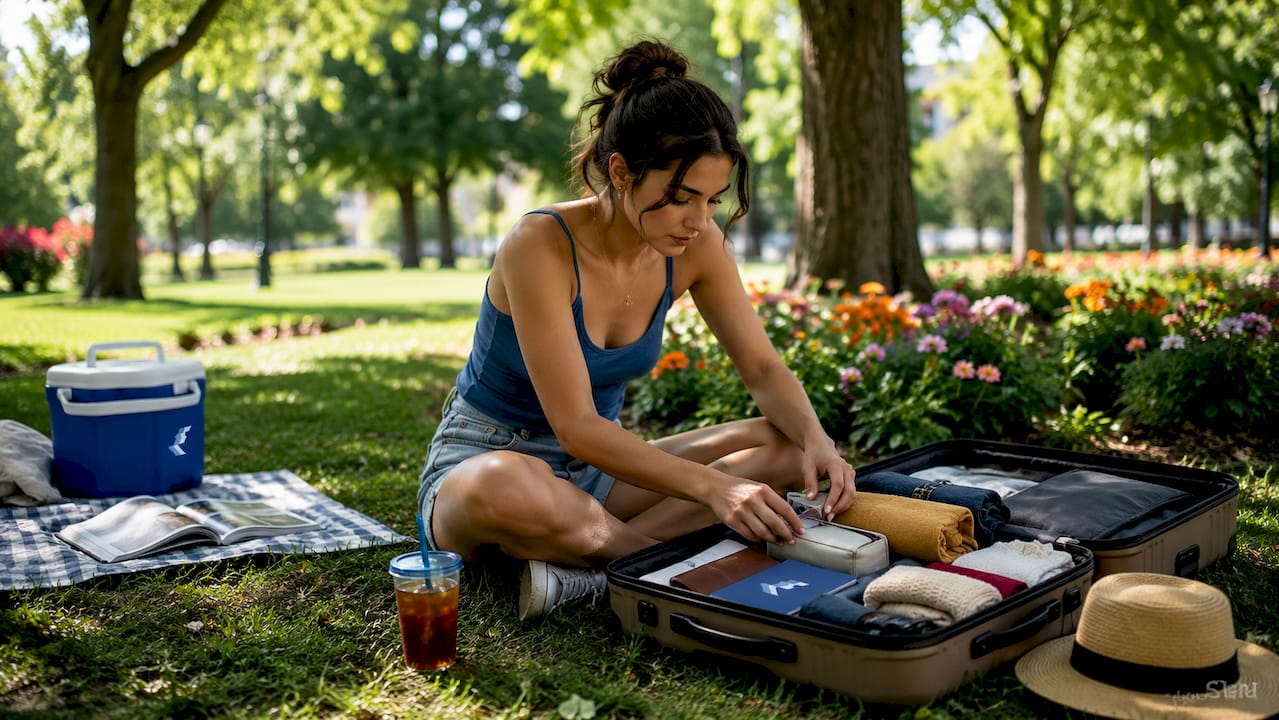
TL;DR:
- Beginner cruise packing tips focus on preparing essential items such as clothing, toiletries, and documents for a smooth voyage. Packing a capsule wardrobe with versatile clothing, three pairs of shoes, and organizing with packing cubes helps save space. Starting packing 15 days early and prioritizing carry-on essentials ensures a stress-free experience.
Beginner cruise packing tips are practical, strategic guidelines that help first-time cruisers prepare their luggage, documents, and essentials for a smooth embarkation and comfortable voyage. For a standard seven-day cruise, one checked bag plus a carry-on is the recommended setup, with a 50-pound weight limit if you’re flying to the port. Your passport should be valid for at least six months beyond your return date to cover unexpected itinerary changes or medical emergencies. Get these two fundamentals right, and the rest of your cruise packing checklist falls into place naturally.
What are the best beginner cruise packing tips for essentials?
The most important items to pack fall into four categories: clothing, footwear, toiletries, and travel documents. Getting each category right before you board saves you from scrambling on embarkation day.
Clothing: build a capsule wardrobe
A capsule wardrobe approach with versatile, mix-and-match pieces cuts luggage bulk without sacrificing style. Pack neutral-colored tops, one or two pairs of shorts or pants, a light layer for air-conditioned dining rooms, and a swimsuit cover-up that doubles as a casual dinner look. For formal nights, 1–2 dressy outfits are enough for most cruise lines. You do not need a different outfit for every single day.
Footwear: choose double-duty shoes
Footwear is where most first-timers overpack. Three pairs cover nearly every situation: flip-flops or sandals for the pool and casual port days, comfortable walking shoes for shore excursions, and one pair of dress shoes for formal dinners. Versatile sandals that work poolside and on excursions are the single best space-saving footwear choice you can make.
Toiletries and technology
Pack reef-safe sunscreen, as many popular cruise destinations require it to protect coral reefs. Bring your own shampoo, conditioner, and any specialty skincare, since ship-provided products are often generic. For technology, a travel-compliant USB hub is a must. Surge protectors are banned on most cruise ships, so a basic multi-port USB charger keeps all your devices powered without violating ship policy. An e-reader loaded with books beats hauling paperbacks.
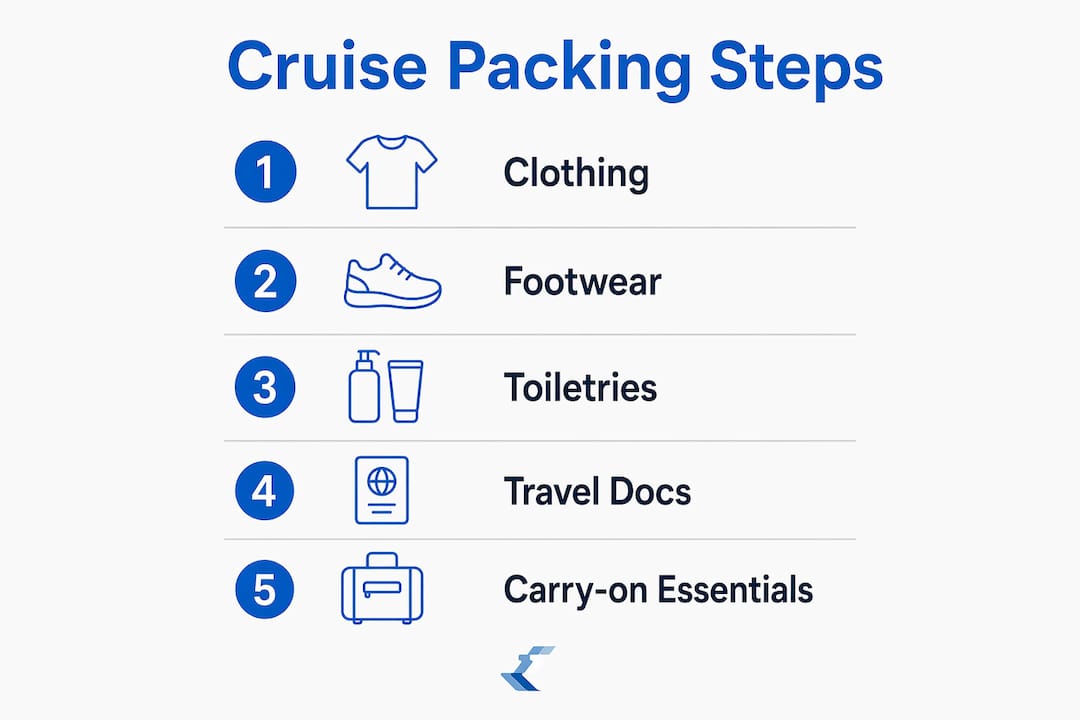
Travel documents and carry-on essentials
Your carry-on bag is your lifeline on embarkation day. Checked bags can take hours to reach your cabin after boarding, so pack your swimsuit, sunscreen, medications, phone charger, and all travel documents in your carry-on. Keep your passport, boarding pass, travel insurance details, and any prescription medications together in one pouch inside that bag.
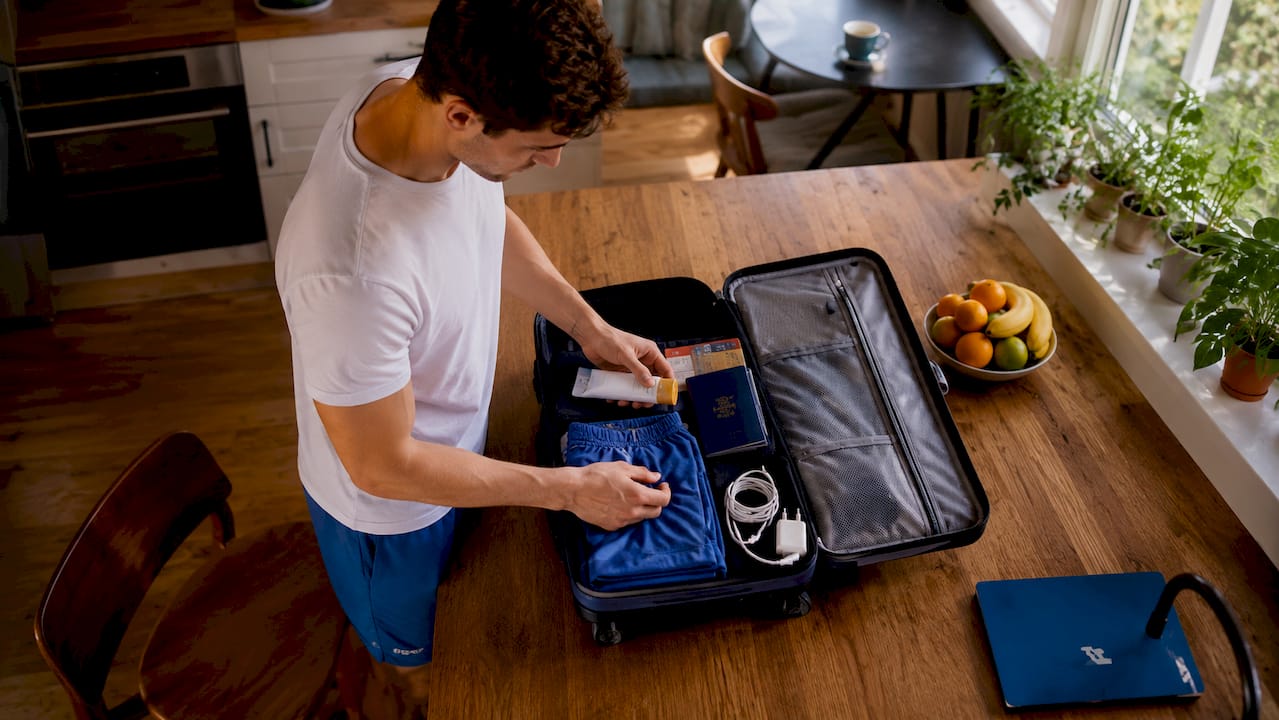
Pro Tip: Pack packing cubes, a few magnetic hooks, and a handful of ziplock bags. Magnetic hooks hang on metal cabin walls to create instant storage, and ziplock bags separate wet swimsuits from dry clothes.
How do you organize your luggage for a cruise?
Efficient luggage organization starts with packing by category and building in enough time before departure.
- Start 15 days out. Beginning your packing timeline at least 15 days before your cruise removes last-minute stress and gives you time to replace forgotten items.
- Sort by category first. Lay out all clothing, accessories, toiletries, and documents separately before anything goes into a bag. This reveals duplicates and unnecessary items before they take up space.
- Use packing cubes. Assign one cube per category: tops, bottoms, swimwear, and undergarments. Cubes compress clothing and make unpacking in a small cabin fast and organized.
- Check weight before you close the bag. A standard bathroom scale works fine. Step on it holding your bag, then subtract your own weight. Stay under 50 pounds if you’re flying to the port.
- Pack your carry-on last. After your checked bag is done, move embarkation-day essentials into your carry-on: documents, medications, a change of clothes, chargers, and sunscreen.
Cabin space on cruise ships is genuinely small. Most standard cabins offer limited closet space and a handful of drawers. Magnetic hooks attached to metal walls create hanging spots for bags, lanyards, and hats that would otherwise pile up on the bed. A Scrubba wash bag lets you hand-wash a few items mid-cruise, which means you can pack fewer clothes overall and still have clean options by day four or five.
Pro Tip: Roll clothes instead of folding them. Rolling reduces wrinkles and fits more into each packing cube.
| Luggage item | Recommended approach |
|---|---|
| Checked bag size | One medium or large bag, under 50 pounds |
| Carry-on contents | Documents, medications, charger, swimsuit, sunscreen |
| Packing tools | Packing cubes, ziplock bags, magnetic hooks |
| Timing | Start packing 15 days before departure |
| Footwear limit | Three pairs maximum for most itineraries |
What should you pack based on your cruise destination?
Your destination changes your packing list more than any other single factor. A Caribbean cruise and an Alaska cruise require almost completely different wardrobes.
For tropical destinations like the Caribbean, Bahamas, or Mexico, prioritize:
- Lightweight, breathable fabrics such as linen and moisture-wicking cotton
- Reef-safe sunscreen in SPF 50 or higher
- A waterproof phone case for beach days and water excursions
- Quick-dry towels, since ship towels are often not allowed off the vessel
- A lightweight backpack for shore excursions
- Snorkel gear if you plan to use it frequently (rental fees add up fast)
For cold-weather or northern destinations like Alaska or Norway, the list shifts significantly:
- Thermal base layers that fit under regular clothing
- A waterproof outer jacket and waterproof pants for deck viewing and excursions
- Warm, waterproof boots with grip for uneven terrain
- Gloves, a hat, and a scarf that pack flat
For Mediterranean or European cruises, a destination-specific checklist helps you balance casual daywear with smart-casual evening looks. Many European ports have dress codes for churches and historical sites, so pack at least one outfit with covered shoulders and knees.
Formal nights vary by cruise line and itinerary. Packing 1–2 nicer outfits covers most formal dinner requirements without overfilling your bag. On port days, bring small bills in local currency for tips, market purchases, and small vendors who do not accept cards.
What packing mistakes do first-time cruisers make?
Overpacking is the single most common mistake beginners make. Small cabins become cluttered fast when luggage is stuffed with “just in case” items that never get used. Recognizing the most frequent errors before you pack saves you real frustration on board.
- Packing prohibited items. Irons and surge protectors are banned on most ships. Bringing them means they get confiscated at the gangway. Pack a wrinkle-release spray instead of an iron, and use a travel-compliant USB hub instead of a surge protector.
- Leaving documents in checked luggage. Your passport, boarding pass, and medications must travel in your carry-on. If your checked bag is delayed or lost, you need those items immediately.
- Ignoring weight limits. Airlines and cruise terminals enforce baggage weight rules. An overweight bag at the airport costs extra fees and slows you down at the worst possible time.
- Packing single-use footwear. Shoes take up more space than almost any other item. Every pair you bring should serve at least two purposes.
- Waiting until the night before. Last-minute packing leads to forgotten essentials and poor decisions. A cruise planning checklist built into your pre-departure timeline prevents both.
“Beginners often overpack out of caution, but small cabins become cluttered and heavy luggage becomes a real burden. The goal is to pack what you will actually use, not what you might possibly need.” — Dean Van Es, cruise travel expert
Luggage security matters too. Use a TSA-approved lock on your checked bag and photograph its contents before closing it. If a bag is delayed or lost, that photo speeds up the claims process considerably.
Key Takeaways
A well-organized cruise packing checklist built around a capsule wardrobe, carry-on essentials, and destination-specific gear is the most reliable way to board your first cruise with confidence.
| Point | Details |
|---|---|
| Luggage sizing | One checked bag under 50 pounds plus a carry-on covers most seven-day cruises. |
| Carry-on priority | Pack documents, medications, and embarkation-day essentials in your carry-on, not your checked bag. |
| Capsule wardrobe | Mix-and-match clothing and three pairs of shoes eliminate the need to overpack. |
| Cabin organization | Magnetic hooks, packing cubes, and ziplock bags maximize limited cabin storage. |
| Start early | Begin packing 15 days before departure to avoid last-minute stress and forgotten items. |
What I’ve learned packing for cruises the hard way
The first time I packed for a cruise, I brought two checked bags for a seven-day Caribbean sailing. I used maybe half of what I packed. The cabin felt like a storage unit by day two, and I spent the whole trip stepping over bags I never opened.
The shift that changed everything was treating packing like a constraint problem, not a comfort problem. The question is not “what might I need?” It is “what will I actually use every single day?” Once I started asking that question, my bag got smaller and my trips got better.
Magnetic hooks were the single best discovery I made on my second cruise. I hung my bag, my lanyard, my hat, and my jacket on the cabin wall and suddenly had a functional room instead of a cluttered box. They cost almost nothing and take up zero luggage space.
The capsule wardrobe approach sounds like a fashion concept, but it is really just math. Five tops that work with two bottoms give you ten outfit combinations. That covers a week with room to spare. Add one dressy option and you are done.
My honest advice: use a first-timer planning guide to build your list, then cut it by 20% before you close the bag. You will not miss what you left behind. You will be glad you left it.
— Igor
Planning your first cruise with ChooseCruise
Packing well is only one part of a great first cruise. Finding the right itinerary, at the right price, without spending hours on outdated booking sites, is where most first-timers lose time and confidence.
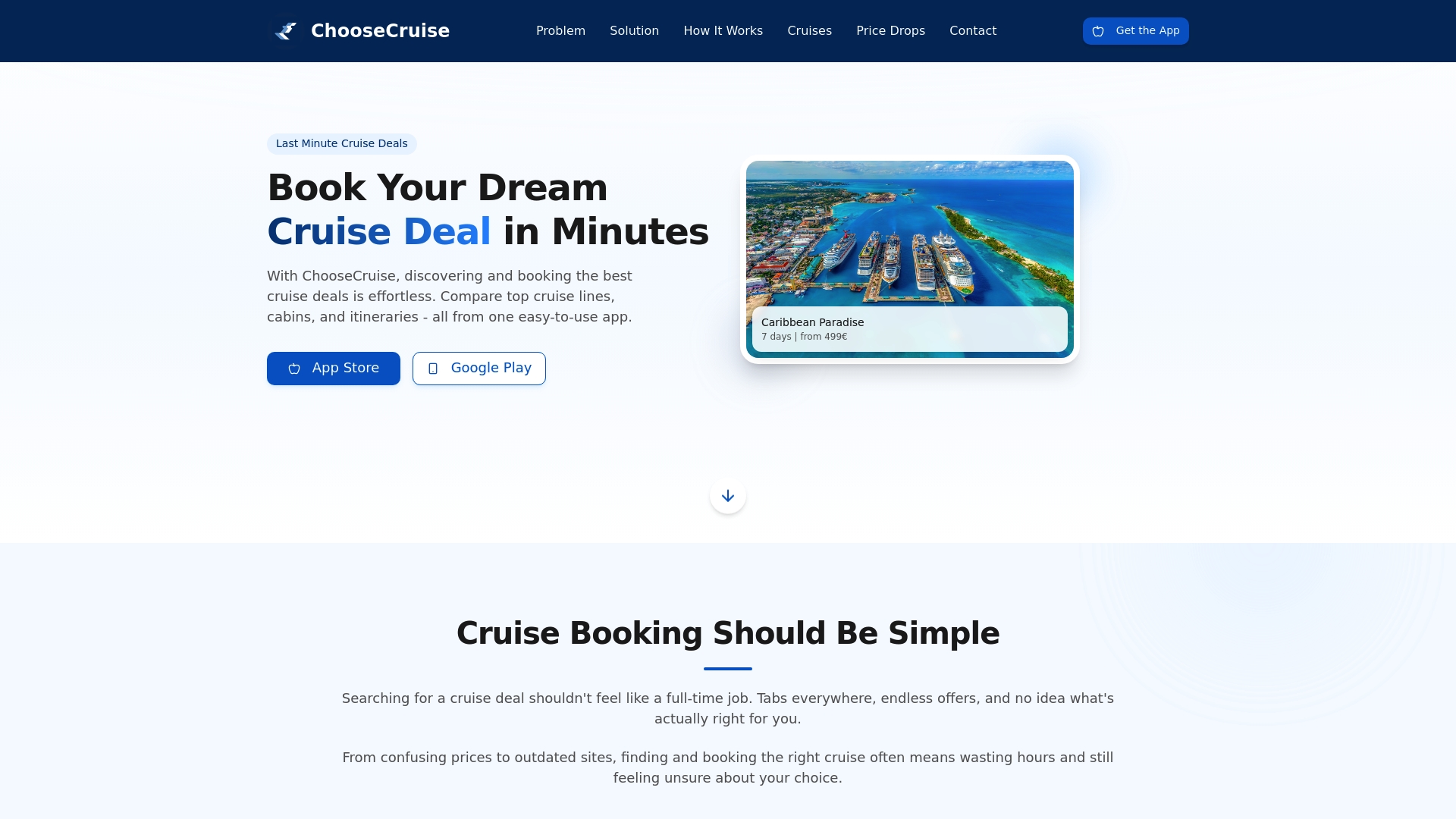
ChooseCruise is built for exactly this situation. The platform offers AI-powered cruise recommendations, real-time price tracking, and a clean booking process designed for travelers who want clarity, not confusion. Whether you are looking for a short three-day trip to test the waters or a full week in the Mediterranean, you can browse current cruise deals and compare options without the noise. ChooseCruise also publishes planning resources and checklists tailored to first-time cruisers, so your preparation starts on solid ground.
FAQ
What is the best luggage size for a seven-day cruise?
One medium or large checked bag plus a carry-on is the standard recommendation for a seven-day cruise. Keep the checked bag under 50 pounds if you are flying to the port.
What should I always pack in my carry-on for a cruise?
Pack your passport, boarding pass, medications, phone charger, a swimsuit, and sunscreen in your carry-on. Checked bags can take several hours to reach your cabin after you board.
Are surge protectors allowed on cruise ships?
Most cruise ships ban surge protectors. Bring a travel-compliant multi-port USB hub instead to charge multiple devices safely from the limited cabin outlets.
How early should I start packing for a cruise?
Start packing at least 15 days before your departure date. Building packing into your overall cruise planning checklist reduces stress and prevents forgotten essentials.
How many pairs of shoes should I bring on a cruise?
Three pairs cover nearly every situation: sandals for the pool and casual port days, walking shoes for excursions, and one pair of dress shoes for formal dinners.
Recommended
Related reading
6 Best Cruise Destinations 2026 for Smart First-Time Travelers
Discover the 6 best cruise destinations 2026 with expert tips for tech-savvy first-time travelers, including personalized advice for easier cruise booking.
Cruise Package Explained: Stress-Free Vacation Booking
Cruise package means bundled travel with accommodations, meals, entertainment, excursions. Learn the types, inclusions, pros, costs, and mistakes to avoid.
7 Smart Ways to Save on Cruises for Modern Travelers
Discover 7 smart ways to save on cruises with easy, practical tips designed for today’s digital cruise travelers. Learn to maximize value and minimize costs.