Must-Know Cruise Etiquette: 45% Avoid Dress Code Mistakes
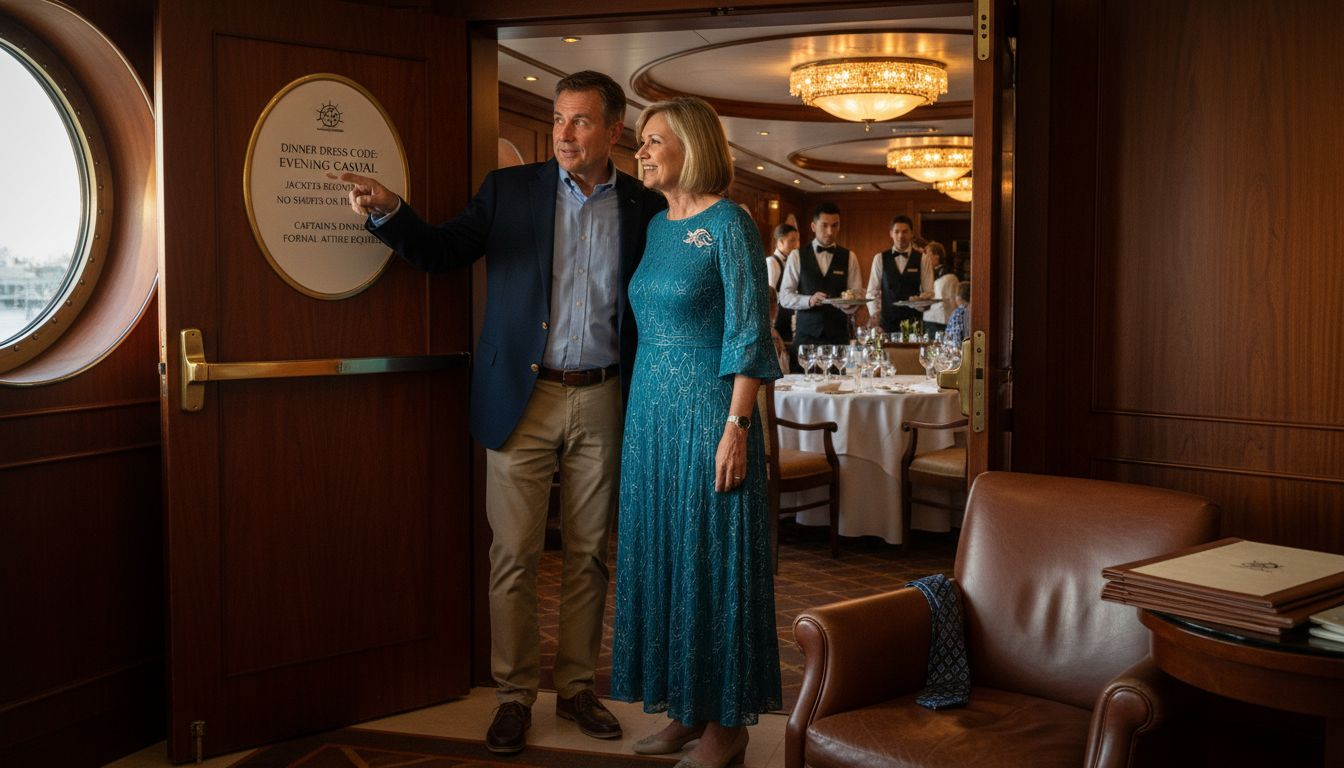
Stepping onto a cruise ship for the first time can feel magical, but awkward moments happen fast when you don’t know the unspoken rules. Research shows that 45% of first-time cruisers unknowingly violate restaurant dress codes, causing embarrassment at dinner or being turned away at the door. Understanding proper cruise etiquette transforms confusion into confidence, helping you navigate dining rooms, tipping protocols, shared spaces, and social interactions with ease. This guide provides the essential etiquette knowledge you need to enjoy your voyage without the stress.
Table of Contents
- Introduction To Cruise Etiquette
- Dining Etiquette And Dress Code
- Tipping Etiquette And The Role Of Cruise Staff
- Respecting Personal Space And Common Areas
- Politeness And Interaction With Crew And Fellow Passengers
- Social Behaviors On Excursions And Group Activities
- Common Misconceptions About Cruise Etiquette
- Adapting To Cruise Culture And Etiquette Variations
- Summary And Practical Tips For Cruise Etiquette Success
- Ready To Book Your Cruise With Confidence?
- FAQ
Key Takeaways
| Point | Details |
|---|---|
| Etiquette impacts satisfaction | Following social norms enhances your onboard experience and reduces conflicts. |
| Dress codes vary widely | Buffets allow casual wear, while main dining rooms and formal nights require smart attire. |
| Tipping drives service quality | Gratuities form a major portion of crew income and directly motivate excellent service. |
| Personal space matters | Maintaining arm’s length distance in shared areas prevents passenger complaints. |
| Politeness enhances experience | Courteous communication with crew and guests creates positive social connections. |
Introduction to Cruise Etiquette
Cruise ships operate as floating communities where hundreds or thousands of guests share meals, entertainment, and relaxation spaces for days or weeks. Unlike hotel stays where you mainly interact during check-in and checkout, cruise vacations demand continuous social awareness and respect for shared environments. Understanding these unique norms prevents uncomfortable situations and helps you blend seamlessly into the onboard culture.
First impressions matter enormously in cruise settings. Your behavior during embarkation, at the first dinner seating, and in common areas establishes how crew and fellow passengers perceive you throughout the voyage. A polite, considerate approach from day one sets a positive tone that carries through your entire trip. Studies indicate that maintaining one arm’s length personal space reduces passenger complaints by 40%, showing how simple awareness creates harmony.
Cruise etiquette encompasses several critical areas that differ from everyday travel norms:
- Dining protocols: Table manners, dress requirements, and interaction with wait staff follow stricter guidelines than casual restaurants
- Tipping practices: Gratuities operate differently than land-based hospitality, with pooled systems and standardized amounts
- Dress codes: Different venues and times of day require specific attire levels, from resort casual to formal wear
- Space sharing: Balancing personal comfort with respect for others in pools, lounges, and corridors demands constant mindfulness
- Communication styles: Interacting with international crew and diverse passengers requires cultural sensitivity and patience
Mastering these fundamentals prevents the common mistakes that mark inexperienced cruisers. When you know what’s expected, you can relax and focus on enjoying your vacation rather than worrying about social missteps. The cruise booking tips and travel safety guidelines complement etiquette knowledge, creating a complete preparation toolkit. Proper etiquette isn’t about being stuffy or formal; it’s about showing consideration that makes everyone’s experience better.
Dining Etiquette and Dress Code
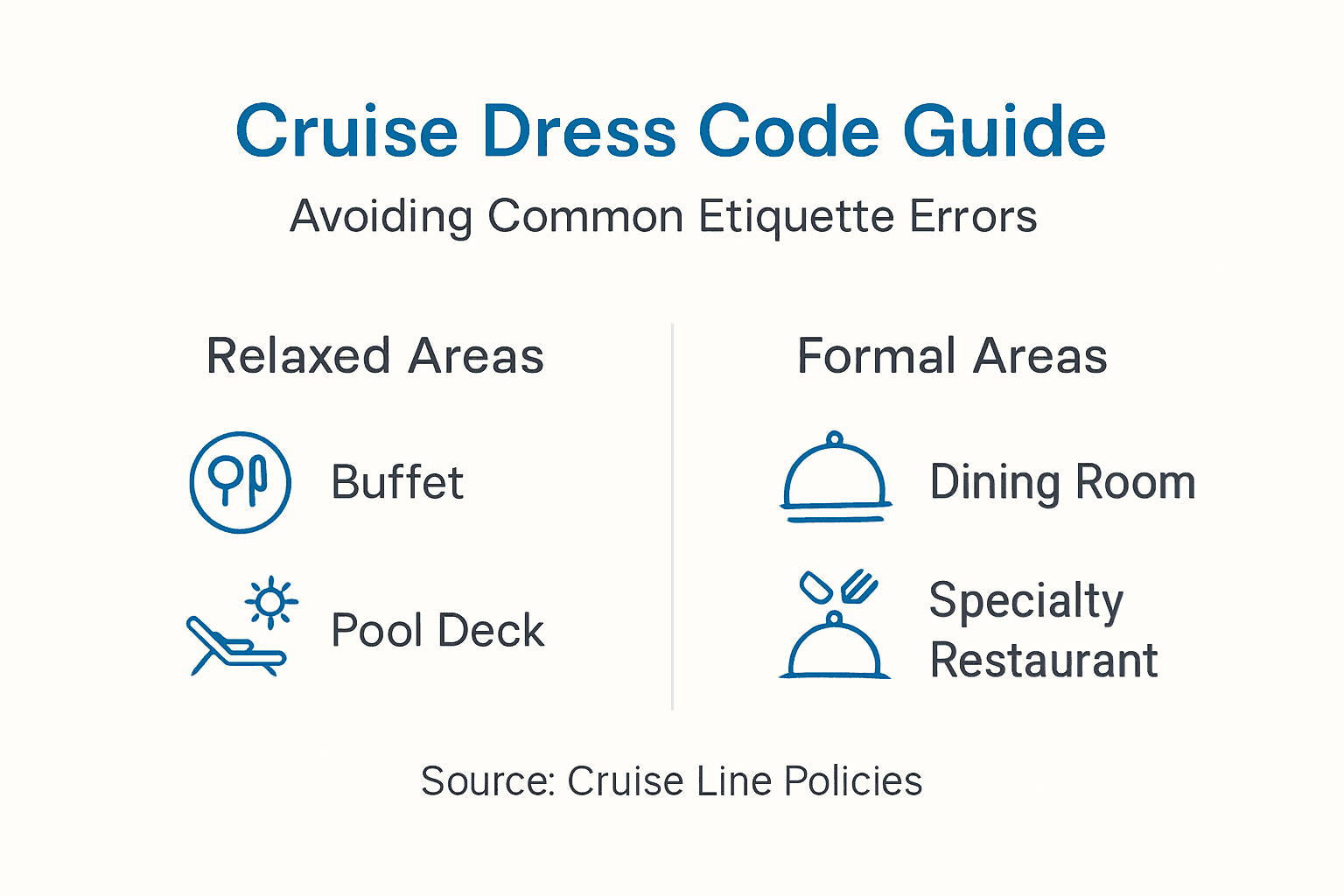
Dining represents the social centerpiece of cruise life, with multiple daily meals bringing passengers together in various venues. Each dining space carries its own expectations for attire and behavior. Survey data reveals that 45% of first-time cruisers are unaware of restaurant dress codes, causing frequent violations that result in embarrassment or denied entry.
Buffet areas typically allow the most relaxed dress standards. You can wear shorts, casual tops, and sandals during daytime buffet service, though swimwear usually requires a coverup. Evening buffet dining calls for slightly neater casual wear like khakis or sundresses. The relaxed atmosphere doesn’t excuse messy or offensive clothing; aim for presentable rather than sloppy.
Main dining rooms require smart casual attire at minimum. Men should wear collared shirts with slacks or nice jeans, while women opt for dresses, skirts, or dressy pants with blouses. Avoid athletic wear, flip-flops, tank tops, and baseball caps in these venues. The cruise dining tips resource provides detailed guidance on navigating meal service expectations.
Formal nights demand elevated attire that shows respect for the occasion and fellow diners:
- Men: Dark suits, tuxedos, or sport coats with dress pants and ties
- Women: Cocktail dresses, evening gowns, or elegant pantsuits with dressy accessories
- Avoid: Jeans, shorts, sneakers, casual sandals, or overly casual fabrics
Specialty restaurants often mirror main dining room standards but check specific venue requirements when making reservations. Some upscale spots enforce stricter dress codes than the general dining room. For destination wedding events or special celebrations onboard, formal attire becomes even more critical.
Behavior at the table matters as much as clothing. Wait for all guests at your table before starting your meal, use quiet conversational voices, and treat wait staff with respect and patience. Avoid monopolizing conversations, complaining loudly about food, or making excessive demands. If you have dietary restrictions, communicate them politely when making reservations rather than creating last-minute complications.
Pro tip: Pack versatile pieces that work for multiple dress code levels. A blazer transforms casual pants into smart casual, while a simple black dress accessorizes up for formal nights or down for main dining. This approach saves luggage space and eliminates packing stress.
Tipping Etiquette and the Role of Cruise Staff
Gratuities form a substantial portion of cruise staff compensation, directly impacting service quality and crew morale throughout your voyage. Research confirms that over 90% of cruise staff report tipping as a critical component of their income and motivation. Understanding tipping expectations prevents awkwardness and ensures you support the people working hard to make your vacation memorable.
Most cruise lines automatically add daily gratuities to your onboard account, typically ranging from $12 to $20 per passenger per day depending on cabin category and cruise line tier. These prepaid tips get pooled and distributed among dining staff, cabin stewards, and behind-the-scenes crew who maintain ship operations. The automatic system ensures fair distribution and removes the pressure of calculating individual tips.
Additional tipping remains appropriate for exceptional service:
- Bar staff: $1 to $2 per drink, or 15% to 18% for bar tabs
- Spa services: 18% to 20% of treatment cost
- Specialty dining: $5 to $10 per person for outstanding service beyond the included gratuity
- Room service: $2 to $5 per delivery
- Shore excursion guides: $3 to $5 per person for excellent tours
Some cruise lines include gratuities in the upfront cruise fare, labeled as inclusive pricing. Check your booking details to understand what’s covered. Even with prepaid tips, crew members appreciate extra cash for service that exceeds expectations. Carry small bills to tip porters, tour guides, and other service providers you encounter during your voyage.
“Crew members often work 10 to 12 hour days for months without time off, relying heavily on gratuities to support families back home. Your tips directly impact their quality of life and motivation to deliver excellent service.”
Budgeting for tips before your cruise eliminates financial surprises. Calculate the automatic gratuity amount based on your party size and cruise length, then add a buffer for discretionary tipping. Prepaying gratuities when booking locks in current rates and spreads costs across your vacation budget rather than hitting your account during the cruise.
Never withhold automatic gratuities to protest service issues. Instead, address concerns through guest services so management can correct problems. Removing prepaid tips punishes the entire service team, including crew members you never interacted with who performed their jobs perfectly. The cruise booking tips guide includes budget planning strategies that account for all cruise-related expenses.
Pro tip: Bring envelopes with small bills for tipping excursion guides, porters, and other service providers. Having cash ready prevents scrambling for change and shows preparedness.
Respecting Personal Space and Common Areas
Cruise ships pack thousands of people into relatively confined spaces, making spatial awareness essential for passenger comfort and conflict prevention. Research demonstrates that maintaining personal space of at least one arm’s length reduces passenger complaints by up to 40%. Simple mindfulness about proximity and behavior in shared areas dramatically improves everyone’s experience.
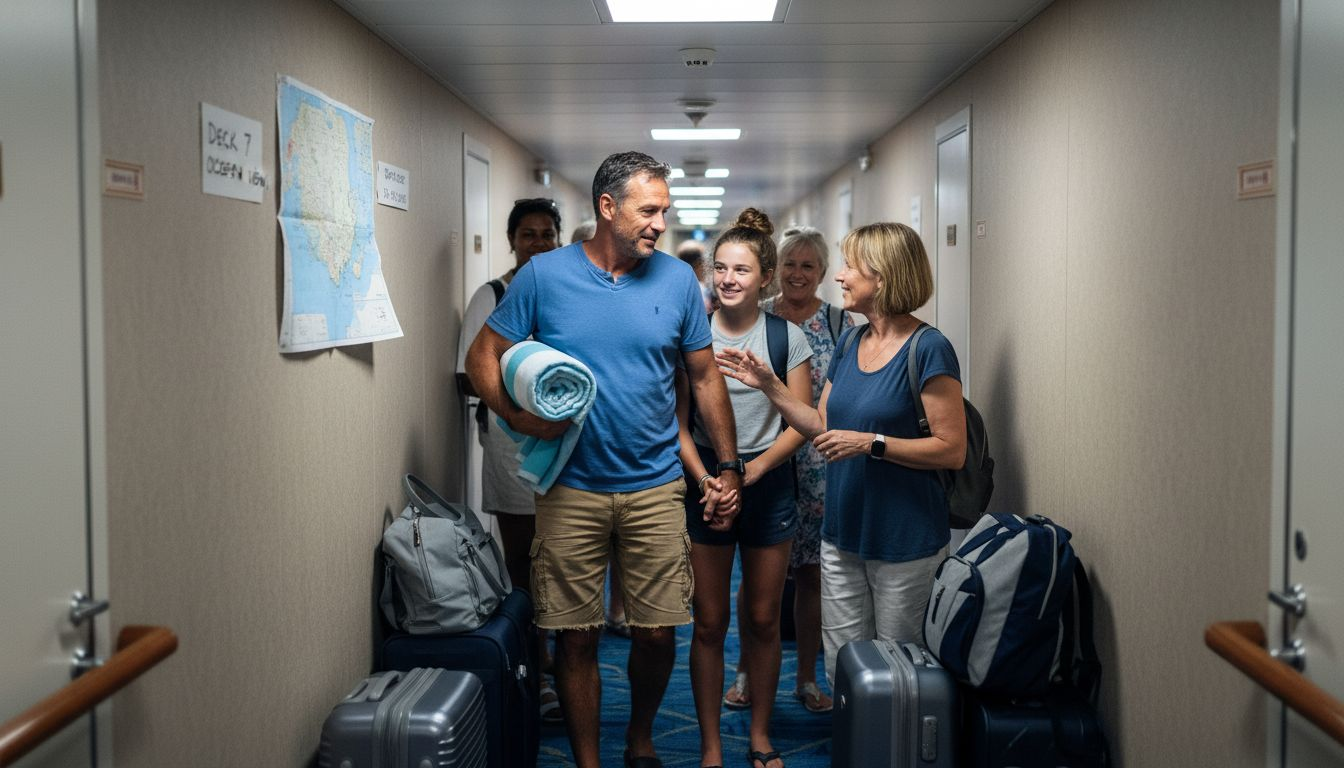
Elevators and corridors present the most frequent spatial challenges. Allow passengers to exit before entering, avoid blocking doorways while chatting, and keep conversations brief when space is tight. During busy times like embarkation or disembarkation, patience becomes crucial. Rushing or pushing creates tension and rarely saves meaningful time.
Pool and deck areas require particular consideration:
- Chair saving: Never reserve lounge chairs by leaving towels, books, or belongings unattended; most cruise lines forbid this practice
- Pool behavior: Keep splashing minimal, respect pool capacity limits, and supervise children closely
- Noise levels: Use moderate voices near pools and on decks where others may be reading or relaxing
- Smoking: Only smoke in designated areas, never near dining venues, pools, or cabin balconies where smoke drifts to neighbors
Public lounges, libraries, and quiet spaces demand even greater restraint. Keep phone conversations brief and quiet, use headphones for videos or music, and respect signage indicating quiet zones. The cruise dining tips extend to lounge areas where pre-dinner drinks and post-meal conversations happen; maintain awareness that others share these spaces.
Hallway interactions matter more than you might expect. When passing others in narrow corridors, make eye contact, smile, and move to one side. Hold doors for people behind you, especially those with mobility challenges or carrying items. These small courtesies accumulate into a culture of respect that benefits everyone.
Balcony etiquette protects both your privacy and your neighbors’ enjoyment. Keep music and TV volumes low, avoid slamming doors early or late, and minimize time spent talking loudly on your balcony. Remember that sound travels easily between adjacent balconies, and what feels like normal conversation volume to you may disturb neighbors trying to sleep or relax.
Pro tip: Arrive at popular venues like pools and lounges during off-peak times to secure space without competing. Early morning and late afternoon often provide the best availability with fewer crowds.
Politeness and Interaction with Crew and Fellow Passengers
Courteous communication creates the foundation for positive cruise experiences, whether you’re interacting with international crew members or fellow passengers from diverse backgrounds. Small gestures of respect and kindness generate goodwill that enriches your entire voyage.
Crew members work incredibly hard to ensure passenger satisfaction, often far from home for months at a time. Learning and using their names shows respect and helps build genuine connections. Greet cabin stewards, waiters, and bartenders by name when you see them throughout the ship. Express gratitude frequently and specifically; instead of generic thanks, acknowledge particular efforts like “Thank you for remembering my coffee preference” or “I appreciate how quickly you handled that request.”
Active listening demonstrates respect during conversations with crew and passengers alike:
- Maintain eye contact and give people your full attention rather than scanning the room or checking your phone
- Ask follow-up questions that show genuine interest in what others share
- Avoid interrupting or steering conversations back to yourself constantly
- Respect privacy by not pressing for personal information if someone seems hesitant to share
Cultural diversity aboard cruise ships demands openness and patience. Crew members hail from dozens of countries, bringing different communication styles, accents, and customs. If you don’t understand something, ask politely for clarification rather than showing frustration. Many crew members speak English as a second or third language, making your patience especially valuable.
Gossip and complaints poison the social atmosphere quickly. Avoid speaking negatively about crew, other passengers, or ship conditions in public spaces where others overhear. If you have legitimate concerns, address them through proper channels like guest services rather than venting to random passengers. Negative talk spreads fast in the confined cruise environment, creating uncomfortable dynamics.
Fellow passengers deserve the same consideration. Respect differences in age, lifestyle, and cruise experience levels. Experienced cruisers can share helpful tips with newcomers without condescension, while first-timers should ask questions rather than making assumptions. The cruise dining tips and family cruise strategies provide frameworks for various passenger types to coexist harmoniously.
Social boundaries matter, especially regarding personal topics like politics, religion, or finances. Keep conversations light and inclusive, focusing on shared cruise experiences, ports of call, and entertainment options. If someone broaches controversial topics, gracefully redirect or excuse yourself rather than engaging in heated debate.
Social Behaviors on Excursions and Group Activities
Shore excursions extend cruise etiquette beyond the ship, requiring additional awareness of group dynamics and cultural sensitivity at destinations. Proper behavior during organized tours ensures smooth experiences for everyone while respecting local customs and environments.
-
Be punctual for all departure times: Tour buses and boats leave on schedule, and late arrivals delay the entire group; set multiple alarms and allow buffer time for unexpected delays.
-
Follow tour guide instructions precisely: Guides know local conditions, safety concerns, and cultural expectations; ignoring their directions risks personal safety and group cohesion.
-
Stay with your assigned group: Wandering off causes delays and forces guides to search for missing participants; if you need to step away briefly, inform the guide first.
-
Respect local customs and dress codes: Research destination norms before excursions; many religious sites require covered shoulders and knees, while some beaches prohibit certain swimwear styles.
-
Minimize disruptive behavior: Keep voices moderate in quiet spaces like museums or religious sites; avoid blocking pathways for photos; don’t touch artifacts or wildlife unless explicitly permitted.
-
Support local economies respectfully: Purchase from legitimate vendors rather than aggressive street sellers; negotiate prices politely; respect “no photography” signs at cultural sites.
Group activities aboard ship require similar consideration. Whether attending trivia contests, fitness classes, or entertainment shows, arrive on time, follow host instructions, and avoid dominating activities. Share equipment in fitness areas, rotate participation in games, and respect others’ space during crowded events.
Photography etiquette matters during excursions and onboard activities. Always ask permission before photographing people, especially children or in culturally sensitive locations. Avoid using flash in museums or during performances where it disrupts others. Don’t block pathways or attractions while composing shots; take your photo quickly and move aside for others.
The excursion planning guide helps you select activities that match your interests and physical abilities, reducing the chance you’ll struggle to keep pace or feel out of place. Choosing appropriate excursions sets you up for positive group dynamics from the start.
Common Misconceptions About Cruise Etiquette
Many first-time cruisers carry false assumptions about onboard expectations, leading to etiquette violations and social discomfort. Correcting these misconceptions prevents embarrassing mistakes and helps you navigate cruise culture confidently.
| Common Belief | Reality |
|---|---|
| Tipping is optional or minimal | Gratuities are expected and form 60% to 80% of crew income; withholding tips severely impacts service quality |
| Casual dress works everywhere | Main dining rooms and specialty restaurants enforce dress codes; formal nights require business or cocktail attire |
| Chair saving is acceptable | Most cruise lines prohibit reserving lounge chairs with towels or belongings; doing so is considered selfish and rude |
| Loud pool behavior is normal | Excessive noise, splashing, and rowdiness disturb other guests; moderate voices and respectful play are expected |
| Crew members are servants | Crew deserve respect and courtesy as hospitality professionals; condescending or demanding behavior is inappropriate |
The tipping misconception causes the most frequent problems. New cruisers sometimes view prepaid gratuities as optional service charges they can remove to save money. In reality, these tips compensate hardworking crew members who earn modest base salaries. Removing automatic gratuities without cause is widely considered unethical within cruise communities.
Dress code confusion stems from conflating buffet casualness with universal ship standards. While poolside dining allows shorts and sandals, evening venues require progressively formal attire. Specialty restaurants often enforce stricter codes than main dining rooms, and formal nights absolutely mandate dressy attire. Packing appropriately prevents disappointment when you’re turned away from desired venues.
Personal space expectations differ dramatically from land-based vacations. Resort hotels offer private pools and secluded beach areas, while cruise ships concentrate thousands of people in shared spaces. What feels like normal behavior at a beach resort may seem intrusive or inconsiderate aboard ship. Heightened spatial awareness and volume control become essential.
Some cruisers mistakenly believe that all-inclusive fares eliminate tipping obligations. Even when gratuities are prepaid, exceptional service merits additional cash tips. Spa treatments, bar service, and room service all benefit from extra gratuities beyond the standard daily amount. Budget for discretionary tipping to show appreciation for outstanding efforts.
Adapting to Cruise Culture and Etiquette Variations
Cruise etiquette isn’t one-size-fits-all; expectations vary significantly based on cruise line positioning, ship size, itinerary, and passenger demographics. Developing adaptability helps you navigate different cruise environments with equal confidence.
Luxury cruise lines like Regent, Seabourn, and Crystal enforce more formal standards than mainstream carriers. Dress codes skew dressier even during casual times, service interactions follow refined protocols, and passenger behavior tends toward quieter sophistication. Tipping may be included in fares, reducing transactional elements but raising expectations for gracious acknowledgment of service. These cruises attract experienced travelers who expect elevated etiquette from fellow passengers.
Mass-market cruise lines like Carnival, Royal Caribbean, and Norwegian offer more relaxed atmospheres. Dress codes exist but enforcement varies, social interactions trend casual and boisterous, and family-friendly activities dominate programming. Adapting to this environment means accepting higher noise levels, more crowded spaces, and diverse passenger behavior standards. Flexibility and patience become crucial.
Itinerary and destination influence etiquette norms significantly:
- Caribbean cruises: Casual, party-friendly atmosphere with younger demographics and relaxed social standards
- Alaska cruises: More mature passenger base, focus on scenery over nightlife, quieter social environment
- European river cruises: Intimate ships with upscale travelers, formal dining, and cultural enrichment focus
- Trans-oceanic voyages: Extended sea days foster close passenger communities with established social hierarchies
Ship size affects social dynamics and spatial etiquette. Mega-ships with 5,000+ passengers create festival atmospheres where you rarely see the same people twice. Smaller ships foster intimate communities where you dine with the same tablemates nightly and recognize most passengers. The latter demands more consistent politeness since you can’t escape awkward encounters.
Observing fellow passengers and crew provides real-time etiquette guidance. Notice how others dress for different venues, what noise levels people tolerate in lounges, and how passengers interact with crew. If you’re unsure about appropriate behavior, watch experienced cruisers and mirror their approach. Crew members also signal expectations through subtle cues like gently reminding guests about dress codes or quiet zones.
Flexibility trumps rigid rule-following when adapting to new cruise environments. What worked perfectly on your Caribbean party cruise may feel inappropriate on an Alaska expedition cruise. Stay alert to context, adjust your behavior to match ship culture, and maintain core courtesy regardless of setting. The ability to read and adapt to different cruise atmospheres marks truly experienced cruisers.
Summary and Practical Tips for Cruise Etiquette Success
Mastering cruise etiquette transforms first-time anxiety into confident enjoyment, helping you navigate social situations smoothly while respecting fellow passengers and hardworking crew. The key principles remain consistent across all cruise experiences, though specific applications vary by ship and itinerary.
Essential etiquette foundations include:
- Dress appropriately: Pack versatile attire that meets buffet casual, smart casual, and formal requirements; research your specific cruise line’s dress code details before sailing
- Budget and tip generously: Calculate automatic gratuities in advance, bring cash for discretionary tips, and reward exceptional service beyond standard amounts
- Maintain spatial awareness: Keep arm’s length distance in crowds, avoid saving chairs, respect noise guidelines in shared areas, and be mindful of balcony sound travel
- Communicate courteously: Learn crew names, express specific gratitude, practice active listening, avoid gossip and complaints in public spaces
- Be punctual: Arrive on time for excursions, dining reservations, and ship departure; late arrivals disrupt groups and risk missing the boat entirely
- Adapt flexibly: Observe ship-specific norms, adjust behavior to match cruise line positioning and passenger demographics, stay open to different cruise cultures
Practical application matters more than memorizing rules. Start each day with a mental etiquette check covering your attire, planned activities, and upcoming interactions. This brief reflection keeps standards top of mind without creating anxiety. Review dining venue dress codes before heading to dinner, double-check excursion meeting times the night before, and maintain awareness of your surroundings in shared spaces.
When mistakes happen, apologize briefly and move on. Everyone commits occasional etiquette errors, especially when learning cruise norms. A sincere apology and behavior correction earn more respect than defensive excuses. Fellow passengers and crew appreciate guests who acknowledge missteps and demonstrate growth.
Pro tip: Keep a small notebook or phone note with daily etiquette reminders: formal night dates, specialty restaurant reservations, excursion times, and crew names. Quick reference eliminates memory lapses that lead to violations.
Ready to Book Your Cruise with Confidence?
Now that you understand the etiquette essentials that make cruise vacations enjoyable and stress-free, you’re prepared to find and book your perfect cruise with complete confidence. ChooseCruise simplifies the discovery process with AI-powered recommendations tailored to first-time cruisers, real-time price tracking, and interactive itineraries that help you visualize your voyage before booking.
Our platform eliminates the overwhelm of comparing dozens of cruise options across multiple sites. Whether you’re seeking Caribbean relaxation, Alaska adventure, or European cultural immersion, ChooseCruise matches you with ideal sailings based on your preferences, budget, and travel dates. The cruise booking tips guide provides expert strategies for securing the best deals and optimal cabin locations, while the excursion ideas help you plan shore activities that complement your newfound etiquette knowledge. Start exploring your options today and transform cruise research from frustrating to effortless.
FAQ
What is the most important cruise etiquette rule for first-time cruisers?
Respecting others’ personal space and maintaining polite communication form the foundation of positive cruise experiences. These basics prevent most conflicts and create comfortable environments for everyone. Proper tipping and appropriate dress codes rank equally important for supporting crew and accessing all ship venues.
How much should I tip cruise staff?
Standard automatic gratuities range from $12 to $20 per passenger per day depending on cruise line and cabin category. Research shows over 90% of cruise staff report tipping as critical to income and motivation. Add discretionary tips of 15% to 20% for bar service, spa treatments, and exceptional dining experiences beyond the prepaid amount.
What should I wear on a formal night?
Men typically wear dark suits, tuxedos, or sport coats with dress pants and ties, while women choose cocktail dresses, evening gowns, or elegant pantsuits. Avoid jeans, shorts, sneakers, and casual fabrics entirely on formal nights. Check your specific cruise line’s requirements, as luxury lines may enforce stricter standards than mainstream carriers. Formal event dress ideas provide inspiration for appropriate attire.
Can I save lounge chairs by leaving towels?
No, most cruise lines explicitly forbid reserving lounge chairs with towels, books, or personal belongings. This practice is considered selfish and unfair to other passengers seeking seating. Crew members often remove items from unattended chairs after 30 to 40 minutes, releasing the space for others.
How do I handle cultural differences with international crew?
Approach interactions with patience, openness, and respect for diverse communication styles and accents. If you don’t understand something, ask politely for clarification rather than showing frustration. Many crew members speak English as a second or third language, making your courtesy especially valuable. Learning a few words in crew members’ native languages demonstrates thoughtfulness and builds positive connections.
Recommended
Related reading
7 Smart Ways to Save on Cruises for Modern Travelers
Discover 7 smart ways to save on cruises with easy, practical tips designed for today’s digital cruise travelers. Learn to maximize value and minimize costs.
Understanding Why Choose River Cruises for Travel Fun
Discover why choose river cruises as your next adventure. Explore their benefits, unique experiences, and how they enhance travel enjoyment.
Understanding the Best Cruise Lines for Beginners
Discover the best cruise lines for beginners, understanding what they offer and why they matter for first-time cruisers.