The Role of Cruise Concierges: Your 2026 Guide

TL;DR:
- A cruise concierge provides personalized service to VIP and suite guests, managing bookings and resolving issues. They serve a small, defined group, anticipate needs, and have authority to override procedures, unlike general guest services. The role requires luxury hospitality experience and multilingual skills, significantly enhancing the onboard experience with priority access and tailored arrangements.
A cruise concierge is defined as a dedicated hospitality professional who provides personalized, high-touch service exclusively to VIP, suite, and loyalty guests aboard a cruise ship. The role of cruise concierges sits at the center of the premium onboard experience, covering everything from dining reservations and spa bookings to shore excursion coordination and service recovery. Unlike general guest services, a concierge manages a designated group of 32 to 154 staterooms depending on vessel size. That focused scope is what makes the position so powerful for travelers who want more than a standard cruise.
What does the role of cruise concierges actually involve?
A cruise concierge is the single point of contact for every need a suite or VIP guest has during the voyage. The responsibilities of cruise concierges span four core areas: dining reservations, spa and wellness bookings, shore excursion management, and concierge lounge operations. Each of these requires coordination across multiple ship departments, often simultaneously.

The concierge lounge is the operational heart of the role. Lounge operations are central to the concierge’s daily work, covering food and beverage quality, guest check-ins, and private event hosting. Guests use the lounge as a retreat from the main ship crowd, and the concierge is responsible for maintaining its standards at all times.
Concierges also act as guest advocates. When a dinner reservation falls through or a shore excursion gets overbooked, the concierge steps in to fix it. That advocacy function separates the role from every other hospitality position on the ship.
How do cruise concierges differ from general guest services?
General guest services handles the entire ship’s passenger population. A cruise concierge serves a much smaller, defined group with proactive, high-touch service rather than reactive problem-solving. That distinction changes everything about how the role operates.
Here is how the two positions differ in practice:
- Guest volume. Guest services manages hundreds or thousands of passengers. A concierge focuses on 32 to 154 staterooms, allowing genuine personal attention.
- Service model. Guest services responds to requests as they arrive. A concierge anticipates needs before guests ask, pre-booking preferred dining times and flagging potential scheduling conflicts.
- Authority level. A concierge holds service recovery authority to override standard procedures when a guest issue requires it. Guest services typically escalates those situations upward.
- Physical workspace. The concierge lounge is a private, dedicated space. Guest services operates from a public desk accessible to all passengers.
- Relationship depth. Concierges learn guest preferences, dietary needs, and celebration dates. Guest services interactions are typically transactional.
Pro Tip: If you are booked in a suite or a concierge class cabin, introduce yourself to your concierge on embarkation day. Sharing your preferences early gives them time to arrange things before you even ask.
The concierge role is also more operationally complex than it appears. Coordinating a private dinner, a spa appointment, and a priority tender ticket for the same guest on the same morning requires real logistics skill, not just hospitality warmth.
What qualifications does a cruise concierge need?
Cruise lines set a high bar for concierge candidates. Recruitment requires at least 2 years of luxury hospitality experience, and multilingual ability is strongly preferred. The most sought-after languages include English, Spanish, French, and Mandarin, reflecting the international makeup of cruise ship passenger rosters.
The full qualification profile breaks down into four areas:
- Luxury hospitality experience. Hotel concierge, resort guest relations, or private club management roles all count. The key is demonstrated experience with affluent guests.
- Multilingual communication. Speaking two or more languages is a competitive advantage. Ships carry guests from dozens of countries, and a concierge who can communicate directly builds trust faster.
- Cruise line knowledge. Concierge etiquette and cruise line standards are distinct from land-based hospitality. Prior shipboard experience shortens the learning curve significantly.
- Leadership and problem-solving. Concierges manage lounge staff, coordinate with multiple departments, and handle escalations. Candidates with event management or team leadership backgrounds stand out.
Pro Tip: Travelers looking to understand luxury cruise experiences will find that the concierge’s background directly shapes the quality of service they receive. A concierge with hotel management experience tends to bring a higher level of anticipatory care.
The pay reflects the specialization. The national average hourly rate for cruise ship concierges sits at $17.97 as of mid-2026. That figure varies with ship size and cruise line tier, but it signals that cruise lines treat the position as a skilled professional role, not an entry-level one.
How do cruise concierges enhance your onboard experience?
The practical benefits of having a cruise concierge are direct and measurable. Guests with concierge access consistently get priority placement at specialty restaurants, preferred spa appointment windows, and early access to shore excursion bookings before general passengers. That priority access matters most on large ships where popular experiences sell out quickly.
Here is what a concierge typically manages on your behalf:
- Specialty dining reservations. Concierges secure tables at the ship’s most in-demand restaurants, often before general booking opens.
- Spa and wellness scheduling. They book treatments at peak times and can coordinate back-to-back appointments across a sea day.
- Shore excursion coordination. Concierges handle priority tender tickets and can arrange private tours in port when ship excursions do not fit your schedule.
- Special occasion planning. Birthday dinners, anniversary cabin decorations, and surprise arrangements all go through the concierge.
- Service disruption recovery. When plans change, the concierge resolves conflicts faster than any other channel on the ship.
The table below shows how concierge access changes the guest experience across key touchpoints:
| Experience area | Without concierge | With concierge |
|---|---|---|
| Specialty dining | Self-book, limited availability | Priority access, pre-voyage booking |
| Spa appointments | First-come, first-served | Reserved windows, preferred timing |
| Shore excursions | Standard booking queue | Priority tender, private tour options |
| Service issues | Guest services queue | Direct resolution, policy override authority |
| Special occasions | Self-arranged | Fully coordinated by concierge |
Travelers booked in cruise suite accommodations receive concierge access as a standard inclusion. That makes the suite tier a genuinely different product, not just a larger cabin.
What does a typical day look like for a cruise concierge?
A concierge’s day starts before most guests wake up. Morning prep involves reviewing the day’s port schedule, confirming dining reservations, and checking the concierge lounge setup for breakfast service. By the time guests arrive, every detail is already in motion.
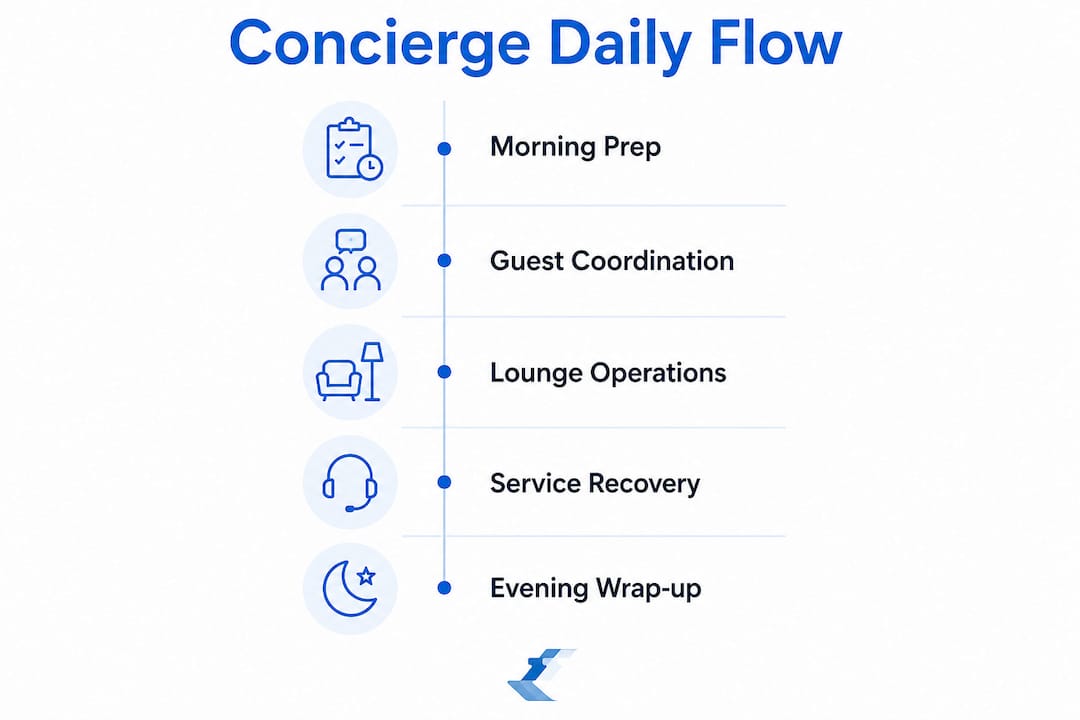
Daily duties include managing multiple VIP staterooms and coordinating with the dining, spa, and shore excursions departments throughout the day. A single concierge might handle a last-minute restaurant change, a medical dietary request, and a priority disembarkation arrangement all within the same hour.
The afternoon shift focuses on the lounge. Concierges oversee afternoon refreshments, handle incoming guest requests, and prepare for evening events. Private cocktail hours and exclusive tastings often run through the concierge lounge, requiring the concierge to act as both host and logistics coordinator.
Service recovery is the most demanding part of the role. When a guest’s excursion bus leaves without them or a cabin issue arises mid-voyage, the concierge steps in with authority to fix it immediately. That ability to act without waiting for management approval is what makes the position so valuable to guests who paid for a premium experience.
Key Takeaways
Cruise concierges are the most direct path to a personalized, priority-access experience on any ship that offers the service.
| Point | Details |
|---|---|
| Defined guest scope | Concierges manage 32 to 154 staterooms, enabling genuine personal attention. |
| Proactive service model | Concierges anticipate needs and act before guests ask, unlike reactive guest services. |
| Service recovery authority | Concierges can override standard procedures to resolve guest issues immediately. |
| Qualification bar is high | Candidates need at least 2 years of luxury hospitality experience and multilingual skills. |
| Suite guests benefit most | Concierge access is typically included with suite bookings and transforms the onboard experience. |
Why the concierge role will only matter more going forward
I have spent years watching the cruise industry evolve, and one pattern is clear: the gap between a standard cabin experience and a suite experience keeps widening. The concierge is the main reason why.
What most travelers miss is that the concierge is not just a booking agent. The best ones function as cultural translators. On a ship carrying guests from 40 countries, a multilingual concierge who understands regional expectations around dining, privacy, and formality delivers something no app or chatbot can replicate. That human layer is genuinely irreplaceable.
My practical advice for travelers: do not wait until something goes wrong to use your concierge. The biggest value comes from the things they arrange before you even board. Share your preferences during pre-voyage communication, and let them build your experience from day one. First-time cruisers especially benefit from reading up on personalizing your cruise trip before departure so they arrive knowing what to ask for.
The concierge role will grow in importance as cruise lines compete harder for the premium traveler segment. Ships are adding more suite inventory, and with it, more concierge positions. Travelers who learn how to use this service well will consistently get more from every voyage than those who do not.
— Igor
Plan your next cruise with ChooseCruise
Knowing what a cruise concierge can do for your trip changes how you shop for one. The right ship, the right cabin category, and the right itinerary all determine whether concierge services are included in your booking.
ChooseCruise makes it straightforward to filter cruise options by cabin class, amenities, and price so you can find sailings that include concierge access without digging through outdated listings. Whether you are looking for a short getaway or a full luxury voyage, you can compare cruise deals and see exactly what each tier includes before you book. Check out cruise booking tips to get the most out of your search and make sure you are comparing the right features from the start.
FAQ
What does a cruise concierge do?
A cruise concierge manages dining, spa, and shore excursion bookings for VIP and suite guests while overseeing concierge lounge operations. They also handle service recovery and act as a personal advocate throughout the voyage.
How is a cruise concierge different from guest services?
Guest services handles all passengers reactively. A cruise concierge serves a smaller group of 32 to 154 staterooms with proactive, personalized attention and authority to override standard procedures when needed.
Do all cruise ships have concierge services?
Not all ships offer dedicated concierge services. The role is most common on ships with suite or concierge class cabin categories, where the service is typically included as part of the booking tier.
What qualifications do cruise concierges have?
Cruise concierges typically hold at least 2 years of luxury hospitality experience and often speak multiple languages including English, Spanish, French, or Mandarin to serve international guests effectively.
How do I get the most from a cruise concierge?
Introduce yourself on embarkation day and share your preferences, dietary needs, and any special occasions early. Concierges deliver the most value when they have time to arrange things before you ask.
Recommended
Related reading
6 Best Cruise Destinations 2026 for Smart First-Time Travelers
Discover the 6 best cruise destinations 2026 with expert tips for tech-savvy first-time travelers, including personalized advice for easier cruise booking.
Cruise Package Explained: Stress-Free Vacation Booking
Cruise package means bundled travel with accommodations, meals, entertainment, excursions. Learn the types, inclusions, pros, costs, and mistakes to avoid.
7 Smart Ways to Save on Cruises for Modern Travelers
Discover 7 smart ways to save on cruises with easy, practical tips designed for today’s digital cruise travelers. Learn to maximize value and minimize costs.