What Is a Smart Cruise Cabin? Features and Benefits
TL;DR:
- Smart cruise cabins use IoT technology to connect lighting, climate, entertainment, and door access into a single digital system. Travelers benefit from personalized environments, faster service, and improved accessibility but face potential digital failures and privacy concerns. Preparation, such as testing controls early and understanding backup options, enhances the overall experience.
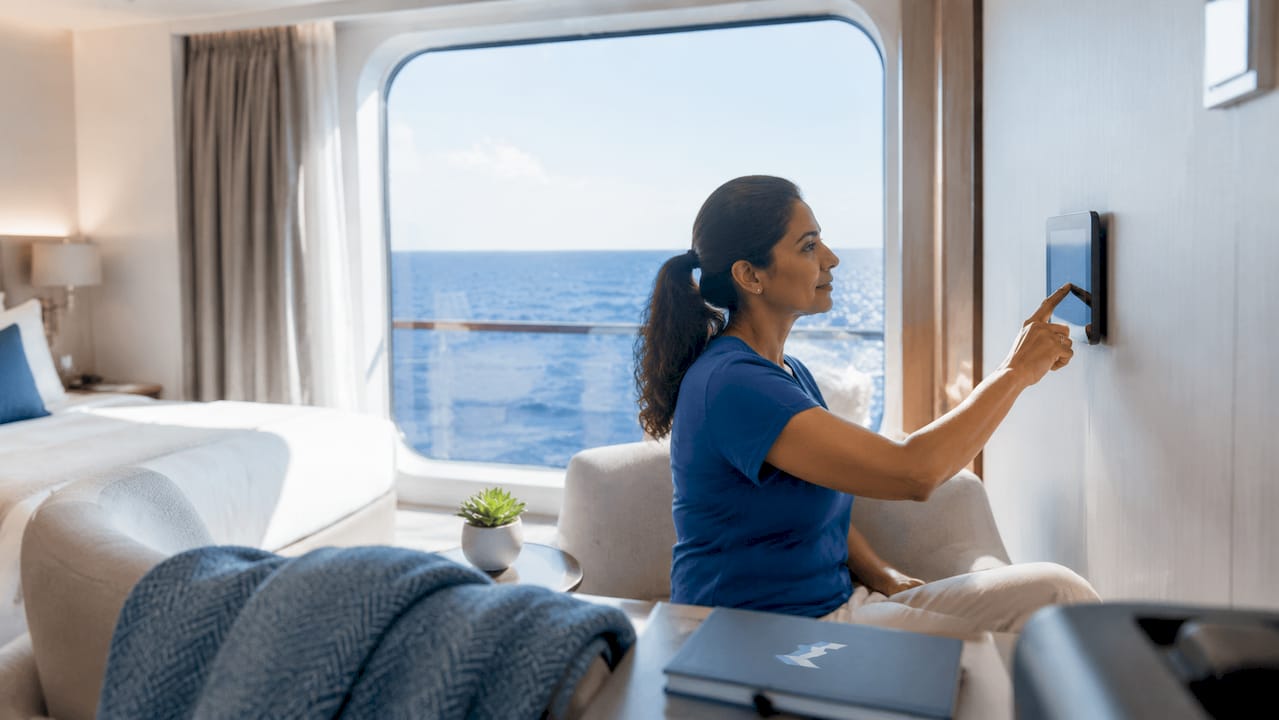
A smart cruise cabin is a stateroom equipped with IoT infrastructure that lets passengers control lighting, climate, entertainment, and services through tablets, apps, and voice assistants. These digitally enhanced rooms represent the fastest-growing category in cruise ship design. Systems like MSC’s ZOE voice assistant can answer over 800 ship-related questions and manage cabin functions remotely. The result is a room that responds to you rather than requiring you to adapt to it. ChooseCruise helps travelers find ships offering exactly this kind of tech-forward experience.
What is a smart cruise cabin, exactly?
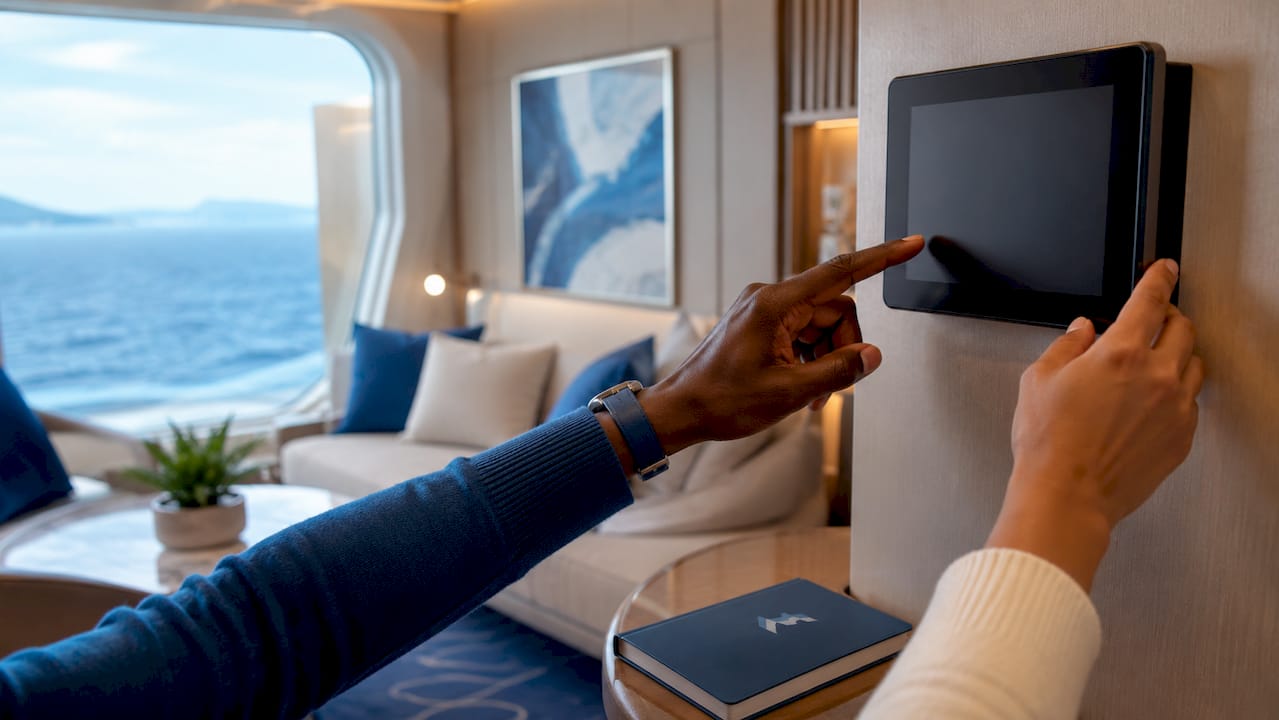
A smart cruise cabin is defined as a stateroom where Internet of Things (IoT) technology connects lighting, temperature, window treatments, entertainment, and door access into a single digital control system. The industry term for this category is “connected stateroom” or “intelligent cabin,” though cruise lines market them under various names. What makes them distinct from a standard cabin is not one feature but the integration of all these controls into one interface, typically a wall-mounted tablet or a companion smartphone app.
The core purpose of smart cabins is to create frictionless self-service experiences by digitalizing functions that once required a phone call to guest services or a walk to the front desk. That shift changes the entire rhythm of your day onboard. Instead of waiting on hold to request a room temperature adjustment or extra towels, you tap a screen. The cabin becomes a control hub rather than just a place to sleep.
This technology also connects to the broader ship ecosystem. Your cabin system links to dining reservations, onboard scheduling, and activity bookings. AI-powered cabin TVs analyze your preferences and past bookings to suggest shows, shore excursions, and restaurant times. The cabin, in effect, acts as a personal concierge that never clocks out.
What are the main features of smart cruise cabins?
Smart cruise cabin features vary by ship class and cruise line, but the core capabilities follow a consistent pattern across the industry.
- Centralized digital controls: A wall tablet or app manages lighting scenes, room temperature, blackout curtains, and the do-not-disturb status from one screen.
- Keyless entry: Wearable bands, smartphone apps, or biometric systems replace the traditional cruise card. Royal Caribbean has patented facial recognition door access with keypad overrides for situations where recognition fails.
- Voice assistants: AI assistants like ZOE handle service requests, answer ship questions, and control cabin functions hands-free.
- Personalization profiles: The system stores your preferred lighting level, temperature, and wake-up settings. Some ships trigger presets automatically based on time of day.
- On-demand entertainment and casting: Passengers stream personal content from their own devices to the cabin TV. Icon-class ships include multiple charging outlets including USB-C and European sockets integrated directly into furniture.
- Virtual balconies: Interior cabins on select ships display real-time, high-definition ocean views on large screens, simulating the feel of an outside room.
Pro Tip: When you first enter your smart cabin, spend 10 to 15 minutes testing every control on the tablet before you unpack. Knowing where each function lives saves real frustration at 11 PM when you cannot figure out how to dim the lights.
The entertainment side of smart cabins deserves special attention. In-cabin AI systems do not just play movies. They track what you have booked, what you have browsed, and what time you tend to return to the cabin. That data shapes the recommendations you see each time you turn on the screen. For travelers who want AI-driven cruise personalization, this is the onboard version of what booking platforms already do before you board.
What are the benefits of smart cruise cabins?
The benefits of smart cabins go well beyond convenience. They reshape the entire onboard experience in ways that matter most to first-time cruisers and frequent travelers alike.
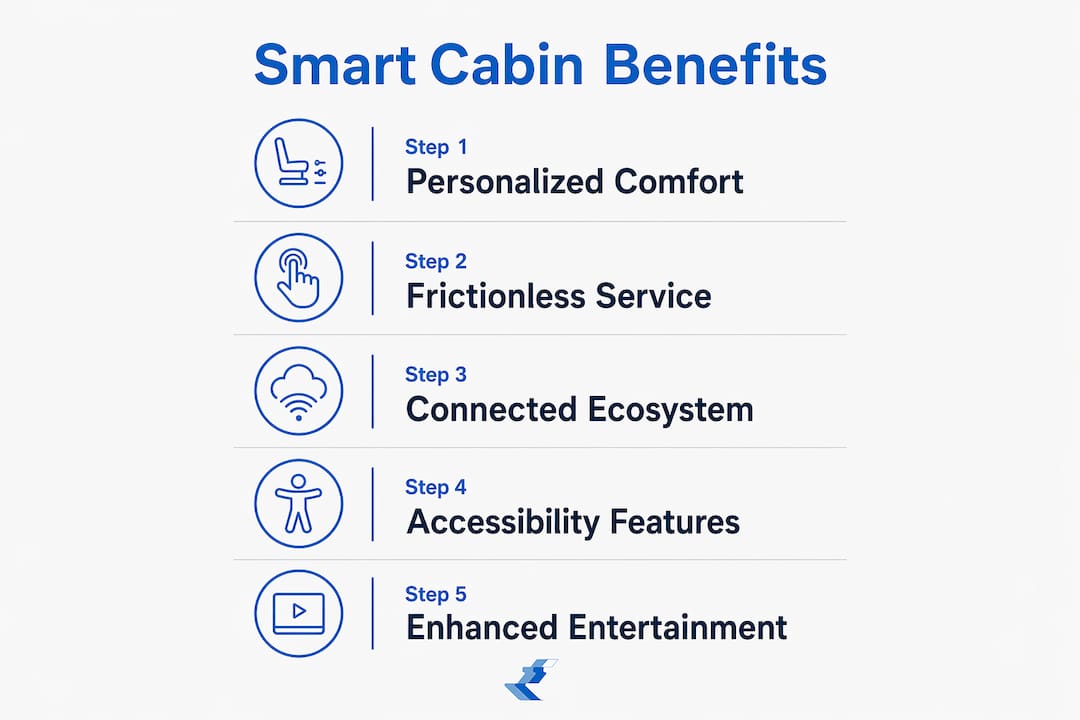
- Hyper-personalization: Your environment adjusts to your schedule, not the ship’s default settings. Climate and lighting presets tied to your profile mean the cabin feels right the moment you walk in.
- Reduced friction: Digital self-service replaces most routine guest service calls. Ordering room service, booking a spa slot, or checking your onboard account balance takes seconds from the cabin tablet.
- Better accessibility: Passengers with mobility limitations benefit significantly from voice-controlled lighting, temperature, and door access. Removing the need to reach physical switches or walk to a phone is a genuine quality-of-life improvement.
- Tighter integration with ship activities: Smart cabin systems connect directly to dining, entertainment, and excursion booking. You can manage your entire day without leaving the room.
- Faster response times: Digital requests route directly to the relevant department rather than passing through a switchboard. That means faster delivery and fewer miscommunications.
The personalization angle is where smart cabins deliver the most value for first-time cruisers. Learning how a ship works can feel disorienting on day one. A cabin system that already knows your preferences and proactively suggests what to do next removes a layer of decision fatigue. For travelers exploring how to personalize a cruise trip, the smart cabin is the starting point, not an add-on.
What are the current limitations of smart cabin technology?
Smart cabin technology in 2026 is both impressive and genuinely unreliable. Travelers who board expecting a flawless digital experience will occasionally be disappointed. Understanding the failure points helps you prepare rather than panic.
-
Tablet crashes lock out multiple functions at once. Because lighting, climate, and entertainment all run through one device, a single system failure can make the cabin temporarily unusable. Forum reports confirm that tablet crashes have left passengers waiting for technicians before they could adjust basic cabin settings.
-
Analog fallbacks are disappearing. Many newer ships remove physical light switches and manual thermostats entirely. The aesthetic looks clean, but it creates operational fragility. When the digital system fails, there is no backup unless a technician intervenes.
-
Facial recognition has real-world failure cases. Sunglasses, hats, or poor lighting can cause biometric door systems to fail. Royal Caribbean’s patent design includes keypad overrides precisely because fallback mechanisms are critical for security and passenger comfort during tech outages.
-
Motion-activated doors can misfire. Sensors that detect hallway movement may lock and unlock repeatedly, which frustrates passengers in cabins near high-traffic corridors.
-
Virtual balconies disrupt sleep. The high-definition screens that simulate ocean views emit blue-spectrum light and generate heat. Passengers report mixed feelings about virtual balconies after extended use, particularly when the screen cannot be fully powered down without affecting other cabin controls.
Pro Tip: Pack a small flashlight and a few pieces of black electrical tape. If your digital controls fail at night, bright status indicator lights on tablets and charging ports can make sleep impossible. Tape over the lights and use the flashlight until a technician arrives.
Privacy concerns add another layer of complexity. Biometric access systems collect and store facial data, which raises legitimate questions about data retention and security. Industry innovators acknowledge that travelers prefer redundancy like physical keys precisely because system downtime is a real and recurring issue. The technology is advancing quickly, but it has not yet reached the reliability level that justifies removing all manual alternatives.
How can travelers make the most of smart cruise cabins?
Getting the most from a connected stateroom requires a small amount of preparation. The goal of smart cabin design is to shift guest interactions from staff to digital self-service. That only works when passengers know how to use the system.
- Learn the interface at embarkation. Spend 10 to 15 minutes exploring the tablet controls before your first meal. Identify where lighting, climate, entertainment, and service requests live.
- Test your manual key or override immediately. Even if your cabin uses wearable or app-based entry, confirm that a physical backup exists and works before you need it.
- Set your personalization profile early. Enter your preferred temperature and lighting settings on day one. The system will apply them automatically for the rest of the voyage.
- Treat the AI assistant as a helpful tool, not a guarantee. Voice assistants like ZOE handle most requests well, but they misunderstand commands or go offline occasionally. Know how to complete the same request manually through the tablet.
- Carry a small flashlight. Experienced cruisers recommend this specifically for smart cabin stays, where digital control failures can leave you without light at inconvenient hours.
Technology is changing how the entire cruise experience works, not just the cabin. Understanding how technology shapes cruise travel in 2026 gives you a clearer picture of what to expect from the moment you book to the moment you disembark.
Key Takeaways
Smart cruise cabins deliver real personalization and convenience, but travelers who prepare for occasional tech failures will have a far better experience than those who do not.
| Point | Details |
|---|---|
| Core definition | A smart cabin uses IoT technology to connect lighting, climate, entertainment, and door access into one digital system. |
| Standout features | Voice assistants, keyless entry, personalization profiles, and AI-driven entertainment recommendations define the category. |
| Real benefits | Hyper-personalization, faster service, and accessibility improvements make smart cabins valuable for all traveler types. |
| Known limitations | Tablet crashes, missing analog backups, and biometric failures are documented issues that require practical workarounds. |
| Best practice | Learn the interface at embarkation, confirm your manual key works, and carry a flashlight as a backup. |
Smart cabins are impressive. They are not yet perfect.
I have followed the rollout of connected stateroom technology closely, and my honest read is this: the marketing is about five years ahead of the engineering. The features are genuinely exciting. A cabin that remembers your preferred temperature, dims the lights automatically at bedtime, and lets you order breakfast without picking up a phone is a real upgrade over a standard room. I do not dismiss that.
What I do push back on is the framing that smart cabins are a luxury without trade-offs. Removing physical switches to create a cleaner aesthetic is a design choice that prioritizes appearance over function. When the tablet goes down, passengers are not just inconvenienced. They are locked out of basic comfort controls in a room they paid a premium for. That is not a minor bug. It is a structural flaw in how these systems are currently built.
The biometric access debate is also worth watching. Facial recognition at cabin doors sounds futuristic, but privacy concerns are legitimate and unresolved. Cruise lines have not published clear data retention policies for biometric data collected onboard. Until they do, I would want a physical key in my pocket regardless of what the app promises.
My advice: book a smart cabin because the personalization features genuinely improve the experience. Go in with realistic expectations. Test everything on day one. And never assume the technology will work perfectly for seven consecutive nights at sea.
— Igor
Find cruises with smart cabin options on ChooseCruise
Knowing what a connected stateroom offers is one thing. Finding a cruise that actually delivers it at the right price is another challenge entirely.
ChooseCruise makes it straightforward to compare cruise deals across ships that feature modern, tech-enhanced cabins. The platform uses AI-powered recommendations to match your preferences with the right itinerary, cabin type, and price point. You can track real-time price drops on sailings that include smart cabin categories, so you never pay more than necessary. If you are ready to book a cruise with the features covered in this article, search current deals on ChooseCruise and filter by cabin type to find exactly what fits your travel style.
FAQ
What is a smart cruise cabin?
A smart cruise cabin is a stateroom equipped with IoT technology that lets passengers control lighting, climate, entertainment, and door access through a tablet, app, or voice assistant. It replaces traditional physical switches and phone-based service requests with a single digital interface.
How does a smart cabin work on a cruise ship?
All cabin systems connect through a central IoT network, which passengers access via a wall-mounted tablet or smartphone app. Voice assistants like ZOE handle requests verbally, while the system stores personal preferences and applies them automatically throughout the voyage.
Are smart cruise cabins worth the extra cost?
Smart cabins deliver genuine value through personalization, faster service, and accessibility features, but they carry a reliability risk when digital systems fail. Travelers who prepare for occasional tech issues and learn the interface early get the most from the upgrade.
What happens if the smart cabin tablet stops working?
A tablet crash can disable lighting, climate, and entertainment controls simultaneously. Passengers should confirm that a manual key or keypad override exists at embarkation and contact guest services immediately if the tablet fails.
Do smart cruise cabins have privacy concerns?
Biometric door access systems collect facial data, and cruise lines have not uniformly published clear data retention policies. Travelers with privacy concerns should ask their cruise line directly about biometric data handling before boarding.
Related reading
6 Best Cruise Destinations 2026 for Smart First-Time Travelers
Discover the 6 best cruise destinations 2026 with expert tips for tech-savvy first-time travelers, including personalized advice for easier cruise booking.
Cruise Package Explained: Stress-Free Vacation Booking
Cruise package means bundled travel with accommodations, meals, entertainment, excursions. Learn the types, inclusions, pros, costs, and mistakes to avoid.
7 Smart Ways to Save on Cruises for Modern Travelers
Discover 7 smart ways to save on cruises with easy, practical tips designed for today’s digital cruise travelers. Learn to maximize value and minimize costs.