What Is an Interactive Cruise Itinerary? First-Timer’s Guide

TL;DR:
- An interactive cruise itinerary is a digital, map-based planning tool that displays real-time routes, port details, and personalized recommendations. It helps first-time cruisers visualize their voyage, compare options side by side, and plan excursions and logistics efficiently. This tool reduces planning complexity, surface critical port information, and increases booking confidence through live data and customization features.
An interactive cruise itinerary is a digital, map-based planning interface that displays real-time cruise routes, port details, and personalized day-by-day recommendations to help you make confident booking decisions. Unlike a static list of ports and dates, this type of tool lets you visualize your entire voyage geographically, compare options side by side, and layer in personal preferences like shore excursions and dining. For first-time cruisers, the difference is significant. ChooseCruise and similar platforms have built these tools specifically to cut through the noise and get you to the right ship faster.
What is an interactive cruise itinerary and how does it work?
An interactive cruise itinerary is a dynamic planning tool that replaces flat text schedules with visual, map-driven interfaces. Modern map tools track data from over 500 ports worldwide, giving you updated route and scheduling information in one place. That scale means you can research a Caribbean loop, a Norwegian fjord route, or a Pacific crossing without switching between a dozen tabs.

The core technology behind these tools combines three layers. First, an interactive map shows your ship’s route, each port of call, and approximate sailing times between stops. Second, real-time data feeds pull in weather conditions, port accessibility, and operational alerts so you know what to expect before you book. Third, AI-driven personalization tailors recommendations based on your answers to a short quiz about travel style, activity level, and interests.
AI-driven quizzes generate packing lists and tailored schedules for 165+ different ships. That level of personalization was previously only available through a travel agent. Now you get it in minutes, on your phone.
Key features you will find in a well-built interactive itinerary tool:
- Map-based route visualization showing each port, sea day, and sailing direction
- Side-by-side voyage comparison so you can weigh two itineraries on duration, port count, and sea days
- Real-time port data including weather, ship traffic, and tendering requirements
- Personalized excursion and dining recommendations based on your preferences
- Safety and operational alerts for weather events or port closures
Pro Tip: Use the side-by-side comparison feature before you look at price. Knowing which itinerary fits your pace makes the price conversation much easier.
Why first-time cruisers benefit most from interactive planning
First-time cruisers carry the heaviest planning burden. You do not yet know the difference between a tender port and a dock port, or why a 12-hour port stop might only give you 9 hours of actual shore time. Interactive itinerary tools surface exactly these details before you commit.
Map-based booking platforms reduce traditional multi-step booking into a single visual interface that improves booking confidence. For a first-timer, that consolidation removes the paralysis that comes from cross-referencing five different websites. You see the route, the price, and the schedule in one screen.
Here is how interactive planning changes the experience for new cruisers:
- Visualize the route before booking. Seeing a map of your Caribbean loop tells you immediately whether you are spending more time at sea or in port. That single visual answers questions most first-timers spend hours researching.
- Understand port logistics. Tender ports reduce a 6-hour stop to about 4 hours of actual shore time. Interactive tools flag this automatically so you can plan accordingly.
- Customize your daily rhythm. Travel advisors note that interactivity lets you adjust trip pacing based on your energy level rather than accepting a one-size-fits-all schedule.
- Book excursions and dining early. Popular dining venues and excursions fill 3–6 months in advance. Seeing your full day-by-day schedule early means you can reserve the spots that matter most.
- Avoid crowded ports. Interactive maps show multiple ships scheduled in the same port simultaneously. You can spot those overlap days and either adjust your itinerary or plan your morning differently.
Pro Tip: Print or save an offline copy of your finalized itinerary before boarding. Ship Wi-Fi is expensive and unreliable, and you will want your schedule accessible without burning data.
For a deeper look at tailoring your first voyage, ChooseCruise has a full guide on personalizing your first cruise that walks through preference setting step by step.
What types of cruise itineraries can you compare interactively?
Not all cruise itineraries are built the same. The three most common categories are perennial itineraries, repositioning cruises, and seasonal routes. Each suits a different traveler profile, and interactive tools make the differences immediately visible.
Perennial itineraries run year-round on fixed routes, typically in the Caribbean or Mediterranean. They are predictable, well-reviewed, and easy to research. These work well for first-timers who want a proven route without surprises.
Repositioning cruises move a ship from one home port to another as seasons change, often crossing an ocean. Some repositioning cruises include 6–7 consecutive sea days. That appeals to travelers who want a slower, more relaxed pace, but it can frustrate anyone expecting daily port stops.
Seasonal itineraries follow specific weather windows, such as Alaska in summer or Antarctica in November through march. They offer unique destinations but require more advance planning.
| Itinerary type | Typical sea days | Best for | Port count |
|---|---|---|---|
| Perennial (Caribbean) | 1–2 per week | First-timers, families | 4–6 ports |
| Repositioning | 6–7 consecutive | Relaxed travelers | 2–4 ports |
| Seasonal (Alaska) | 2–3 per week | Adventure seekers | 4–5 ports |
| Mediterranean loop | 1–2 per week | Culture-focused travelers | 5–8 ports |
Interactive planners let you filter by sea day ratio, port count, and duration simultaneously. That means you can rule out a repositioning cruise in 30 seconds if you know you want daily port stops. For a full breakdown of route categories, the ChooseCruise guide on cruise itinerary types covers seven distinct formats with practical advice on each.
How to create and use an interactive cruise itinerary effectively
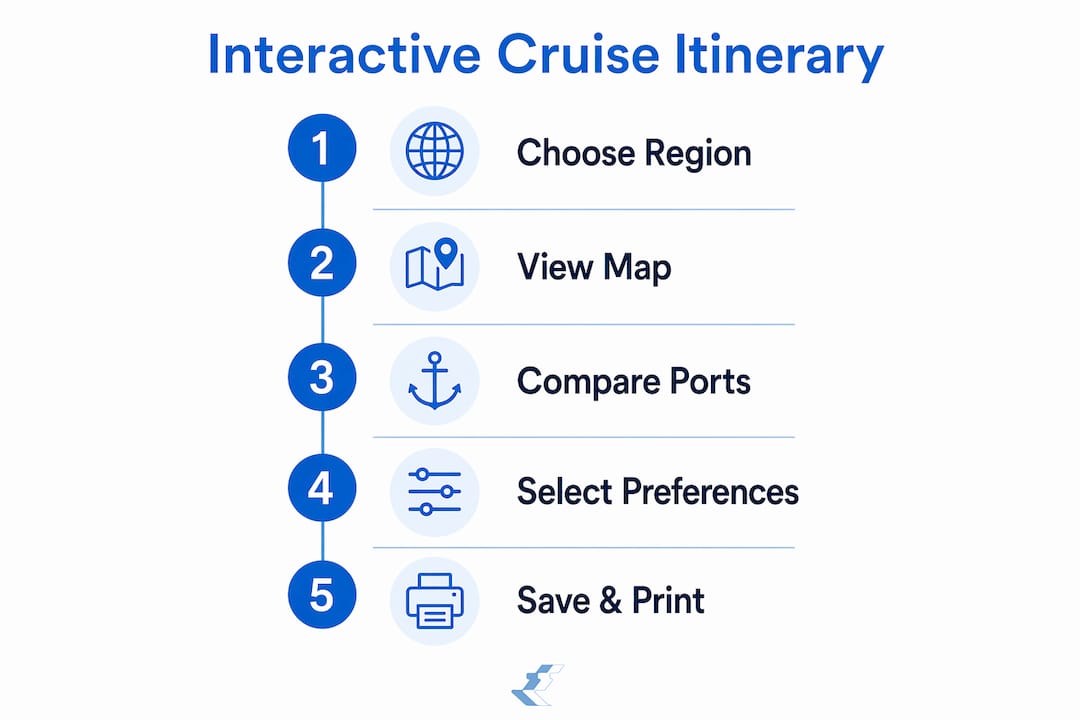
Building a useful interactive itinerary takes about 20 minutes if you approach it with a clear goal. The process is straightforward when you follow a logical order.
Start with the map view. Choose a region and use the visual route display to get a feel for distances and port clusters. The Caribbean, for example, groups Eastern, Western, and Southern routes that look similar on paper but feel very different on a map.
Next, run the AI quiz if the platform offers one. Answer questions about your activity level, interests, and travel party. The quiz output gives you a ranked list of voyages matched to your profile, which cuts the decision field significantly.
Then dig into the details for your top two or three options:
- Check tendering status for each port. A tendered port means you take a small boat to shore, which adds 30–45 minutes each way and reduces your exploration window.
- Look at ship overlap data. Interactive maps show multiple ships scheduled in the same port, helping you avoid peak crowd times at popular stops.
- Review the sea day to port day ratio. A 7-night cruise with 5 port days suits an active explorer. The same cruise with 3 port days suits someone who wants pool time and spa appointments.
- Lock in dining and excursion reservations immediately. Once you choose a sailing, book specialty restaurants and shore tours the same day. Waiting costs you the best slots.
Pro Tip: Cross-reference your port days against local market days or festivals. A port visit that lands on a weekly market day adds a layer of local culture that no excursion brochure can replicate.
For step-by-step guidance on the full booking process, the ChooseCruise cruise planning guide covers everything from deposit to departure.
Key Takeaways
An interactive cruise itinerary is the single most effective tool a first-time cruiser can use to reduce planning stress, visualize the voyage, and book with confidence.
| Point | Details |
|---|---|
| Core definition | An interactive itinerary is a map-based, real-time planning tool, not a static port list. |
| Tender port awareness | Tender ports cut a 6-hour stop to roughly 4 hours of shore time, a fact interactive tools surface automatically. |
| Book early | Popular excursions and dining fill 3–6 months ahead; use your itinerary view to reserve immediately after booking. |
| Itinerary type matching | Filter by sea day ratio and port count to match the voyage to your energy level and travel style. |
| Crowd avoidance | Map tools show overlapping ship schedules in port, letting you plan around peak crowd times. |
Why interactive itineraries changed how I think about cruise planning
The first time I used a map-based cruise planning tool, I realized how much the old way was hiding from travelers. A printed itinerary tells you the port name and the arrival time. It does not tell you that the port requires tendering, that three other ships arrive the same morning, or that the main attraction closes at noon. Interactive tools surface all of that before you spend a dollar.
What surprises most first-timers is how much the ship’s published schedule is just a skeleton. The real itinerary is the one you build on top of it. Excursions, dining reservations, sea day activities, and port logistics all need to be layered in deliberately. First-time cruisers often mistake the ship’s schedule for their complete itinerary. That misunderstanding leads to missed experiences and last-minute scrambling.
The other thing I have noticed is that interactive tools reduce the anxiety of choosing wrong. When you can see two voyages side by side on a map, compare their port counts, and read real-time weather data for the region, the decision stops feeling like a gamble. You are choosing based on actual information, not marketing copy. That shift in confidence is real, and it shows up in how travelers talk about their trips afterward.
My honest recommendation: spend 20 minutes with a map-based planner before you read a single cruise review. The visual context changes everything about how you evaluate options.
— Igor
Plan your next cruise with ChooseCruise
ChooseCruise brings interactive itinerary search, AI-powered recommendations, and real-time price tracking together in one place built for first-time cruisers.
Whether you want a quick 3-day cruise deal or a longer voyage with multiple port stops, ChooseCruise lets you filter by route, duration, and sea day ratio so you find the right fit fast. The map-based interface shows you exactly where your ship goes, which ports require tendering, and when competing ships share your destination. Browse cruise deals and compare itineraries side by side to book with confidence, not guesswork.
FAQ
What is an interactive cruise itinerary?
An interactive cruise itinerary is a digital, map-based planning tool that displays real-time cruise routes, port details, and personalized recommendations in one visual interface. It replaces static port lists with live data on weather, ship schedules, and excursion availability.
How does an interactive itinerary differ from a standard one?
A standard itinerary lists ports and dates in text form. An interactive version shows the same information on a live map with added data like tendering status, port crowd levels, and side-by-side voyage comparisons.
What is a tender port and why does it matter?
A tender port requires passengers to take a small boat from the ship to shore rather than docking directly. This process reduces a 6-hour port stop to roughly 4 hours of actual exploration time, which interactive tools flag clearly so you can plan your day accurately.
How far in advance should I book excursions and dining?
Popular excursions and specialty dining venues fill 3–6 months before departure. Booking immediately after you confirm your sailing gives you the best selection and avoids last-minute disappointment.
Can I use an interactive itinerary on my phone during the cruise?
You can access most interactive itinerary platforms on mobile before boarding, but ship Wi-Fi is limited and costly at sea. Save or print your finalized itinerary before departure so you have full access without relying on onboard connectivity.
Recommended
Related reading
6 Best Cruise Destinations 2026 for Smart First-Time Travelers
Discover the 6 best cruise destinations 2026 with expert tips for tech-savvy first-time travelers, including personalized advice for easier cruise booking.
Cruise Package Explained: Stress-Free Vacation Booking
Cruise package means bundled travel with accommodations, meals, entertainment, excursions. Learn the types, inclusions, pros, costs, and mistakes to avoid.
7 Smart Ways to Save on Cruises for Modern Travelers
Discover 7 smart ways to save on cruises with easy, practical tips designed for today’s digital cruise travelers. Learn to maximize value and minimize costs.