Why Cruise Deals Change: Real-Time Price Factors

Booking your first cruise can feel overwhelming when deals seem to change overnight and hidden costs disrupt your budget. For tech-savvy European travelers in their twenties to forties, understanding how cruise offers work is the key to avoiding expensive mistakes and getting the best value. This guide breaks down what a real cruise deal includes, debunks common myths, and highlights how dynamic pricing and real-time strategy can help you book smarter and save more.
Table of Contents
- Cruise Deals Defined And Common Misconceptions
- Types Of Cruise Deals And Seasonal Variations
- How Dynamic Pricing Shapes Cruise Offers
- Booking Timing, Upgrades, And Real-Time Adjustments
- Financial Implications And Mistakes To Avoid
Key Takeaways
| Point | Details |
|---|---|
| Understanding Cruise Deals | A cruise deal includes accommodations, meals, entertainment, and port fees, distinguishing it from simple discounts in pricing. |
| Misconceptions of Cruise Demographics | Cruises attract not only older travelers but also younger couples and families, making them a diverse vacation option. |
| Dynamic Pricing Strategies | Prices fluctuate daily based on demand and occupancy, offering potential savings for travelers who monitor prices closely. |
| Hidden Costs Awareness | Be aware of additional expenses like gratuities and excursions that can significantly increase the total cost of a cruise beyond the advertised fare. |
Cruise Deals Defined and Common Misconceptions
A cruise deal isn’t just a discounted price tag. It’s a bundled offering that combines passage on a specialized leisure vessel with accommodations, dining, and onboard amenities for a set itinerary lasting at least one night. Understanding what you’re actually getting prevents costly booking mistakes.
Many first-time cruisers confuse deals with simple discounts. A real cruise deal includes the cabin, meals in main dining venues, basic entertainment, and port calls. What makes it a “deal” depends on value—how much you’re paying relative to what’s included, compared to booking each element separately.
What Cruise Deals Actually Include
Here’s what typically comes bundled:
- Cabin accommodation for your entire voyage
- Breakfast, lunch, and dinner in main dining rooms
- Access to theaters, gyms, and swimming pools
- Most onboard entertainment and activities
- Ports of call and docking fees
- Basic beverages (varies by cruise line)
When you see “all-inclusive” marketing, that’s misleading. Specialty restaurants, premium beverages, spa services, and excursions cost extra. Understanding cruise fare types helps you distinguish between what’s covered and what’ll drain your vacation budget.
The Biggest Misconception: Cruises Are Only for Older Travelers
This myth persists because marketing traditionally targeted retirees. Reality? Modern cruise lines actively attract younger couples and families with adults aged 25-45. Wave pools, nightclubs, specialty dining, and adventure excursions appeal to your demographic. Cruising myths debunk this notion completely—younger travelers represent one of the fastest-growing segments.
Another Major Misconception: Cruises Are Overpriced
Many first-timers assume cruises cost more than land-based vacations. The truth: bundled pricing often delivers better value. You’re paying one price for transportation, lodging, food, and entertainment. Land vacations require separate hotel, restaurant, and activity payments. A seven-day cruise might cost $800 per person including everything; a land trip covering the same ground costs significantly more when itemized.
Cruise deals leverage economies of scale—feeding hundreds at once costs less per person than restaurant meals, making bundled pricing genuinely competitive.
The Promotional Code Misconception
First-timers often think promotional codes are secret hacks. They’re standard marketing tactics. Cruise lines offer codes publicly through email, websites, and travel sites. Using codes doesn’t mean you’re getting a special price—it’s the standard pricing mechanism. Everyone searching for deals finds the same codes.
Why Deal Prices Appear to Drop Without Warning
Here’s what confuses most first-time cruisers: prices genuinely change daily. Cruise deals fluctuate based on real-time demand, capacity, and booking patterns. That $1,200 per-person price drops to $900 three weeks later not because it’s clearance—it’s because the sailing isn’t full and cruise lines adjust pricing to fill cabins.

This isn’t negotiable pricing or last-minute desperation. It’s dynamic pricing, identical to airline ticket pricing models.
Pro tip: Set up price monitoring alerts for your desired sailing; prices often dip 4-8 weeks before departure when cruise lines adjust capacity projections, giving you genuine savings opportunities.
Types of Cruise Deals and Seasonal Variations
Cruise deals aren’t one-size-fits-all. They vary dramatically by deal type and season, which means the same sailing might be priced completely differently depending on when you book. Knowing these variations helps you time your booking perfectly.
The cruise industry segments deals into distinct categories based on pricing structure, destination focus, and target booking windows. Understanding these categories reveals why your ideal cruise might be cheaper in October than June.
Main Types of Cruise Deals
Cruise operators structure deals around several core models:
- Wave season deals occur in January through March when cruise lines release their biggest promotional codes and pricing incentives to fill future sailings
- Early-bird specials reward planners booking 6-12 months ahead with significantly lower per-person rates
- Last-minute deals appear 4-8 weeks before departure when cabins remain unsold and pricing drops to fill capacity
- Repositioning cruises offer discounted rates on longer voyages that move ships between seasonal destinations (like moving from Caribbean to Alaska)
- Regional promotions target specific geographic markets with localized pricing (European promotions differ from North American pricing)
Seasonal demand patterns shape pricing strategy throughout the year, directly affecting which deals appear when.
Here’s a quick overview of cruise deal types and their ideal booking timing:
| Deal Type | Ideal Booking Window | Typical Discount Range | Best For |
|---|---|---|---|
| Wave Season | January to March | Up to 40% off base fares | Future planners |
| Early-Bird | 6-12 months in advance | 15-25% below peak rates | Flexible travelers |
| Last-Minute | 4-8 weeks before departure | 20-50% off late occupancy | Bargain seekers |
| Repositioning | Seasonal ship transitions | 35-60% off longer trips | Adventurous guests |
How Seasonality Drives Deal Availability
Peak season (June-August, December) means higher baseline prices and fewer discounts. Families with school-age children drive demand, so cruise lines charge premium rates. Early-bird bookings from the previous year already fill many cabins.
Shoulder season (April-May, September-November) offers better deals than peak but higher prices than off-season. Weather remains favorable in most destinations, yet booking demand drops enough for cruise lines to offer moderate discounts.
Off-season (January-March, excluding wave season) provides your deepest discounts outside wave season. Hurricane season in the Atlantic (June-November) reduces Caribbean cruise demand, and winter weather limits northern European itineraries, creating pricing opportunities.
Wave season—January through March—is when cruise lines release the year’s best promotional codes and pricing, making it the single most important booking window for savvy travelers.
Geographic and Destination Variations
Destinations shift seasonally, and availability follows. Caribbean cruises peak December through April when European weather is cold. Alaskan cruises concentrate May through September during the brief summer season. Mediterranean sailings maximize June through September when weather is optimal.
Each destination’s high season means higher pricing. Booking your preferred destination during its shoulder or off-season dramatically reduces costs.
Premium vs. Value Deal Structures
Cruise lines offer tiered pricing models targeting different traveler profiles. Premium cabin deals emphasize luxury amenities and higher-end pricing; value deals emphasize affordability and basic accommodations. Both can represent legitimate “deals” if priced competitively for their category.
Understanding how cruise pricing works helps you evaluate whether a deal is genuinely competitive or simply standard pricing marketed aggressively.
Pro tip: Monitor wave season closely (January-March) and book your preferred sailing then—you’ll capture the year’s best promotional rates before peak demand pushes prices upward.
How Dynamic Pricing Shapes Cruise Offers
Dynamic pricing means cruise operators adjust prices constantly based on real-time market conditions. Your ideal cruise might cost $899 per person on Monday and $749 on Thursday. This isn’t random—it’s algorithmic strategy optimizing revenue and capacity simultaneously.
Unlike static pricing where a cruise costs the same regardless of booking timing, dynamic pricing treats each sailing like an airline route. Supply, demand, competitor pricing, and booking patterns all feed into automated pricing algorithms that recalibrate offers multiple times daily.
The Core Mechanics of Dynamic Pricing
Cruise operators adjust prices based on supply and demand dynamics to maximize revenue while filling cabins. Here’s how it actually works:
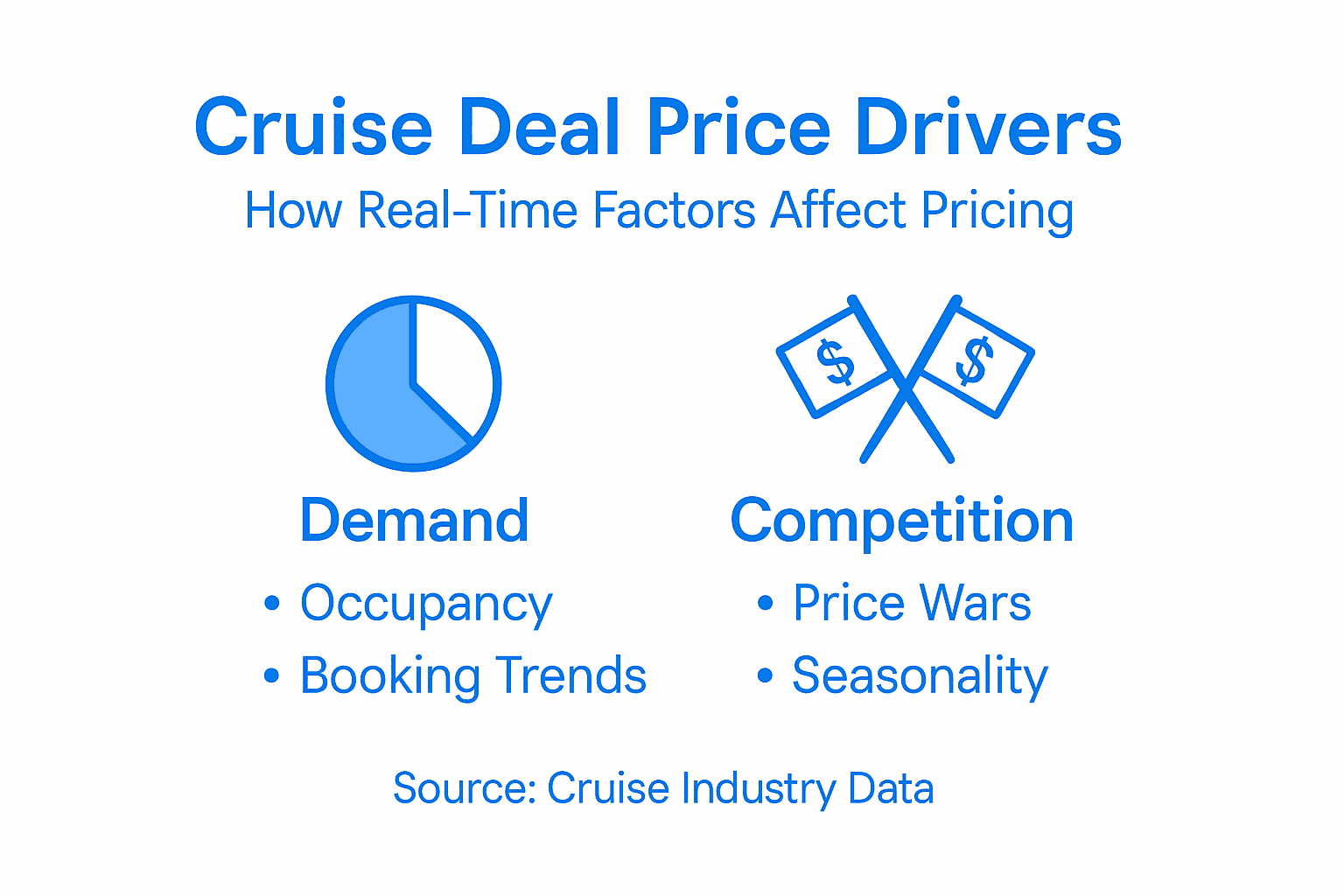
- Occupancy rates trigger price changes—if a sailing is 60% booked three weeks out, prices drop to incentivize final bookings
- Booking velocity matters enormously—fast sales mean raising prices; slow sales mean reducing them
- Competitive positioning requires monitoring rival cruise lines’ pricing for comparable itineraries
- Time-to-departure windows follow predictable patterns—prices typically shift at 12 weeks, 8 weeks, 4 weeks, and 2 weeks before departure
- Historical booking patterns inform predictions; cruise lines know October Caribbean sailings underperform and price accordingly
Why Prices Drop Weeks Before Departure
You’ve likely noticed: that $1,200 cruise drops to $850 five weeks before departure. This happens because booking curves are predictable. Cruise lines know most bookings occur months in advance through early-bird programs.
When actual bookings fall short of projections, pricing algorithms automatically reduce fares to fill remaining cabins. It’s not desperation—it’s optimization. An $850 cabin sale beats zero revenue from an empty suite.
Dynamic pricing transforms cruise inventory into perishable assets; unsold cabins on departure day generate zero revenue, making aggressive price cuts logical economics.
How Competitors Influence Your Deal
Cruise lines monitor each other obsessively. If competitor A drops Caribbean pricing by 15%, competitor B adjusts within hours. Your desired cruise might suddenly become cheaper not because demand shifted, but because a rival adjusted their strategy.
This competitive pressure works in your favor—price wars create genuine savings when operators battle for market share.
The Role of Data in Modern Pricing
Real-time market dynamics shape pricing adjustments across destinations and seasons. Sophisticated algorithms analyze thousands of variables: historical bookings, weather forecasts, event calendars, fuel costs, even currency exchange rates for European bookings.
This complexity means you cannot predict exact pricing. You can only understand the mechanics and leverage them strategically.
Pro tip: Set price alerts for your desired sailing and watch the trend—prices typically dip most aggressively 4-6 weeks before departure when cruise lines finalize capacity projections and adjust accordingly.
Booking Timing, Upgrades, and Real-Time Adjustments
When you book dramatically affects what you pay and what you receive. Early bookings lock in lower per-person rates; last-minute bookings create opportunities for steep discounts or unexpected cabin upgrades. Understanding this timing dance prevents regret and maximizes value.
Cruise deals aren’t static offers. They shift hourly based on real-time occupancy data. Savvy travelers leverage these shifts intentionally rather than booking randomly and hoping for luck.
The Early Booking Advantage
Booking 6-12 months before departure typically secures the lowest base prices. Here’s why cruise lines incentivize early commitment:
- Predictability helps operators plan staffing, provisioning, and itinerary details
- Cash flow improves when deposits arrive months early
- Marketing value grows as early bookings validate demand
- Promotional codes bundled with early bookings offer better perks than last-minute codes
Early bookings often secure better rates and benefits directly from cruise lines, meaning you pay less per person in most cases.
The trade-off: you commit months ahead without flexibility, and you pay the full balance weeks before departure.
The Last-Minute Deal Window
Prices sometimes plummet 4-8 weeks before departure. This happens when actual bookings fall short and cruise lines aggressively cut fares to fill cabins. A sailing at 65% occupancy three weeks out triggers automatic price reductions.
However, last-minute deals come with constraints. Cabin selection is limited—premium categories may be sold out. Onboard credit or beverage packages rarely accompany last-minute deals. You pay less but receive fewer perks.
Last-minute deals represent genuine savings, but early-bird packages often deliver better overall value when combining discounted pricing with included benefits.
Automatic Cabin Upgrades: When and Why They Happen
Cruise lines automatically upgrade cabins to fill specific categories when demand patterns shift unexpectedly. If premium inside cabins sell faster than predicted while oceanview cabins languish, you might receive a surprise upgrade.
Real-time inventory management triggers automatic upgrades when balancing occupancy across cabin types. These upgrades appear days or weeks before departure—sometimes on your final payment statement.
You can’t predict upgrades, but you can position yourself by booking during high-inventory periods when surplus cabins create upgrading opportunities.
Purchased Upgrades vs. Complimentary Upgrades
Some cruise lines offer paid upgrade options during booking: spend $200 extra for a guaranteed oceanview cabin instead of interior. Other lines reserve upgrade decisions for operational management, making them complimentary surprises.
Understanding available upgrade options helps you decide whether purchasing guaranteed upgrades makes sense or waiting for complimentary assignments is worth the uncertainty.
Real-Time Price Monitoring Strategy
Modern travel sites track price changes hourly. Setting alerts for your desired sailing reveals pricing patterns. Most sailings show their deepest discounts in 4-6 week windows before departure.
Monitoring doesn’t require constant checking—automated alerts notify you of price drops exceeding your threshold, eliminating the need for manual searching.
Pro tip: Book early if you prefer planning certainty and maximum perks, or monitor prices closely during the 4-8 week window before departure for potential savings if you prioritize price over flexibility.
Financial Implications and Mistakes to Avoid
That advertised $599 cruise price rarely reflects what you’ll actually spend. Hidden costs derail budgets faster than price fluctuations. Understanding what’s excluded from cruise deals prevents sticker shock and buyer’s remorse.
First-time cruisers often book based on per-person base pricing alone, overlooking mandatory fees that transform deals into disappointments. Avoiding these financial pitfalls requires understanding what “all-inclusive” really means.
The Hidden Costs That Nobody Mentions
Cruise pricing separates into base fare and add-ons. Here’s what typically costs extra:
- Gratuities (15-18% of cruise fare) are automatically added to your final bill
- Specialty dining restaurants charge $15-45 per person per meal beyond main dining room
- Shore excursions range $50-300 per person depending on destination and activity
- Beverages (alcoholic and premium) cost $7-15 each outside your cabin
- Onboard services like spa, internet, and photos add $100-400+ per week
Understanding pricing structures helps you budget accurately and avoid financial surprises when final bills arrive.
A “$599” cruise becomes $1,100+ per person once you add these mandatory and optional expenses.
Here’s a comparison of typical cruise expenses versus land vacations for financial planning:
| Expense Category | Seven-Day Cruise (per person) | Land Vacation (per person) | Notes |
|---|---|---|---|
| Lodging | Included in fare | $75-$200/night, paid separately | Cruise fares bundle lodging |
| Meals | Main dining included | $25-$60/day, paid separately | Specialty meals extra on both |
| Entertainment | Theater/activities included | $15-$45 per activity | Cruise includes basic events |
| Transportation | Ship travel included | Flights, train, rental car | Separate for land vacation |
| Hidden Fees | Gratuities, excursions, etc. | Resort fees, taxes, etc. | Both require extra budgeting |
The All-Inclusive Myth
Cruise lines use “all-inclusive” marketing loosely. What’s actually included: cabin, main dining, basic entertainment, and ports. What’s excluded: nearly everything else. Beverages, premium restaurants, excursions, and services require separate payments.
Compare this to land vacations where hotel, meals, and activities are typically distinct purchases you budget separately. Cruise pricing bundles some elements while excluding others, creating confusion.
The most expensive cruise deals are those booked at lowest prices without understanding hidden costs; a moderately-priced cruise with transparent add-ons costs less overall.
The Timing Trap
Waiting too long to book eliminates deal options entirely. While last-minute deals seem attractive, they’re only valuable if cabins remain available at your preferred sailing.
If you wait until two weeks before departure and your cruise is 90% full, available cabins might be interior cabins far from elevators—poor value despite low pricing. Delaying bookings limits your options and increases costs when premium categories are already sold.
Comparison Shopping Mistakes
Comparing prices across cruise lines requires precision. One line’s “all-inclusive” package includes beverages; another’s doesn’t. Per-person pricing differs between interior and oceanview cabins. Gratuity policies vary.
Direct comparison requires identifying identical cabin types, destinations, and dates across operators. Many first-timers compare advertised prices without standardizing these variables, leading to false conclusions about value.
Budget-Building Framework
Calculate true cruise costs by itemizing three categories:
- Base fare (per-person cabin cost)
- Mandatory adds (gratuities, taxes, port fees already included or automatically added)
- Discretionary spending (excursions, specialty dining, beverages, services)
Multiply per-person costs by passenger count. Add flights and pre-cruise transportation. This reveals actual trip cost, not advertised price.
Pro tip: Before booking, create a detailed budget spreadsheet listing base fare, gratuities, estimated excursions, beverage costs, and onboard services to understand true per-person spend and compare deals accurately.
Stay Ahead of Changing Cruise Prices with ChooseCruise
Understanding how real-time factors shape cruise deal prices can feel overwhelming. Dynamic pricing, booking timing, and competitor moves all influence the cost you see. Many travelers struggle to track these shifts and miss out on the best offers or pay more than necessary. The challenge is clear: you want a smarter way to monitor changing fares and confidently secure your ideal cruise at the right price without endless searching.
ChooseCruise is built specifically for travelers like you who value real-time insights and simplicity. Our platform offers AI-powered cruise recommendations tailored to your preferences and interactive price tracking that alerts you the moment fares drop. You no longer need to guess or wait—get reliable updates on cruise deals and optimal booking windows to plan with confidence.
Discover a faster, easier way to navigate fluctuating cruise prices and capture genuine savings now. Visit ChooseCruise to explore tailored options, set up personalized alerts, and book your next cruise with less effort and more control.
Frequently Asked Questions
What factors cause cruise deals to fluctuate in price?
Cruise deals fluctuate primarily due to real-time demand, occupancy rates, and competitive pricing actions from other cruise lines. When demand for a specific cruise is lower than expected, prices may drop to encourage bookings.
How can I effectively monitor cruise deal prices before booking?
Setting up price alerts on travel websites allows you to track fluctuations in cruise deals. Most sailings tend to show their best prices 4-6 weeks before departure, making this the ideal time to monitor prices closely.
Why do cruise prices appear to drop shortly before departure?
Cruise prices may drop shortly before departure as cruise lines adjust rates based on occupancy levels. If a cruise is not selling well and is below certain occupancy thresholds, prices can drop to attract last-minute bookings.
Are last-minute cruise deals truly a good value?
Last-minute cruise deals can offer significant savings, but they come with limited availability and may lack some perks, such as guaranteed cabin categories or onboard credits. Early-bird bookings often provide better overall value when considering included benefits.
Recommended
Related reading
7 Smart Ways to Save on Cruises for Modern Travelers
Discover 7 smart ways to save on cruises with easy, practical tips designed for today’s digital cruise travelers. Learn to maximize value and minimize costs.
Understanding Why Mobile Cruise Booking Matters
Discover why mobile cruise booking is essential. Explore its benefits and how it enhances the cruising experience for tech-savvy travelers.
Understanding the Best Cruise Lines for Beginners
Discover the best cruise lines for beginners, understanding what they offer and why they matter for first-time cruisers.