Best Deals on Mediterranean Cruises: 2026 Budget Guide

TL;DR:
- Booking 9 to 12 months ahead offers the lowest fares and the best cabin choices.
- Choosing shoulder-season departures reduces costs, crowds, and enhances the overall experience.
The best deals on Mediterranean cruises combine affordable base fares, included meals and entertainment, and itineraries that match what you actually want to see. A low sticker price means nothing if you pay extra for every meal, excursion, and Wi-Fi minute. Budget-conscious travelers aged 25–60 get the most value by assessing total trip cost rather than chasing the cheapest headline fare. This guide covers when to book, which routes save you money, and the insider moves most travelers overlook.
1. When to book for the best deals on Mediterranean cruises
Booking 9–12 months in advance is the single most reliable way to secure low fares and your preferred cabin category. Travel experts at Cruise Critic confirm that earlier bookings consistently outperform last-minute deals for Mediterranean sailings, especially in summer.
Last-minute deals do exist, but they are inconsistent. True last-minute discounts typically appear 30–60 days before sailing and rarely cover peak july and august departures. If your dates are flexible and you can pack a bag on short notice, last-minute can work. For most travelers with jobs, families, or fixed vacation windows, it is a gamble not worth taking.
- Book 9–12 months out for peak summer sailings (july and august)
- Target 6–9 months out for shoulder season departures (may, june, september, october)
- Watch for early-bird promotions that include free drink packages or onboard credits
- Set price alerts the moment you identify a sailing you want
Pro Tip: Book your preferred cabin early, then monitor prices. Many cruise lines allow you to rebook at a lower rate if the price drops before final payment.

2. Best regions for affordable Mediterranean cruise itineraries
Not all Mediterranean routes cost the same. The region you choose has a direct impact on your total spend, from port fees to shore excursion prices.
Western Mediterranean routes call at Barcelona, Rome (Civitavecchia), Marseille, and Palma de Mallorca. These are the most popular itineraries, which means more competition among cruise lines and frequent promotional pricing. Flight connections into Barcelona and Rome are plentiful and affordable, which lowers your total trip cost before you even board.
Eastern Mediterranean routes covering Croatia, Turkey, and Greece tend to run 10–20% cheaper than comparable Western Mediterranean sailings. Lower port fees and reduced demand drive that gap. The cultural payoff is also strong: Dubrovnik, Istanbul, and Santorini deliver experiences that rival anything in the west at a lower price point.
| Region | Typical Itinerary Length | Relative Price | Best For |
|---|---|---|---|
| Western Mediterranean | 7–10 nights | Moderate to high | First-time cruisers, city lovers |
| Eastern Mediterranean | 7–12 nights | Lower | Culture seekers, budget travelers |
| Greek Isles | 7–10 nights | Moderate | Island hoppers, history fans |
| Adriatic (Croatia focus) | 7–10 nights | Lower | Off-the-beaten-path travelers |
The Greek Isles deserve a specific note. Passenger caps at popular ports like Santorini now limit daily visitor numbers. This affects itinerary scheduling and shore time, so check your cruise line’s confirmed port hours before booking.
3. Off-season and shoulder season timing
Peak season Mediterranean cruises in july and august carry premium fares and crowded ships. Shoulder months, specifically may, june, september, and october, offer a better balance of price, weather, and experience.
May and october are the sweet spots for budget travelers. Temperatures are comfortable, major attractions are less crowded, and fares drop noticeably compared to summer peaks. September is ideal if you want warm water for swimming without the july price tag. June sits in the middle: prices start climbing but have not yet hit peak levels.
Traveling in shoulder season also reduces onboard costs. Fewer passengers mean shorter lines at specialty restaurants, easier shore excursion bookings, and a more relaxed atmosphere overall. The savings compound across the whole trip.
4. What to look for beyond the base price
The base fare is just the starting point. Comparing total inclusions rather than base price alone is the standard approach among experienced cruise travelers, and it is the right one.
A cruise priced at $899 per person with meals, entertainment, and basic Wi-Fi included often costs less overall than a $699 fare where you pay separately for every meal and activity. Run the numbers before you commit. Ask specifically about:
- Meal plan coverage (main dining room vs. specialty restaurants)
- Drink packages and whether they are included or add-on
- Wi-Fi pricing per day
- Gratuity policies (some lines include them, others charge $15–$20 per person per day)
- Onboard credit amounts and restrictions
Pro Tip: Request an itemized cost breakdown from your booking agent or platform before finalizing. Add up the extras you know you will use. The “cheaper” cruise often is not.
5. Choosing the right embarkation port
Your embarkation port affects your total trip cost more than most travelers realize. Flying into major hubs like Rome, Barcelona, or Athens costs significantly less than routing through smaller secondary airports. The flight savings alone can offset a higher cruise fare.
Barcelona and Rome are the two most popular Western Mediterranean departure points. Both have multiple daily transatlantic flights from major U.S. cities, strong public transit connections to the cruise terminals, and affordable pre-cruise hotel options. Athens serves as the primary Eastern Mediterranean hub with similar advantages.
Avoid the temptation to book a cruise departing from a smaller port just because the fare looks attractive. If you need two connecting flights and an expensive transfer to reach the terminal, you have erased the savings before the ship leaves the dock.
6. Shore excursions: the hidden budget killer
Shore excursions are where cruise budgets quietly collapse. Ship-sponsored tours run 20–40% more expensive than independently booked alternatives for the same experience. That gap adds up fast across a 10-night itinerary with seven port days.
The smart approach is to mix both. Book ship-sponsored excursions for ports where timing is tight or logistics are complex, such as a full-day trip to Pompeii from Naples. For straightforward ports like Dubrovnik or Barcelona, book independently through local operators or platforms like Viator and GetYourGuide. You get the same tour, often with a smaller group, at a lower price.
Independent booking does require advance planning. Popular tours in peak season sell out weeks ahead. Research your ports before you board and have reservations confirmed before the ship docks.
7. Using price trackers and alerts effectively
Price drop trackers are one of the most underused tools for finding Mediterranean cruise discounts. Setting an alert the moment you identify a sailing means you capture reductions automatically rather than checking manually every week.
ChooseCruise offers a cruise price drop tracker that monitors fares in real time and notifies you when prices fall on sailings you are watching. This is especially useful in the 6–9 month window before departure, when cruise lines frequently adjust pricing to fill remaining inventory.
Price alerts work best when you have already done your research. Know your preferred itinerary, cabin category, and travel dates before you set alerts. Vague monitoring produces vague results.
8. Repositioning cruises and mixed-category sailings
Repositioning cruises are one of the best-kept secrets in affordable Mediterranean vacations. These sailings move a ship from one region to another at the start or end of a season, often crossing the Atlantic or repositioning within Europe. Fares run significantly lower than standard itineraries because the cruise line needs to fill the ship for a logistically necessary voyage.
The trade-off is more sea days and fewer port stops. For travelers who enjoy the ship itself, that is a feature rather than a flaw. Repositioning cruises from the Mediterranean back to the Caribbean in october and november regularly offer strong value.
Mixed-category sailings, where you book an interior cabin on a premium line rather than a balcony on a budget line, are another underrated move. The dining, entertainment, and service quality on a premium line often justifies the trade-off in cabin size.
9. Loyalty programs and travel agent advantages
Cruise line loyalty programs reward repeat travelers with cabin upgrades, onboard credits, and priority boarding. If you have sailed with a specific line before, always check your loyalty tier before booking. Even a modest credit from a previous sailing can reduce your out-of-pocket costs on the next trip.
Travel agents with CLIA (Cruise Lines International Association) certification have direct access to group rates, exclusive promotions, and added-value perks that are not publicly listed on booking platforms. A good CLIA-certified agent often secures better total value than booking directly, particularly for complex itineraries or back-to-back sailings.
The combination of a loyalty discount, a CLIA agent’s group rate, and a shoulder-season departure can stack into a genuinely significant saving on a Mediterranean cruise package deal.
Key takeaways
The best Mediterranean cruise deals come from booking 9–12 months early, choosing shoulder-season departures, and comparing total inclusions rather than base fares alone.
| Point | Details |
|---|---|
| Book early for best pricing | Booking 9–12 months ahead secures the lowest fares and best cabin selection. |
| Shoulder season saves money | May, june, september, and october offer lower prices and fewer crowds than peak summer. |
| Eastern Med costs less | Eastern Mediterranean routes run 10–20% cheaper than comparable Western sailings. |
| Total cost beats sticker price | Compare all inclusions, gratuities, and Wi-Fi before deciding which fare is truly cheaper. |
| Independent excursions cut costs | Booking tours outside the ship saves 20–40% per excursion without sacrificing quality. |
My honest take on finding real value in Mediterranean cruises
The biggest mistake I see budget travelers make is treating the base fare as the whole story. A $699 cruise that charges separately for meals, drinks, and gratuities can easily cost $1,200 per person by the time you disembark. Meanwhile, a $999 all-inclusive fare on the same route leaves you with zero surprises at checkout.
The second mistake is gambling on last-minute deals for peak summer sailings. I understand the appeal. The idea of snagging a $499 Mediterranean cruise two weeks before departure feels exciting. The reality is that july and august sailings fill up. The cabins left at the last minute are the ones nobody wanted, at prices that reflect desperation on your end, not generosity from the cruise line.
What actually works is planning nearly a year out, targeting shoulder months, and using a platform that tracks price drops so you can rebook if fares fall. The travelers I have seen get the best value are not the ones who waited for a miracle deal. They are the ones who planned their booking steps methodically and stayed flexible on itinerary within a fixed travel window.
Read the fine print on every “deal.” Free drink packages that exclude beer and wine are not free drink packages. Onboard credits that expire before the last sea day are not credits you will use. The best Mediterranean cruise deal is the one where you understand exactly what you are getting before you hand over your credit card.
— Igor
ChooseCruise makes finding Mediterranean deals faster
Sorting through hundreds of Mediterranean cruise options across multiple lines, departure dates, and cabin categories takes hours. ChooseCruise cuts that time down by pulling real-time pricing, tracking price drops, and matching itineraries to your travel preferences in one place.
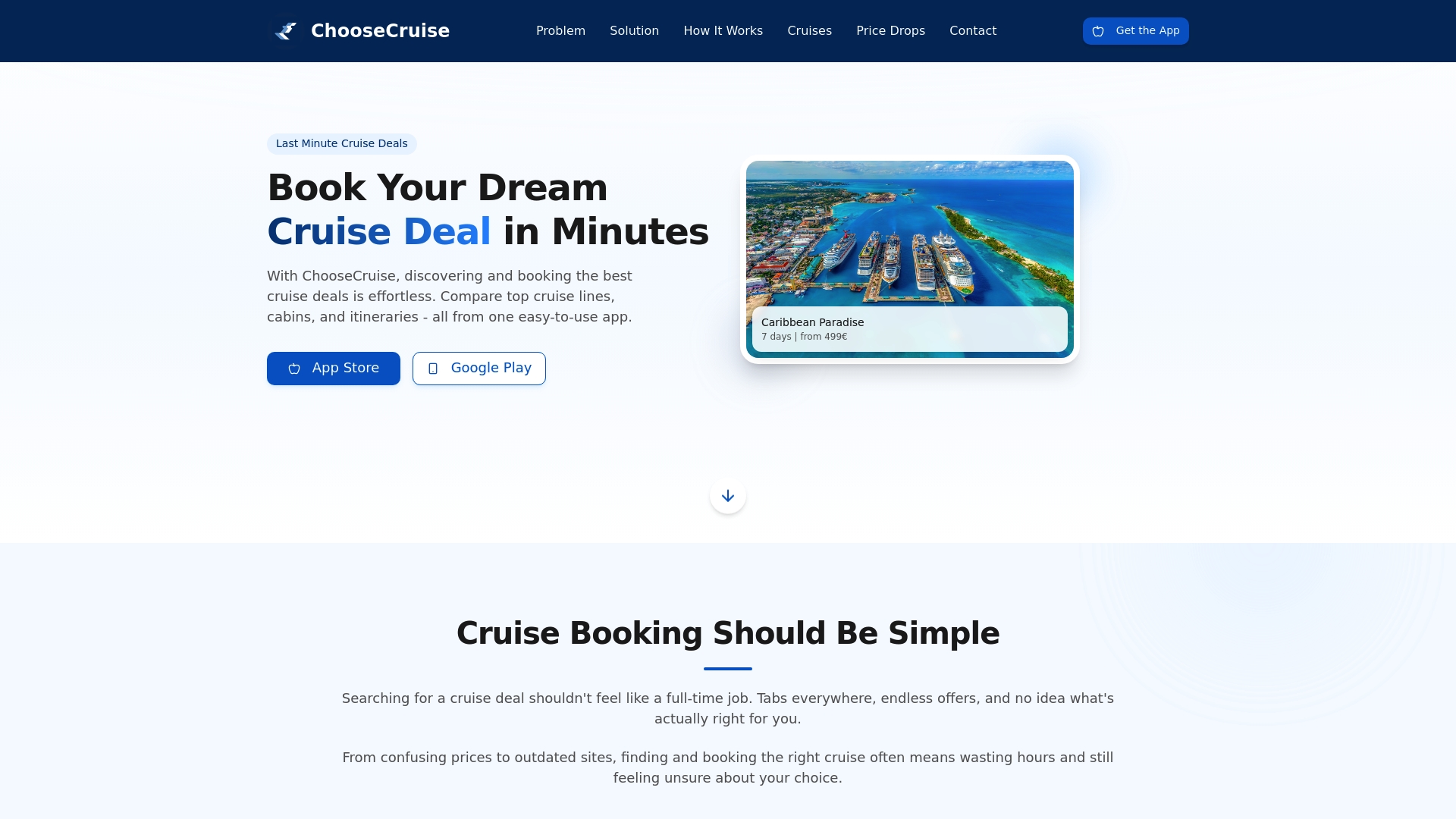
The price drop tracker monitors fares on sailings you are watching and alerts you when costs fall, so you never miss a genuine discount. Whether you are after a 7-night Western Mediterranean sailing from Barcelona or a 12-night Eastern route through Greece and Croatia, ChooseCruise gives you the tools to compare and book cruise deals with confidence. No outdated listings, no hidden surprises.
FAQ
When is the cheapest time to book a Mediterranean cruise?
Booking 9–12 months in advance gives you the best combination of low fares and itinerary choice. Shoulder season departures in may, june, september, and october also cost less than peak july and august sailings.
Are last-minute Mediterranean cruise deals worth it?
Last-minute deals appear 30–60 days before sailing but are unreliable for peak summer dates. They work best for flexible travelers with no fixed cabin or itinerary requirements.
Is the Eastern or Western Mediterranean cheaper?
Eastern Mediterranean cruises run 10–20% cheaper than comparable Western sailings due to lower port fees and reduced demand. Croatia, Turkey, and Greece offer strong value relative to Italy and France routes.
What is the best way to save on shore excursions?
Book tours independently through local operators rather than through the ship. Independent tours cost 20–40% less for the same experience and often include smaller group sizes.
How do I track Mediterranean cruise price drops?
Use a price alert tool like the one on ChooseCruise to monitor fares on specific sailings. Set alerts as soon as you identify your preferred itinerary and cabin category.
Recommended
Related reading
6 Best Cruise Destinations 2026 for Smart First-Time Travelers
Discover the 6 best cruise destinations 2026 with expert tips for tech-savvy first-time travelers, including personalized advice for easier cruise booking.
Cruise Package Explained: Stress-Free Vacation Booking
Cruise package means bundled travel with accommodations, meals, entertainment, excursions. Learn the types, inclusions, pros, costs, and mistakes to avoid.
7 Smart Ways to Save on Cruises for Modern Travelers
Discover 7 smart ways to save on cruises with easy, practical tips designed for today’s digital cruise travelers. Learn to maximize value and minimize costs.