Budget Cruise Planning Workflow for First-Timers

TL;DR:
- A budget cruise planning process involves setting a total trip budget before selecting the ship or itinerary. It covers all major costs beyond the base fare, including flights, hotels, gratuities, excursions, and onboard spending. Following a sequential workflow and monitoring expenses daily helps prevent overspending and unexpected bills.
A budget cruise planning workflow is a sequential process that starts with setting your total trip budget and ends with actively managing your onboard expenses. Most first-time cruisers make one critical mistake: they book based on the base fare alone. The base fare covers only 40–45% of the total trip cost, with flights, transfers, hotels, gratuities, excursions, and onboard spending making up the rest. Following a structured cruise budget planning process from the start prevents that gap from becoming a financial surprise. ChooseCruise is built to help you close that gap with real-time price tracking and clear cost breakdowns before you commit.

What essential costs must you include in your cruise budget?
The total cost of a cruise extends well beyond the ticket price. Treating the base fare as your full budget is the single most common reason first-time cruisers overspend.
Every complete cruise budget covers six major categories: the base fare, flights to and from the port, pre-cruise hotel stays, ground transfers, daily gratuities, shore excursions, and onboard spending. Each category carries a predictable cost range you can plan around.
| Cost Category | Typical Range (per person) |
|---|---|
| Base cruise fare | 40–45% of total trip cost |
| Round-trip flights | $200–$600+ depending on origin |
| Pre-cruise hotel | $120–$350 per night |
| Daily gratuities | $16–$20 per person per day |
| Drink packages | $60–$90 per person per day |
| Shore excursions | $50–$150 per port |
| Onboard extras | $50–$200+ per day |
Standard daily gratuities run $16–$20 per person per day. On a 7-night cruise for two, that adds $224–$280 before you spend a dollar at the bar. Drink packages add another $60–$90 per person per day if purchased in advance, which is almost always the cheaper option compared to buying onboard.
The per-person-per-night cost is the most useful benchmark for comparing cruise value. Trips priced above $550 per night per person signal a premium line. Trips below $400 per night typically indicate shorter sailings or well-planned budget itineraries. Use this metric early to filter options before you fall in love with a ship you cannot afford.
Pro Tip: Download your cruise line’s app before you sail and set a daily spending alert. Catching a $50 overage on day two is far easier than absorbing a $400 surprise on the final bill.
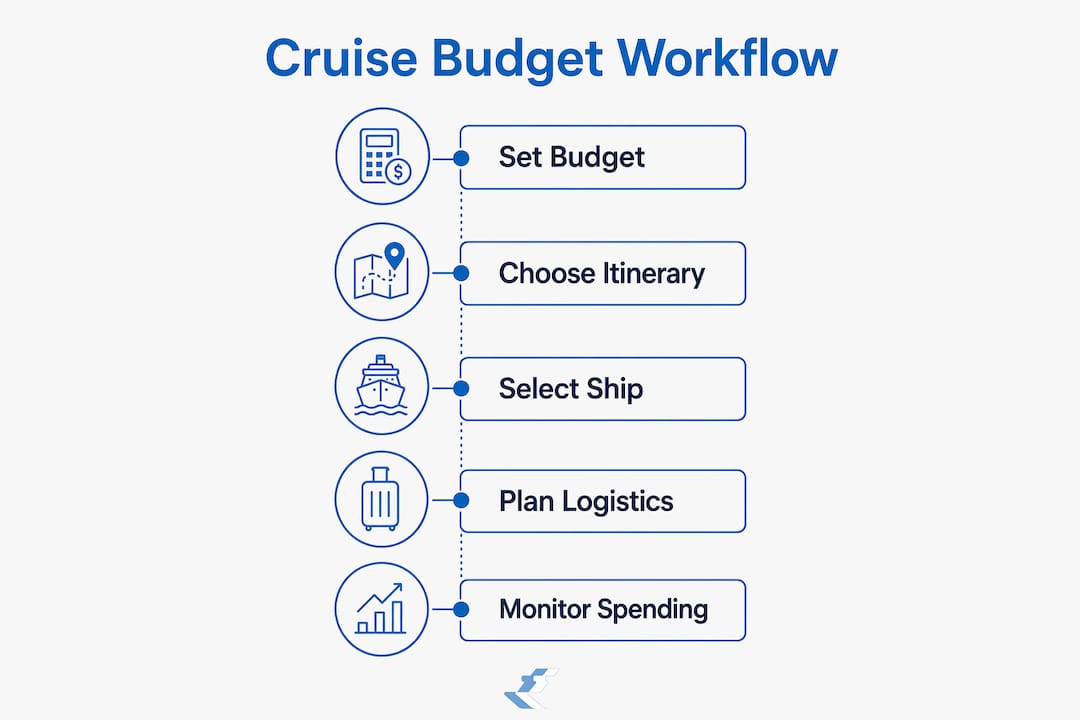
How do you build a step-by-step budget cruise planning workflow?
A sequential planning workflow is the most effective strategy for avoiding budget overruns and post-booking regret. The order matters. Choosing a ship before you know your total budget is like buying a house before checking your mortgage approval.
Follow these five steps in order:
-
Set your total budget. Decide the maximum you will spend on the entire trip, not just the cruise fare. Include flights, hotels, gratuities, excursions, and a contingency buffer of roughly 10–15% for unexpected costs.
-
Choose your itinerary based on pace and season. Deciding between sea days and port days early in the process shapes your excursion budget, your downtime, and your overall experience. A Caribbean itinerary with five port days costs significantly more in excursions than one with three. Shoulder season sailings in april or october typically offer lower base fares than peak summer or holiday departures.
-
Select your ship and cabin type. Match the ship’s amenities to your priorities. A budget traveler who wants relaxation needs a different ship than one who wants nightly entertainment. Interior cabins cost the least and are perfectly comfortable for travelers who plan to spend most of their time outside the room.
-
Book the cruise. Lock in your fare once you have confirmed the itinerary fits your budget. Use a platform like ChooseCruise to compare fares across sailings and identify real-time price drops before booking. Check the cruise booking steps guide for a detailed breakdown of what to confirm at this stage.
-
Add upgrades last. Drink packages, specialty dining, and Wi-Fi should only be added after the core booking is confirmed and you know how much budget remains. Stacking upgrades before you see the full cost picture is how budgets collapse.
Pro Tip: Prioritize your vacation pace before you choose a ship. Travelers who pick a vessel first and discover later it has eight port stops often end up spending $400–$600 more than planned on excursions they felt pressured to book.
What budget tips help you manage variable cruise expenses?
Variable expenses are the category that most reliably breaks cruise budgets. They feel small individually but compound fast across seven to fourteen days.
-
Gratuities are not optional. Budget $16–$20 per person per day from the start. Some cruise lines allow you to prepay gratuities at booking, which locks in the rate and removes the daily psychological drain of watching your account balance drop.
-
Evaluate drink packages honestly. Buying a beverage package before the cruise is almost always cheaper than purchasing onboard. However, light drinkers often save money buying individual drinks. Calculate your realistic daily consumption before committing to a $70-per-day package.
-
Book excursions in advance. Port-day excursions booked through third-party operators before sailing typically cost 20–40% less than the same tours booked through the cruise line onboard. Research your ports at least four weeks before departure.
-
Park off-site near the cruise terminal. Off-site parking near major cruise ports saves $8–$12 per day compared to official terminal parking. On a 10-night cruise, that is $80–$120 back in your pocket, usually with a free shuttle included.
-
Set a daily onboard spending limit. Decide before you board how much you will spend each day on extras. Stick to it by checking your onboard account every evening through the cruise line’s app.
-
Avoid the casino and art auctions. These are the two highest-margin onboard revenue sources for cruise lines. Both are designed to feel low-stakes while accumulating high charges quickly.
For a full breakdown of where money goes and how to keep more of it, the how to save on cruises guide covers each category in detail.
How do you prepare for departure to avoid last-minute expenses?
Pre-cruise preparation is where budget travelers either protect their investment or expose it to unnecessary risk. One missed flight can cost you the entire cruise fare.
Flying in at least one day before embarkation and booking a pre-cruise hotel ($120–$350 per night) is the most effective way to protect your trip investment. Ships do not wait. A delayed flight on embarkation morning means you miss the ship and lose your fare unless you have travel insurance. The hotel cost is cheap insurance by comparison.
| Preparation Step | Average Cost | Notes |
|---|---|---|
| Pre-cruise hotel (1 night) | $120–$350 | Book near the port to minimize transfer time |
| Airport to hotel transfer | $20–$60 | Rideshare or shuttle; book in advance |
| Hotel to port transfer | $15–$40 | Many port hotels offer free shuttles |
| Off-site parking (7 nights) | $70–$105 | Saves $56–$84 vs. terminal parking |
| Travel insurance | $50–$150 | Covers trip cancellation and medical emergencies |
Pack your documents in a single waterproof folder: passport, boarding pass, cruise booking confirmation, travel insurance card, and any required visas. Losing one of these at the port creates delays and fees that eat into your first-day experience.
Build a contingency line into your budget for small friction costs: a forgotten phone charger, a taxi when the shuttle is full, or a meal near the port the night before. A $75–$100 buffer covers most of these without stress.
What common mistakes derail a cruise budget?
The most expensive cruise planning mistake is choosing a ship before understanding the full cost of the trip. Travelers fall in love with a vessel’s amenities, book it, and then discover the itinerary requires five paid excursions to feel worthwhile.
Skipping the sequential workflow and jumping straight to ship selection is the fastest route to budget overrun. Every upgrade, excursion, and gratuity you add after booking a ship you cannot fully afford compounds the problem. The fix is simple: set your total budget first, then let that number guide every decision that follows.
Ignoring gratuities during the planning phase is the second most common error. A couple on a 7-night cruise pays $224–$280 in gratuities alone. That is a real cost that belongs in the initial budget, not a surprise on the final bill.
Failing to monitor onboard spending daily is the third mistake. Checking your onboard account daily through the cruise line’s app catches overages before they become unmanageable. Most travelers who overspend do so gradually, $15 at a time, without realizing the total until checkout.
Overlooking pre-cruise logistics rounds out the list. Parking, transfers, and a pre-cruise hotel are predictable costs. Budget for them upfront using the table in the previous section, and they will not catch you off guard.
Key Takeaways
A complete budget cruise planning workflow requires setting your total budget before choosing any ship, itinerary, or upgrade, because the base fare covers only 40–45% of the actual trip cost.
| Point | Details |
|---|---|
| Base fare is not the full cost | Budget for flights, hotels, gratuities, excursions, and onboard spending from day one. |
| Follow the sequential workflow | Set budget first, then itinerary, ship, cabin, and upgrades in that exact order. |
| Gratuities are a fixed cost | Plan for $16–$20 per person per day; prepaying at booking locks in the rate. |
| Pre-cruise hotel protects your investment | Flying in one day early prevents a missed ship and covers your entire fare. |
| Monitor spending daily | Use the cruise line’s app to catch overages early and avoid final-bill surprises. |
Why I think most cruise budget advice gets the order wrong
Most cruise budget articles tell you to find a great deal first and then figure out how to afford it. That is backwards, and it is why so many first-time cruisers end up frustrated.
The workflow I trust starts with a hard number: the maximum you will spend on the entire trip, including every category. That number becomes your filter. It eliminates ships, itineraries, and upgrades that do not fit before you have time to fall in love with them. I have seen travelers book a premium ship on a budget fare, only to spend twice their intended budget on excursions and onboard extras because the itinerary demanded it.
The most underrated step in the whole process is deciding your vacation pace before anything else. Do you want to wake up in a new port every day, or do you want two sea days to decompress by the pool? That single preference determines your excursion budget, your ideal itinerary, and even which ship makes sense. Get that right first, and the rest of the planning falls into place with far less friction.
Budget planning for a cruise is not about deprivation. It is about making deliberate choices early so you can enjoy every dollar you spend without second-guessing yourself at the bar on day four.
— Igor
ChooseCruise makes budget cruise planning faster and clearer
Planning a cruise on a budget gets significantly easier when you can compare real fares, see total cost breakdowns, and track price changes in one place.
ChooseCruise gives you AI-powered recommendations, real-time price tracking, and interactive itineraries built for travelers who want clarity before they commit. Whether you are looking at a 3-day cruise deal as an affordable first sailing or a longer itinerary with more ports, ChooseCruise surfaces the options that fit your actual budget, not just the advertised fare. Search and compare cruise deals across hundreds of sailings and find the right trip at the right price, without the guesswork that comes from piecing it together across a dozen different sites.
FAQ
What does a budget cruise planning workflow include?
A budget cruise planning workflow covers six steps: setting your total budget, choosing your itinerary, selecting a ship and cabin, booking the fare, adding upgrades, and managing onboard expenses. The base fare covers only 40–45% of the total trip cost, so the workflow must account for all remaining categories from the start.
How much should I budget for cruise gratuities?
Standard daily gratuities run $16–$20 per person per day. For a couple on a 7-night cruise, that totals $224–$280, and prepaying at booking locks in the rate before any price increases.
Is a drink package worth it on a budget cruise?
Buying a beverage package before the cruise is almost always cheaper than purchasing drinks onboard. Light drinkers typically save more by buying individual drinks, so calculate your realistic daily consumption before committing to a $60–$90 per day package.
Why should I fly in the day before my cruise?
Flying in one day early and staying in a pre-cruise hotel ($120–$350) protects your entire trip investment against flight delays. Ships do not wait for late passengers, and missing embarkation means losing your full fare.
How do I avoid overspending on a cruise?
Check your onboard account daily through the cruise line’s app to catch overages early. Set a firm daily spending limit before you board, and book excursions through third-party operators in advance to pay 20–40% less than onboard prices.
Recommended
Related reading
6 Best Cruise Destinations 2026 for Smart First-Time Travelers
Discover the 6 best cruise destinations 2026 with expert tips for tech-savvy first-time travelers, including personalized advice for easier cruise booking.
Cruise Package Explained: Stress-Free Vacation Booking
Cruise package means bundled travel with accommodations, meals, entertainment, excursions. Learn the types, inclusions, pros, costs, and mistakes to avoid.
7 Smart Ways to Save on Cruises for Modern Travelers
Discover 7 smart ways to save on cruises with easy, practical tips designed for today’s digital cruise travelers. Learn to maximize value and minimize costs.