Budget Cruises: 70% Offer Affordable 3-7 Day Trips

Many first-time cruisers believe budget cruises sacrifice safety or quality for lower prices. This misconception keeps countless travelers from exploring affordable cruise options that deliver genuine value. Budget cruises offer accessible, enjoyable experiences through smart trade-offs, not corner-cutting. This guide reveals how budget cruises work, what you gain and give up, and how modern technology helps you book confidently and save more.
Table of Contents
- Understanding Budget Cruises: Definition and Market Role
- Key Economic Mechanisms Behind Budget Cruise Pricing
- Trade-Offs and Compromises in Budget Cruises
- Common Misconceptions About Budget Cruises
- How Personalized Recommendations and Real-Time Pricing Enhance Budget Cruise Booking
- Comparing Budget and Premium Cruises: A Framework for Decision Making
- Practical Guide to Booking Your First Budget Cruise
- Discover and Book Affordable Budget Cruises with ChooseCruise
- Frequently Asked Questions
Key Takeaways
| Point | Details |
|---|---|
| Accessibility | Budget cruises provide affordable 3-7 day trips, particularly popular across European routes. |
| Cost Efficiency | Lower prices result from larger ships, higher passenger capacity, and streamlined amenities. |
| Trade-offs | Expect smaller cabins and simpler onboard experiences compared to premium alternatives. |
| Smart Booking | AI personalization and real-time pricing tools significantly boost booking satisfaction. |
| Informed Choices | Comparing budget versus premium options helps align your cruise with personal preferences. |
Understanding Budget Cruises: Definition and Market Role
Budget cruises deliver lower-cost voyages by maximizing economies of scale and focusing on essential services rather than luxury extras. These cruises attract travelers who prioritize affordability and accessibility over premium amenities. The model works brilliantly for first-time cruisers testing the waters without major financial commitment.
European waters host the majority of budget cruise activity. 70% of budget cruises in Europe offer 3-7 day voyages on popular routes like the Mediterranean and Northern Europe. These shorter itineraries feature frequent departures, making it easy to find trips matching your schedule. You can explore Barcelona to Rome or Copenhagen to Oslo without taking weeks off work.
The cruising demographic is shifting younger. Travelers aged 25-45 now represent the fastest-growing segment, driven largely by budget options increasing accessibility. Younger cruisers value experiences over luxury and appreciate the convenience of visiting multiple destinations without constant packing. Budget cruises remove the financial barrier that once made cruising feel exclusive to retirees.
Key characteristics distinguishing budget from premium cruises include:
- Focus on maximizing passenger capacity through larger vessels
- Reduced luxury amenities while maintaining safety and basic comfort
- Shorter itineraries with efficient port schedules
- Competitive pricing through operational efficiency rather than service cuts
Understanding these fundamentals helps you approach budget cruising with realistic expectations and appreciation for the value delivered.
Key Economic Mechanisms Behind Budget Cruise Pricing
How do budget cruises keep prices so low without compromising safety? The answer lies in smart operational economics, not quality shortcuts. Budget cruises use large ships with high passenger density combined with streamlined services to keep prices low.
Large ship size directly impacts your ticket price. Vessels carrying 3,000 to 5,000 passengers spread fixed costs like fuel, crew salaries, and port fees across more travelers. Each additional passenger lowers the per-person expense. Think of it like carpooling on a massive scale.
Streamlined services cut operational expenses while preserving essentials. Budget cruises might offer fewer specialty restaurants or skip elaborate stage productions, but you still get clean accommodations, safe navigation, and enjoyable entertainment. The focus shifts from extravagance to efficiency.
Shorter itineraries and quick turnarounds boost fleet utilization. A ship completing more voyages per year generates more revenue from the same asset. These cruise budget planning strategies translate directly into lower consumer prices. The vessel spends less time docked and more time earning.
Factors enabling budget pricing include:
- Higher passenger-to-crew ratios reducing labor costs
- Standardized cabin designs simplifying construction and maintenance
- Volume purchasing agreements for supplies and provisions
- Optimized route planning minimizing fuel consumption
Pro Tip: Understanding these economic mechanisms helps you set realistic service expectations. You’re paying for transportation and basic comfort, not concierge-level attention.
Trade-offs and Compromises in Budget Cruises
Every budget cruise involves conscious trade-offs between price and amenities. Recognizing these compromises upfront prevents disappointment and helps you decide if budget cruising suits your preferences.
Budget cruises typically feature smaller cabins, fewer dining options, and reduced entertainment compared to premium offerings. Cabins on budget ships average 150-180 square feet versus 200-250 on premium vessels. The space works fine for sleeping and storing luggage, but feels tight if you plan to spend significant time in your room. Inside cabins without windows cost less but may feel claustrophobic on longer voyages.

Dining remains enjoyable but simpler. Expect one or two main dining rooms with set menus rather than five specialty restaurants. Buffet options provide variety, though ingredients skew toward cost-effective choices. You won’t starve or eat poorly, but don’t anticipate Michelin-level cuisine.
Entertainment focuses on essentials rather than Broadway productions. Live music, poolside activities, and basic shows keep you occupied without elaborate staging. Shore excursions may offer fewer included options, with most requiring additional payment. These budget cruise traveler tips help maximize enjoyment within constraints.
Common compromises include:
- Limited balcony cabin availability at budget price points
- Fewer complimentary beverage options beyond basic drinks
- Reduced onboard activity variety compared to premium ships
- Less personalized service due to higher passenger-to-crew ratios
Pro Tip: Weigh these trade-offs consciously against your priorities. If you plan to spend most time exploring ports, cabin size matters less than sailing schedule and price.
Common Misconceptions About Budget Cruises
Misconceptions about budget cruising deter many potential travelers from excellent vacation options. Let’s address the most persistent myths with facts.
-
Budget cruises are unsafe. This myth conflates affordability with negligence. Budget cruises maintain safety standards equivalent to premium cruise lines under international SOLAS regulations. Every vessel undergoes rigorous inspections covering fire safety, navigation equipment, and emergency procedures. Your safety receives identical protection regardless of ticket price.
-
Budget equals poor quality service. Lower prices reflect operational efficiency, not indifferent staff. Crew members maintain professional service standards, though you might wait slightly longer during peak times due to higher passenger ratios. Cleanliness, food safety, and basic hospitality remain priorities across all cruise segments.
-
Early booking always guarantees the lowest price. Dynamic pricing has changed this equation. While advance booking sometimes offers savings, last-minute deals can beat early-bird rates when ships need to fill remaining cabins. Real-time pricing platforms track these fluctuations, helping you capture unexpected bargains.
“Safety and value are both priorities on budget cruises, not mutually exclusive.”
The reality is budget cruises deliver safe, comfortable experiences at accessible prices. They won’t match luxury ships for amenities, but they provide legitimate value for cost-conscious travelers. Understanding what you actually receive versus misconceptions helps you book confidently.
How Personalized Recommendations and Real-Time Pricing Enhance Budget Cruise Booking
Modern technology transforms budget cruise booking from overwhelming to empowering. AI-powered platforms and dynamic pricing tools help you navigate choices and secure better deals.
AI improves matching cruises to your specific preferences, cutting through decision paralysis. Instead of browsing hundreds of options, you answer a few questions about dates, destinations, and priorities. The system filters choices to trips genuinely aligned with your needs. Platforms integrating AI personalization saw a 35% higher user satisfaction in affordable cruise bookings in 2025.
Real-time pricing alerts help capture fluctuating deals. Cruise prices change based on demand, booking patterns, and departure proximity. Setting alerts notifies you when prices drop on routes you want, maximizing savings without constant manual checking. This real-time cruise price tracking technology levels the playing field between casual bookers and travel agents.
Personalized platforms increase booking confidence. When recommendations reflect your actual preferences rather than generic popularity, you trust your choice more. Confidence reduces pre-trip anxiety and improves overall satisfaction. You’re not guessing whether a cruise fits you.
Key technological advantages include:
- Tailored itinerary suggestions based on your travel history and preferences
- Dynamic price tracking across multiple cruise lines simultaneously
- Custom filters for budget, duration, departure port, and amenities
- Comparison tools highlighting differences between similar options
These AI cruise booking benefits particularly help first-time cruisers lacking experience to evaluate options manually. Technology compensates for knowledge gaps.
Comparing Budget and Premium Cruises: A Framework for Decision Making
Choosing between budget and premium cruises depends on your priorities, budget, and travel style. A structured comparison clarifies trade-offs and helps you decide confidently.
Budget cruises focus on lower price via economies of scale; premium cruises offer luxury at higher costs. Understanding these fundamental differences guides your selection.
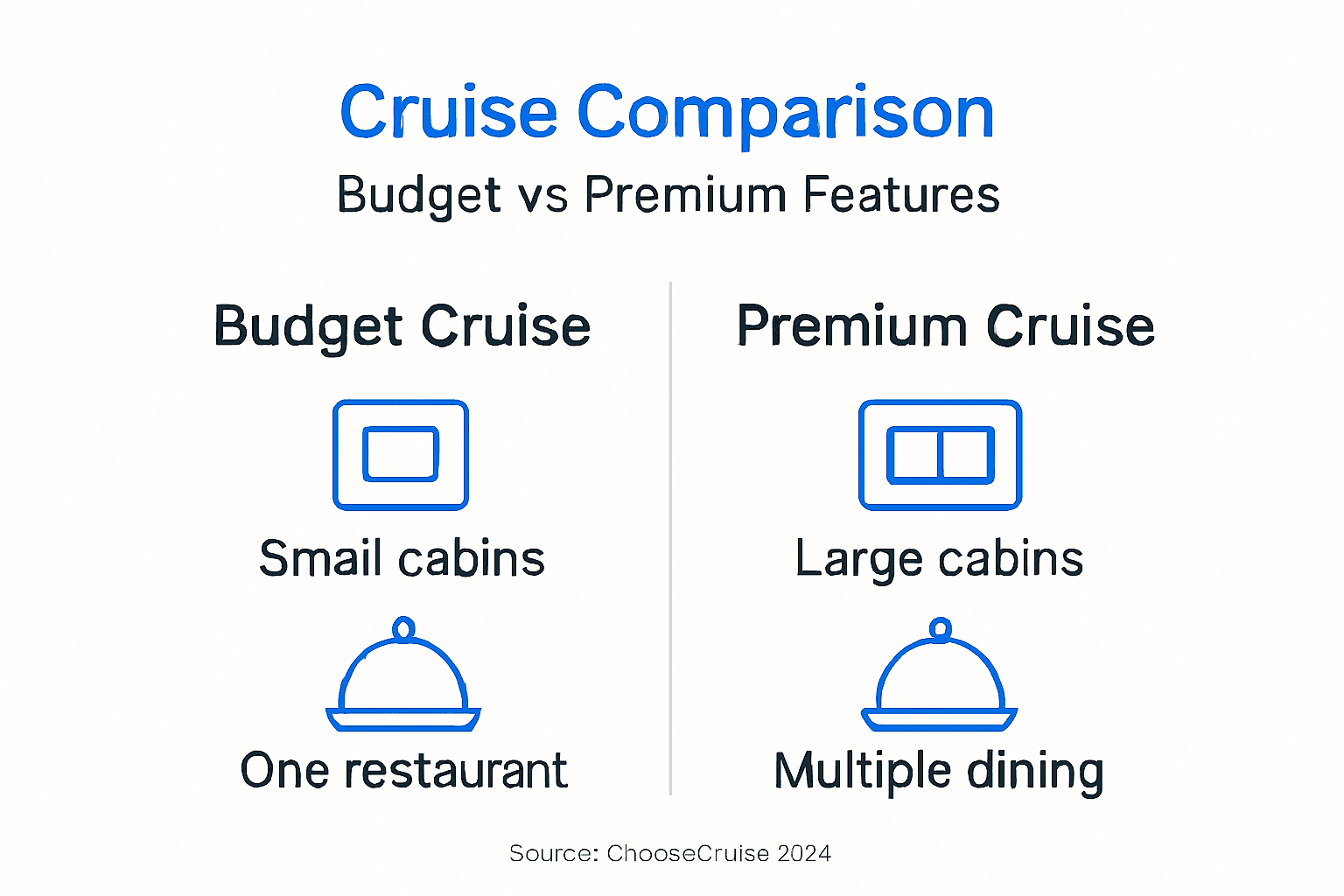
| Feature | Budget Cruises | Premium Cruises |
|---|---|---|
| Price Range | $50-150 per day | $200-500+ per day |
| Ship Size | Large (3,000-5,000 passengers) | Medium to Small (500-2,500 passengers) |
| Cabin Size | 150-180 sq ft average | 200-300 sq ft average |
| Dining Options | 1-2 main restaurants, buffet | 3-6 specialty restaurants, room service |
| Entertainment | Basic shows, live music | Broadway productions, enrichment programs |
| Service Ratio | 3-4 passengers per crew | 1.5-2 passengers per crew |
| Itinerary Length | 3-7 days typical | 7-14 days common |
Budget cruises excel when:
- You prioritize visiting destinations over onboard luxury
- Your budget limits spending to $500-1,000 per person
- You’re testing cruising before committing to longer trips
- Traveling with children who care more about pools than fine dining
Premium cruises suit travelers who:
- Value spacious accommodations and personalized service
- Want extensive dining variety and specialty cuisine
- Prefer smaller ships with fewer crowds
- Can allocate $2,000+ per person for vacation
This budget vs premium cruise guide helps align your choice with practical realities. Neither option is inherently better, they serve different needs and preferences.
Practical Guide to Booking Your First Budget Cruise
Ready to book your first budget cruise? Follow these actionable steps to navigate the process confidently and secure the best value.
-
Research short European itineraries fitting your schedule and budget. Start by identifying departure ports near you and routes visiting destinations you want to explore. Mediterranean loops from Barcelona or Italian ports offer excellent first-time experiences. Northern Europe routes provide cultural variety with convenient departure cities.
-
Evaluate trade-offs like cabin size and amenities against price. Decide which compromises you can accept. Inside cabins save money if you plan to spend days exploring ports. Balconies add cost but enhance relaxation time onboard. Match cabin type to how you’ll actually use the space.
-
Use AI-powered platforms for personalized options to narrow choices. Answer preference questions honestly rather than aspirationally. The system recommends cruises matching your real needs, not fantasy vacations. This filtering saves hours of manual comparison.
-
Monitor real-time price alerts to capture last-minute savings. Set alerts for routes and dates you’ve identified. Check notifications promptly when prices drop, as deals can disappear within hours. Flexibility on exact dates increases savings opportunities.
-
Review terms carefully before final booking to avoid surprises. Verify what’s included versus what costs extra. Check cancellation policies, payment schedules, and passport requirements. Understanding fine print prevents unwelcome discoveries later.
Key booking considerations include:
- Departure port accessibility and transportation costs
- Visa requirements for countries visited
- Onboard credit card policies and currency
- Travel insurance options and coverage details
Pro Tip: Combining AI recommendations with price alerts helps secure personalized, affordable cruises. Booking within optimal windows can save up to 10% compared to random timing.
These cruise booking tips for beginners and budget cruise tips provide additional guidance for smooth planning and booking.
Discover and Book Affordable Budget Cruises with ChooseCruise
Now that you understand how to evaluate and book budget cruises, let ChooseCruise simplify your search. Our platform combines AI-powered recommendations with real-time pricing to match you with ideal budget cruises effortlessly.
Compare options across cruise lines, set price alerts for routes you want, and book confidently knowing you’ve secured genuine value. Our AI personalized cruise recommendations eliminate guesswork by learning your preferences and highlighting trips you’ll actually enjoy. Track prices through our real-time cruise price tracking feature to capture savings the moment they appear.
Join thousands of savvy travelers who’ve simplified their booking process and saved more on budget cruises. Start exploring affordable European itineraries today and turn your cruise dreams into reality.
Frequently Asked Questions
Can I find last-minute deals on budget cruises?
Yes, last-minute deals frequently appear as departure dates approach and cruise lines need to fill remaining cabins. Real-time price alerts notify you immediately when these opportunities arise, helping you capture savings even within weeks of sailing. Flexibility on exact dates and cabins increases your chances of finding excellent last-minute value.
Are budget cruises safe for first-time travelers?
Absolutely, budget cruises meet identical international safety standards as premium lines under SOLAS regulations. Every vessel undergoes rigorous inspections covering fire safety, navigation equipment, lifeboats, and emergency procedures. Your physical safety receives the same protection regardless of ticket price, making budget cruises perfectly safe for first-time cruisers.
What amenities can I expect on a budget cruise?
Expect clean, comfortable cabins, main dining room meals, buffet options, pools, basic entertainment like live music and shows, and fitness facilities. You won’t find extensive specialty restaurants, Broadway-level productions, or luxury spa services included at budget prices. The focus is essential comfort and enjoyable experiences rather than premium extras.
How do I know if a budget cruise is right for me?
Consider three key factors: your budget, preferred itinerary length, and comfort priorities. Budget cruises suit travelers who prioritize visiting destinations over onboard luxury, can accept smaller cabins and simpler amenities, and want to explore cruising without major financial commitment. If you value extensive personal service, spacious accommodations, or gourmet dining, premium options might better match your expectations. Use these cruise booking tips to evaluate your preferences honestly.
Recommended
Related reading
6 Best Cruise Destinations 2026 for Smart First-Time Travelers
Discover the 6 best cruise destinations 2026 with expert tips for tech-savvy first-time travelers, including personalized advice for easier cruise booking.
Cruise Package Explained: Stress-Free Vacation Booking
Cruise package means bundled travel with accommodations, meals, entertainment, excursions. Learn the types, inclusions, pros, costs, and mistakes to avoid.
7 Smart Ways to Save on Cruises for Modern Travelers
Discover 7 smart ways to save on cruises with easy, practical tips designed for today’s digital cruise travelers. Learn to maximize value and minimize costs.