Cruise Travel Checklist 2025: Pack Smart, Sail Stress-Free

TL;DR:
- A cruise travel checklist for 2025 covers essential categories like documents, clothing, health items, and cabin organization. Starting preparations at least 90 days before sailing ensures smooth booking, packing, and embarkation, with a focus on packing complete outfits and carry-on essentials. Proper planning and strategic packing help first-time cruisers avoid stress and maximize their onboard experience.
A cruise travel checklist for 2025 is a complete packing and preparation plan that covers every category you need before boarding, from documents and medications to clothing and cabin gear. Most first-time cruisers pack the wrong things, forget critical documents, or show up on embarkation day without their essentials in their carry-on. This guide gives you a proven preparation timeline, an outfit-focused packing strategy, and the cabin organization tricks that experienced cruisers rely on. Whether you are planning a Caribbean getaway or a Mediterranean cruise, this checklist covers every step.
What does a cruise travel checklist 2025 actually cover?
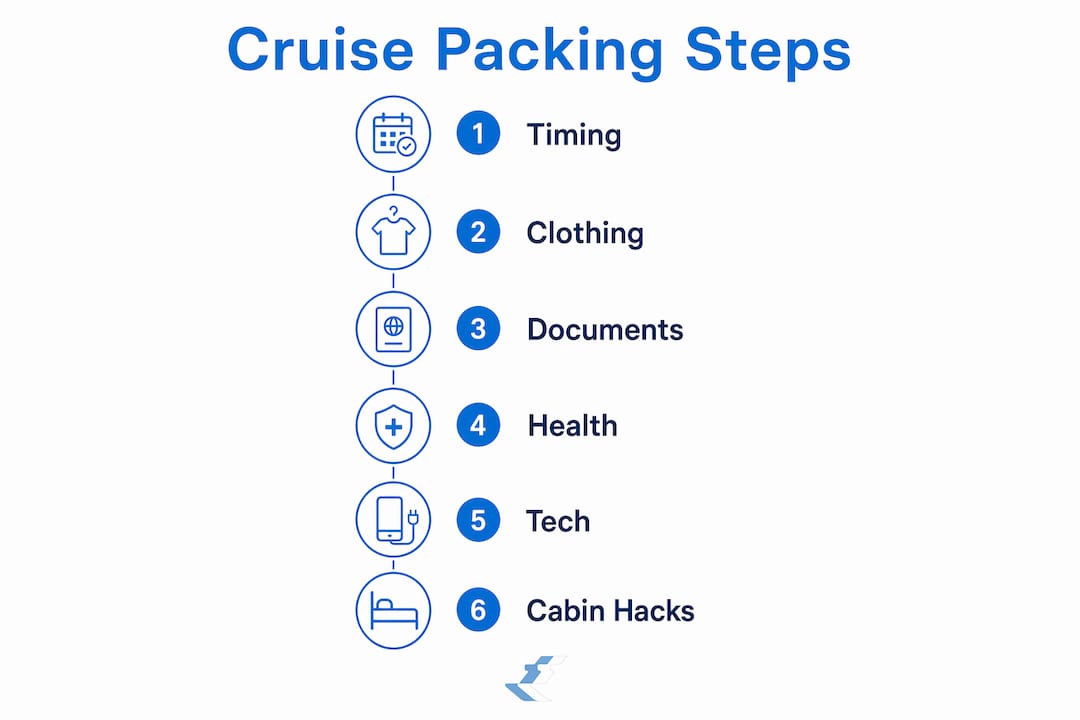
A cruise preparation checklist covers six core categories: timing, clothing, documents, health items, tech, and cabin organization. Most generic packing guides stop at a simple item list. A real cruise ship packing list goes further by telling you when to act, not just what to pack. The difference between a stressful embarkation and a smooth one is almost always preparation timing and carry-on strategy.
When should you start preparing for a cruise?
Start cruise preparations at least 90 days before your sailing date. That window gives you time to book flights, verify passport validity, and purchase travel insurance before prices rise and availability shrinks.
Here is the timeline that works:
- 90 days out: Book your flights and verify all travel documents. Passports should be valid for at least six months beyond your return date. Purchase travel insurance now, not the week before departure.
- 30 days out: Book shore excursions and specialty dining to lock in availability. Popular excursions sell out fast, especially on peak-season sailings.
- 15 days out: Complete your online check-in and download your cruise line’s app. Most lines, including Royal Caribbean and Carnival, require digital check-in to generate your boarding pass.
- 3 days out: Confirm all reservations, recheck your flight times, and do a final document review. Print backup copies of everything.
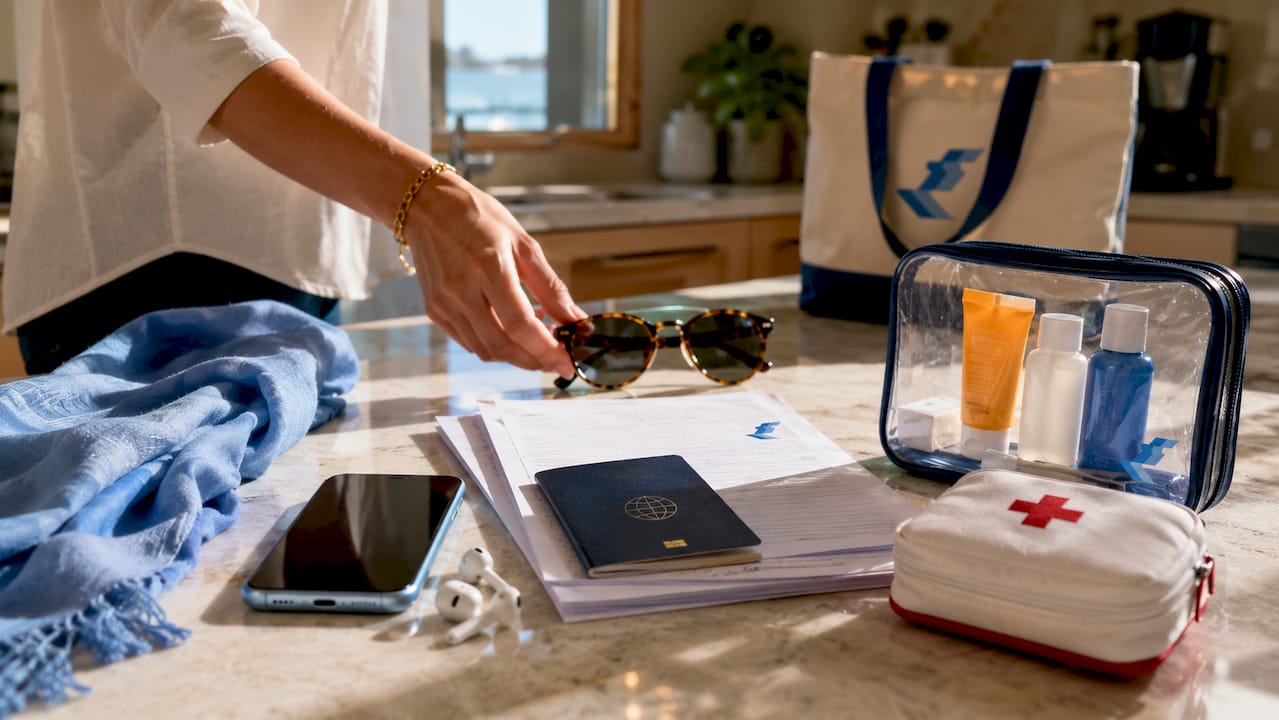
Pro Tip: Pack your carry-on bag at the 3-day mark, not the morning of departure. Checked luggage on embarkation day often arrives hours late, sometimes not until evening. Your carry-on is your lifeline for the first several hours onboard.
Following this cruise planning timeline removes the last-minute scramble that ruins the first day of so many vacations.
How to pack clothing for a 7-night cruise
Clothing is where most travelers go wrong. The fix is planning by complete outfits, not by individual items. Packing by outfit category is more effective than packing by item because it forces you to think about what you will actually wear each day.
For a standard 7-night cruise, the recommended quantities are:
- Casual day outfits: 5–7 looks for sea days and port mornings. Think breathable fabrics like linen and moisture-wicking blends.
- Smart casual evening outfits: 3–4 outfits for most dinner nights. Chinos and a collared shirt, or a sundress, fit this category.
- Formal wear: At least 1 formal outfit for formal nights. Most 7-night sailings include 1–2 formal evenings.
- Shore excursion outfits: 2–3 practical looks with comfortable shoes. Closed-toe shoes are required for some excursions.
- Swimwear: 2–3 swimsuits so one is always dry.
- Layers: A light cardigan or jacket for air-conditioned dining rooms and cooler evenings at sea.
Mixing and layering across these four categories lets you fit a full week’s wardrobe into one checked suitcase. Use packing cubes to separate each category and compress bulkier items. Ignoring dress codes is the most common mistake first-time cruisers make. Check your cruise line’s dress code policy before you pack. Lines like Cunard enforce formal nights strictly, while Norwegian Cruise Line takes a more relaxed approach.
Pro Tip: Lay out every outfit as a complete set, including shoes and accessories, before packing. If an item does not belong to at least two outfits, leave it at home. This single rule cuts most people’s luggage by 20–30%.
For more detail on what each cruise line expects, the cruise dress code guide from ChooseCruise breaks it down by line and sailing type.
What documents and health items must you pack?
Documents and medications are non-negotiable. Forgetting either category can end your trip before it starts.
Documents to pack:
- Passport (valid for at least 6 months beyond return date)
- Printed and digital boarding passes
- Travel insurance policy with emergency contact numbers
- Visas, if required for your ports of call
- Credit card and cash in local currencies for ports
- RFID-blocking wallet to protect card data in busy ports
Health and medical essentials:
- Prescription medications in your carry-on, with a buffer supply that exceeds your trip length. Delays happen, and running out of a critical medication at sea is a serious problem.
- Motion sickness remedies such as Dramamine, Bonine, or Sea-Bands. Even travelers who have never experienced seasickness can be affected in rough open water.
- Basic first-aid kit: adhesive bandages, antiseptic wipes, antidiarrheal tablets, and antacids.
- Sunscreen with SPF 50 or higher. Port days mean extended sun exposure.
Most cruise lines provide basic toiletries like shampoo, conditioner, and body wash. Check your cruise line’s amenities list before packing full-size bottles. Bringing duplicates of what the ship already supplies wastes valuable luggage space.
Pro Tip: Build a small “embarkation day survival kit” inside your carry-on: one change of clothes, swimwear, sunscreen, medications, your boarding documents, and a phone charger. This kit covers everything you need for the first 6–8 hours before your checked bags arrive at your cabin.
What cabin hacks and tech items actually make a difference?
Cruise cabins are small. The travelers who are most comfortable onboard are the ones who pack a few specific items that most people never think about.
Cabin storage solutions vs. what to skip
| Item | Bring It? | Why |
|---|---|---|
| Magnetic hooks | Yes | Magnetic hooks attach to metal cabin walls and cost around $5. They hold hats, bags, and lanyards. |
| Surge-protected power strip | No | Surge protectors are banned on most cruise lines. Many confiscate them at boarding. |
| Non-surge USB hub | Yes | A USB hub with multiple ports charges all your devices without violating ship policy. |
| Full-size toiletries | No | The ship provides them. Bring travel-size items only for port days. |
| Packing cubes | Yes | They compress clothing and keep your cabin organized throughout the trip. |
| Over-door shoe organizer | Yes | Hangs on the bathroom door and stores small items like sunscreen, sunglasses, and chargers. |
The magnetic hook tip surprises most travelers. Cabin walls on ships like those in the Royal Caribbean and Norwegian fleets are metal, which means a $5 set of magnetic hooks instantly doubles your hanging storage. Most travelers never think to pack them.
For tech, the core list is simple: your smartphone, a portable power bank, a non-surge USB hub, and a pair of noise-canceling headphones for overnight flights or sea days. An RFID-blocking wallet is worth adding if you are visiting busy ports in Europe or the Caribbean.
Pro Tip: Download your cruise line’s app and your destination’s offline maps on Google Maps before you board. Onboard Wi-Fi is expensive, and offline maps save you from data charges at every port.
Key takeaways
A complete cruise packing list succeeds when it combines a preparation timeline, outfit-focused clothing strategy, carry-on essentials, and a few overlooked cabin tools.
| Point | Details |
|---|---|
| Start 90 days early | Book flights, verify documents, and buy travel insurance at least 90 days before sailing. |
| Pack by outfit, not by item | Plan complete outfits for each occasion to avoid overpacking and missing dress codes. |
| Build a carry-on survival kit | Include medications, documents, swimwear, and a charger for the hours before checked bags arrive. |
| Skip banned items | Leave surge-protected power strips at home and bring a non-surge USB hub instead. |
| Use magnetic hooks | A $5 set of magnetic hooks adds significant storage to any small cruise cabin. |
Why I pack my carry-on before I pack my suitcase
Most cruise packing guides tell you to start with your suitcase. I do the opposite. The carry-on comes first, every time.
The reason is simple. Your checked bag is not guaranteed to be in your cabin when you board. On embarkation day, luggage can take 4–6 hours to arrive. I have been on sailings where bags did not show up until after dinner. If your medications, swimwear, and boarding documents are buried in your checked bag, that is a genuinely bad start to a vacation.
I also stopped packing individual clothing items years ago. Laying out complete outfits, including shoes and accessories, before anything goes into a bag changed how I travel entirely. You see gaps immediately. You spot redundancies. You realize you packed three pairs of pants but only one pair of shoes that works with all of them.
The other thing most articles skip is checking your cruise line’s amenities before you pack toiletries. I once brought a full bag of shampoo, conditioner, and body wash onto a Celebrity Cruises sailing, only to find the cabin already stocked with all three. That is dead weight you carry through airports for no reason.
The cabin storage tricks matter more than people expect. Magnetic hooks, an over-door organizer, and packing cubes turn a tight cabin into a livable space. A cruise cabin is not a hotel room. You adapt to it, or you spend a week tripping over your own luggage.
— Igor
Ready to book your 2025 cruise?
Planning the perfect cruise starts with finding the right sailing at the right price. ChooseCruise makes that part easy.
ChooseCruise gives you real-time price tracking, AI-powered recommendations, and a clean booking experience built for travelers who want less friction and more confidence. Whether you are looking for a short getaway or a full two-week voyage, you can compare cruise deals across dozens of lines in one place. For travelers just getting started, the first-time cruiser tips on ChooseCruise walk you through every booking decision before you commit.
FAQ
What should go in a cruise carry-on bag?
Your carry-on should hold your passport, boarding passes, travel insurance details, all prescription medications, a change of clothes, swimwear, sunscreen, and a phone charger. Checked luggage often arrives hours late on embarkation day, so treat your carry-on as your first-day survival kit.
How many outfits do you need for a 7-night cruise?
Pack 5–7 casual day outfits, 3–4 smart casual evening outfits, and at least 1 formal outfit for a standard 7-night sailing. Planning by outfit category rather than by individual item keeps your luggage within one checked suitcase.
Are power strips allowed on cruise ships?
Surge-protected power strips are banned on most cruise lines because they interfere with onboard electrical systems. Bring a non-surge USB hub or a basic multi-outlet adapter instead.
When should you do online check-in for a cruise?
Complete online check-in approximately 15 days before your departure date. Most cruise lines, including Royal Caribbean and Carnival, require digital check-in to generate your boarding pass and speed up embarkation.
Do cruise ships provide toiletries?
Most cruise lines provide shampoo, conditioner, body wash, and towels in the cabin. Check your specific cruise line’s amenity list before packing full-size toiletries to avoid carrying unnecessary weight through airports.
Recommended
Related reading
Cruise Vacations: Effortless Travel, Personalized Discovery
Discover why cruise vacations offer effortless planning, personalized experiences, and real-time deals. Learn cruise types, amenities, and costs.
Advantages of Cruise Travel: Effortless and Personalized Escapes
Discover the top advantages of cruise travel for tech-savvy couples. Explore seamless planning, personalized experiences, diverse destinations, and high-tech ship amenities.
7 Inspiring Cruise Itinerary Examples for Easy Trip Planning
Discover 7 essential cruise itinerary examples designed for first-time cruisers. Learn practical tips to simplify your planning and choose the right vacation route.