How Interactive Cruise Planning Works for First-Timers

TL;DR:
- Interactive cruise planning uses digital tools to personalize and simplify booking by focusing on preferences and budgets. These tools, including AI recommenders and virtual ship tours, reduce research time and prevent port day conflicts, helping first-time cruisers build confidence. By combining cost estimates and personalized itineraries, they transform a seemingly overwhelming process into an engaging, manageable experience.
Interactive cruise planning is the process of using digital tools to match you with the right cruise, customize your itinerary, and estimate your full costs before you book a single thing. These tools replaced the old model of scrolling through hundreds of identical-looking sailings with no clear way to compare them. For first-time cruisers in 2026, the standard approach now combines AI-powered recommenders, virtual ship tours, port day planners, and cost calculators into one connected experience. Understanding how interactive cruise planning works gives you a real advantage before you spend a dollar.
How interactive cruise planning works: the core process
Interactive cruise planning is defined by one key principle: the tool asks questions first, then shows results. Instead of dumping 500 sailings on your screen, a well-designed platform collects your budget, travel dates, party size, and destination preferences through a short quiz or chat interface. Only then does it surface a filtered shortlist.

AI-powered tools compress what used to be hours of research into a 2–3 minute session. That shift matters because most first-time cruisers have no frame of reference for what separates one ship from another. The tool builds that frame for you.
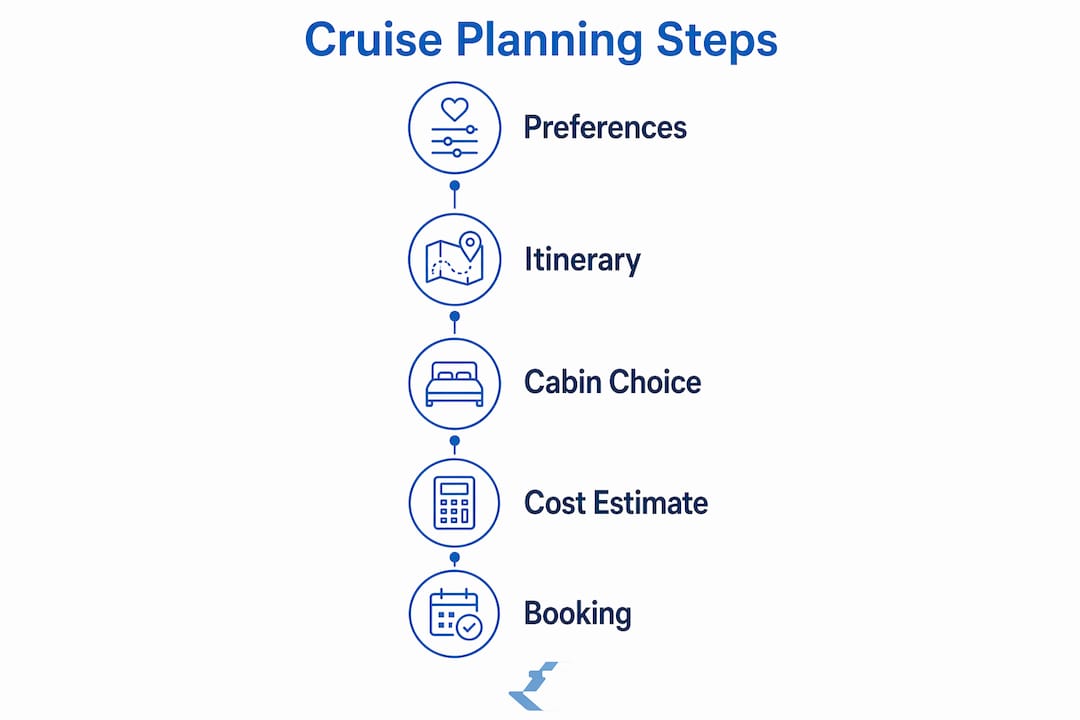
The process typically moves through four stages: preference gathering, itinerary building, cabin selection, and cost estimation. Each stage feeds the next. Your budget input, for example, filters both the ship options and the shore excursion packages shown in the itinerary builder. Nothing is siloed.
Pro Tip: Set your budget range before you touch any planning tool. Experts warn that choosing ships or excursions before establishing your budget leads to overwhelm and incoherent planning. Budget first, then browse.
What are the main features of interactive cruise planning tools?
Modern interactive cruise planning tools share a core set of features. Each one solves a specific problem that trips up first-time cruisers.
- AI quiz recommenders. These ask 5–10 questions about your travel style, budget, and group composition. The output is a ranked shortlist of sailings that match your answers, not a generic list sorted by price.
- Interactive port day planners. You input your ship’s arrival and departure times for each port, then choose a pace (relaxed, moderate, or high-intensity). The tool builds a timed schedule around those constraints.
- Virtual 360-degree ship tours. Interactive catalogs host virtual tours of cabins, pools, restaurants, and common areas. You preview the ship before committing to a cabin category.
- Daily cost calculators. These estimate gratuities, drink packages, Wi-Fi, and specialty dining so you see the real cost of your trip, not just the advertised fare.
- Packing list generators. Ship-specific lists account for dress codes, onboard activities, and destination climate.
These features work together. A traveler who completes the AI quiz, previews their cabin with a virtual tour, builds a port day schedule, and runs the cost calculator arrives at booking with far more confidence than someone who browsed a static website.
Pro Tip: Use the virtual tour before selecting your cabin category. Cabin layouts vary significantly even within the same ship. A category-4 balcony on one deck may have an obstructed view that the photos don’t show clearly.
How do interactive cruise itineraries improve your shore excursion planning?
An interactive cruise itinerary is a live, editable schedule that adjusts in real time as you add or remove activities. It is the opposite of a static PDF that lists port stops with no context about timing or logistics.
Port day planners give you access to nearly 2,000 shore excursions with filtering by duration, activity type, price, and physical intensity. That filtering is critical. Without it, choosing between a snorkeling tour and a city walk in Cozumel requires reading dozens of individual descriptions.
The table below shows how a typical interactive port day schedule looks for a three-port Caribbean sailing.
| Port | Ship arrives | Ship departs | Excursion selected | Pace |
|---|---|---|---|---|
| Cozumel, Mexico | 8:00 AM | 5:00 PM | Reef snorkeling (3 hrs) | Relaxed |
| Roatán, Honduras | 7:00 AM | 4:00 PM | Zip-line and beach (5 hrs) | High-intensity |
| Belize City, Belize | 9:00 AM | 6:00 PM | Mayan ruins tour (4 hrs) | Moderate |
The tool flags conflicts automatically. If your Roatán zip-line tour ends at 3:45 PM and the ship departs at 4:00 PM, the planner warns you before you book. Static itineraries cannot do this.
Pro Tip: Always build your port day schedule with a 90-minute buffer before the ship’s departure time. Interactive planners show the scheduled end time of excursions, but traffic, weather, and group delays are real. The buffer protects you.
In what ways do AI and personalization reduce planning time and decision paralysis?
Decision paralysis affects up to 75–80% of cruise website visitors, causing them to leave without booking. That statistic reflects a real structural problem: most cruise sites show too many options with too little guidance.
AI planning tools solve this through progressive disclosure. You see a small set of results first, then refine them. This approach keeps travelers engaged without overwhelming them, and it moves the experience from data entry to guided discovery.
“The most effective AI cruise assistants don’t just filter results. They remember your preferences across sessions, so your second visit picks up where your first one left off. That continuity is what separates a genuinely useful tool from a fancy search bar.”
AI-enabled planners maintain memory of your preferences throughout the planning process. This reduces booking friction because you don’t re-enter your travel dates and budget every time you return to the tool. The system builds on what it already knows about you.
The practical result is that a first-time cruiser can go from “I have no idea where to start” to a concrete shortlist of three sailings in under five minutes. That speed removes the anxiety that causes most people to abandon the process entirely. For a deeper look at how AI shapes cruise recommendations, the mechanics are worth understanding before you start.
How do cruise planning calculators and packing lists improve trip readiness?
Cost calculators are the most underused feature in interactive cruise planning. The advertised fare is rarely the full cost of a cruise. Gratuities, drink packages, Wi-Fi, and specialty dining can add hundreds of dollars per person to the final bill.
Modern calculators estimate all of these daily costs in one place, covering gratuities, drink packages, and Wi-Fi for over 165 specific ships. That ship-specific detail matters because pricing varies by cruise line and vessel.
Packing list generators work the same way. A generic “what to pack for a cruise” list misses the details that actually affect your trip:
- Dress codes. Some ships require formal attire on specific nights. Others are entirely casual. Your packing list should reflect the actual policy of your ship.
- Destination climate. A Caribbean sailing in december requires different clothing than a Norwegian fjords cruise in june.
- Onboard activities. A ship with a rock-climbing wall and a surf simulator calls for different footwear than one focused on spa and dining.
- Party size and experience level. Personalized packing lists factor in whether you are traveling with young children, elderly family members, or as a solo traveler.
Ship-specific planners are critical because amenities and layouts vary widely even within the same cruise line. A generic packing list built for “any Caribbean cruise” will leave gaps that a ship-specific list catches. For first-time cruisers managing a budget cruise planning workflow, the calculator is the single most practical tool available.
Key Takeaways
Interactive cruise planning works best when you use AI filtering, itinerary builders, virtual tours, and cost calculators together as a connected system rather than separate tools.
| Point | Details |
|---|---|
| AI filtering cuts research time | Tools reduce hours of browsing to a 2–3 minute session by filtering on budget and preferences. |
| Interactive itineraries prevent port day errors | Timed schedules with automatic conflict warnings keep you from missing the ship. |
| Virtual tours improve cabin confidence | Previewing cabins and facilities digitally before booking reduces post-booking regret. |
| Cost calculators reveal the real price | Gratuities, drink packages, and Wi-Fi add significantly to the advertised fare. |
| Ship-specific packing lists close planning gaps | Generic lists miss dress codes, activity gear, and destination-specific needs. |
Why first-timers get more from interactive tools than they expect
Most first-time cruisers I talk to assume interactive planning tools are just a fancier version of a search filter. They are not. The real value is that these tools change the sequence of decisions you make.
Traditional cruise browsing starts with the ship or the destination. Interactive planning starts with you: your budget, your pace preference, your group. That reversal is what makes the process feel manageable instead of paralyzing. When the tool already knows you want a relaxed Caribbean sailing for two adults under $2,000 per person, it stops showing you 12-night Mediterranean sailings for families of four.
The technology behind cruise travel in 2026 has matured to the point where the tools genuinely remember you across sessions. That continuity is what I find most valuable for first-timers. You don’t have to hold the entire decision in your head at once. The tool holds it for you.
My honest advice: use the cost calculator before you fall in love with a specific sailing. The advertised fare is almost never the number you will actually pay. Running the full cost estimate first keeps you from building an itinerary around a ship you cannot actually afford.
— Igor
ChooseCruise makes interactive planning practical
Planning a cruise should feel exciting, not exhausting. ChooseCruise brings together live cruise deals and real-time pricing in one place, so the research you did with interactive tools translates directly into bookings you can trust.
ChooseCruise updates pricing continuously, which means the fare you see reflects actual availability, not a cached number from last week. First-time cruisers can filter by destination, duration, and budget without wading through irrelevant options. If you are ready to put your interactive planning into action, ChooseCruise is built for exactly that next step.
FAQ
What is interactive cruise planning?
Interactive cruise planning is the use of digital tools including AI recommenders, itinerary builders, and cost calculators to customize and book a cruise vacation. These tools filter options based on your preferences and guide you through each decision step by step.
How long does interactive cruise planning take?
AI-powered tools can reduce the initial research phase from hours to 2–3 minutes by filtering hundreds of options based on your budget and travel preferences. Full itinerary building and cost estimation typically adds another 20–30 minutes.
What are interactive cruise itineraries?
Interactive cruise itineraries are editable, timed port day schedules that adjust in real time as you add or remove excursions. They flag timing conflicts automatically, which static PDF itineraries cannot do.
How do I customize a cruise itinerary online?
Use a port day planner to input your ship’s arrival and departure times, then filter available shore excursions by duration, activity type, and price. The tool builds a timed schedule and warns you if any excursion runs too close to departure.
Why do so many people abandon cruise websites without booking?
Decision paralysis affects up to 75–80% of cruise site visitors, causing them to leave without booking. Interactive tools solve this by showing a filtered shortlist instead of hundreds of undifferentiated options.
Recommended
Related reading
6 Best Cruise Destinations 2026 for Smart First-Time Travelers
Discover the 6 best cruise destinations 2026 with expert tips for tech-savvy first-time travelers, including personalized advice for easier cruise booking.
Cruise Package Explained: Stress-Free Vacation Booking
Cruise package means bundled travel with accommodations, meals, entertainment, excursions. Learn the types, inclusions, pros, costs, and mistakes to avoid.
7 Smart Ways to Save on Cruises for Modern Travelers
Discover 7 smart ways to save on cruises with easy, practical tips designed for today’s digital cruise travelers. Learn to maximize value and minimize costs.