Modern Cruise Booking Trends 2025: What Travelers Need to Know

TL;DR:
- Cruise booking in 2025 combines AI tools with human advisors to offer personalized, flexible experiences. The industry sees steady growth, with travelers preferring regional choices, medium-sized ships, and short sailings. Using both digital platforms and expert guidance delivers the best outcomes for complex and straightforward trips alike.
Modern cruise booking in 2025 is defined by a hybrid model that blends AI-powered digital tools with the irreplaceable judgment of human travel advisors. Global cruise passenger volume hit a record 37.2 million in 2025, up from 34.6 million the year before, with nearly 90% of those travelers planning to cruise again. That level of repeat intent signals a market that is not just growing but maturing fast. Travelers today expect personalized itineraries, real-time pricing, and flexible booking options. Understanding how these forces interact is the first step to booking smarter in 2025.
What are the modern cruise booking trends in 2025?
The cruise industry in 2025 operates on a hybrid booking model. Digital platforms handle discovery and price comparison, while human advisors close the deal on complex or high-value trips. This split is not accidental. It reflects how travelers actually behave when planning a vacation that involves multiple moving parts: flights, ports, excursions, cabin categories, and dining packages.

One-third of cruisers are now under 40 years old. That demographic shift is pulling the industry toward mobile-first interfaces, instant confirmations, and AI-assisted recommendations. At the same time, multi-generational family groups and luxury travelers still rely heavily on personal service to coordinate complex arrangements. The result is a booking ecosystem that must serve both audiences simultaneously.
Personalization sits at the center of every major trend. Travelers no longer accept one-size-fits-all itineraries. They want specific cabin types, curated shore excursions, and pricing that reflects their loyalty history. Platforms and advisors that deliver this level of customization are winning the most bookings in 2025.
What booking channels do travelers prefer in 2025?
The channel split in cruise booking is more balanced than most travelers expect. About 50% of travelers still book through traditional or specialized agencies, while direct online booking continues to grow. This coexistence is not a sign of an industry in transition. It is the destination.
Human advisors hold their ground for good reason. For luxury bookings specifically, 75% of reservations go through a human advisor. Advisors negotiate perks, manage waitlists, and catch itinerary conflicts that automated systems miss. They also carry relationships with cruise line representatives that translate into real value for clients.
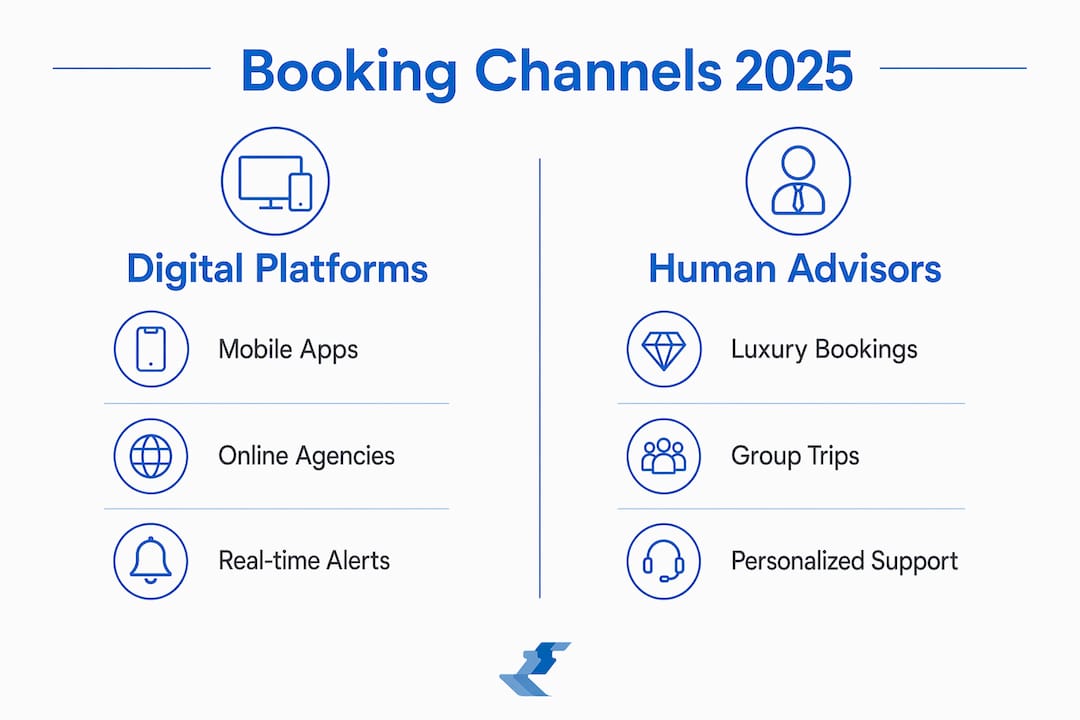
AI tools are entering this space as assistants, not replacements. AI in cruise bookings currently functions as administrative support, handling price checks, availability queries, and draft itineraries so that advisors can focus on high-value personal service. That division of labor makes the overall booking process faster and more accurate.
Here is how to decide which channel fits your trip:
- Self-service digital platforms work best for straightforward itineraries, short cruises, and price-sensitive travelers who know what they want.
- Travel advisors are worth the call for luxury sailings, complex multi-port itineraries, group bookings, and any trip where perks and upgrades matter.
- Hybrid platforms like ChooseCruise combine AI-powered search with expert guidance, giving you the speed of digital tools and the confidence of human oversight.
- Direct cruise line websites offer loyalty point redemption and early access to promotions but rarely match the breadth of an independent comparison platform.
Pro Tip: If your cruise budget exceeds $5,000 per person or involves more than two ports in different countries, contact a specialist advisor. The perks they secure typically outweigh any booking fee.
For a deeper look at how these channels compare, the guide on online cruise booking breaks down the trade-offs clearly.
How are traveler preferences shaping cruise bookings in 2025?
Destination drives the booking decision more than any other factor. Travelers pick a region first, then find a ship that fits. This reverses the older pattern where brand loyalty determined everything. 82% of cruisers now report loyalty to the travel experience rather than to a specific cruise line. That shift gives travelers more flexibility and gives booking platforms more influence over the final decision.
Ship size is the second major filter. 41% of travelers prefer medium-sized ships over megaships. Medium ships access smaller ports, carry fewer passengers, and create a more personal atmosphere. For travelers who want to visit places like the Norwegian fjords or the Greek islands without fighting crowds at the gangway, ship size is a non-negotiable.
Short cruises are the fastest-growing segment by booking volume. Three to five night sailings attract first-time cruisers who want to test the experience without committing to a two-week voyage. They also appeal to busy professionals who cannot take extended time off. This trend is reshaping how cruise lines structure their itineraries and how booking platforms present options.
| Preference | 2025 Trend |
|---|---|
| Destination focus | Travelers choose region first, ship second |
| Ship size | 41% prefer medium-sized ships over megaships |
| Cruise length | Short sailings (3–5 nights) growing fastest |
| Brand loyalty | 82% loyal to experience, not cruise line brand |
For travelers still building their destination shortlist, the guide to best cruise destinations 2025 covers both popular routes and emerging ports worth considering.
How is technology improving the cruise booking experience?
Cruise booking technology in 2025 has moved well beyond simple search filters. AI now handles the parts of booking that used to require a phone call. Conversational AI and mobile integration reduce booking friction by guiding travelers through cabin selection, excursion options, and dining preferences in real time. That guidance used to take 45 minutes on the phone. Now it takes minutes on a mobile screen.
The technology improvements follow a clear progression:
- AI-powered search matches traveler preferences to available itineraries using large language models and predictive analytics, surfacing options that a manual search would miss.
- Real-time price tracking alerts travelers when fares drop on their saved itineraries, removing the guesswork from timing a booking.
- Contactless and biometric systems speed up the pre-boarding process. Facial recognition at the gangway and keyless cabin access reduce congestion and free crew to focus on guest experience.
- Personalized offer engines use booking history and stated preferences to surface targeted upgrades, dining packages, and shore excursions at the right moment in the booking flow.
- Omnichannel engagement lets travelers start a booking on mobile, continue on desktop, and finish with an advisor, with all context preserved across channels.
“Agentic Commerce powered by AI aims to provide 24/7 digital booking with personalized guidance similar to human advisors, actively navigating cabin inventories, excursions, and traveler preferences using large language models and predictive analytics.”
Travel agents are also adopting these tools directly. AI-powered tools help advisors run price and availability checks faster, cutting response times and improving the quality of their recommendations. The technology does not replace the advisor. It makes the advisor sharper.
Pro Tip: Use a platform with real-time price alerts and set your target price before you are ready to book. Cruise fares fluctuate frequently, and travelers who monitor prices for two to four weeks before booking consistently secure better rates.
The full picture of how digital tools are reshaping the onboard and booking experience is covered in the article on technology changing cruise travel.
What challenges should travelers know about cruise booking in 2025?
Modern cruise booking is faster and more personalized than it was five years ago. It is not friction-free. Several real challenges affect travelers who go in unprepared.
- Booking complexity remains high. Multi-port itineraries with pre-cruise hotel stays, shore excursions, and specialty dining require coordination across multiple systems. Fully automated booking engines handle straightforward trips well but struggle with complex arrangements.
- Customer support wait times spike during peak periods. Wait times reach 2–3 hours during high-demand windows like wave season (january through march) and summer school holiday periods. Travelers who call during these windows face long holds.
- Overtourism is reshaping itineraries. The cruise industry forecast projects 42 million annual passengers by 2029. That volume puts pressure on popular ports, and some destinations are already restricting cruise ship access or capping daily visitor numbers.
- Geopolitical and weather disruptions require flexible bookings. Itinerary changes are more common than most travelers expect. Booking with a refundable deposit or a flexible fare class protects your investment when a port gets dropped.
- Price transparency varies by channel. Some booking platforms display base fares without port fees, taxes, or gratuities. Always calculate the total cost before comparing options.
The smartest response to these challenges is a combination of early planning and the right booking tools. Travelers who book six to nine months out get better cabin selection, lower fares, and more time to add excursions before they sell out. Using AI chatbots during off-peak hours resolves routine questions without the wait. And pairing a digital platform with an advisor for complex trips covers both speed and expertise.
Key Takeaways
The most effective approach to cruise booking in 2025 combines AI-powered digital tools with human advisor expertise, matched to the complexity and value of your specific trip.
| Point | Details |
|---|---|
| Hybrid booking dominates | 50% of bookings still go through advisors; digital platforms handle discovery and price comparison. |
| Destination drives decisions | Travelers choose a region first, then a ship, with 82% loyal to experience over brand. |
| Technology reduces friction | AI, real-time pricing, and biometric boarding speed up every stage of the booking process. |
| Short cruises are growing fast | Three to five night sailings attract first-timers and time-pressed travelers in large numbers. |
| Plan early and stay flexible | Book six to nine months out and choose refundable fares to protect against itinerary changes. |
The hybrid model is the only model that works
I have watched the cruise booking space long enough to know that every few years someone declares the travel advisor dead. AI will replace them. Online platforms will replace them. Direct booking will replace them. None of it has happened, and the 2025 data makes clear why.
The travelers who get the best outcomes are not the ones who go fully digital or fully advisor-driven. They are the ones who know when to use each. A 4-night Bahamas cruise for two? Book it yourself on a platform with real-time pricing. A 14-night Mediterranean sailing for a family of six with a pre-cruise stay in Barcelona? Call an advisor. That distinction is not complicated, but most travelers do not make it deliberately.
What I find genuinely interesting about 2025 is that AI is finally making advisors better rather than threatening them. When an advisor can run 20 price scenarios in the time it used to take to run two, they serve their clients at a higher level. That is the future worth paying attention to. The travelers who learn to use both tools confidently will consistently outplan those who pick one and ignore the other.
The trends beyond 2025 point toward even tighter integration between AI personalization and human judgment. Platforms that build that bridge well will define the next decade of cruise travel. For now, the practical advice is simple: use technology to find and compare, use humans to finalize and protect.
— Igor
Plan your next cruise with ChooseCruise
ChooseCruise brings together real-time pricing, AI-powered recommendations, and a wide catalog of ships and destinations in one place.
Whether you are booking your first short sailing or planning a complex multi-port itinerary, ChooseCruise gives you the tools to compare options quickly and book with confidence. The platform surfaces personalized deals based on your preferences, tracks price changes on saved itineraries, and connects you with expert support when you need a human perspective. Find and compare cruise deals across hundreds of sailings and start planning the trip you actually want.
FAQ
What are the biggest cruise booking trends in 2025?
The defining trends in cruise booking in 2025 are the hybrid booking model, AI-assisted personalization, and the rise of short sailings. Record passenger volumes of 37.2 million in 2025 reflect strong demand across all traveler segments.
How do I choose between a travel advisor and booking online?
Use a travel advisor for luxury sailings, group trips, or complex multi-port itineraries where personalized perks and coordination matter. Self-service digital platforms work best for straightforward, shorter cruises where price and speed are the priority.
Is AI replacing travel agents for cruise bookings?
AI is not replacing travel agents. AI functions as administrative support that handles price checks and draft itineraries, freeing advisors to focus on high-value personal service and complex planning.
What is the best time to book a cruise in 2025?
Booking six to nine months in advance gives you the best cabin selection and fare options. Avoid calling customer support during wave season (january through march) when wait times can reach 2–3 hours; use AI chatbots or book during off-peak hours instead.
Why are short cruises growing so popular?
Short cruises of 3–5 nights lower the commitment barrier for first-time cruisers and fit the schedules of travelers who cannot take extended vacations. They also serve as a practical way to test a ship or destination before booking a longer sailing.
Recommended
Related reading
6 Best Cruise Destinations 2026 for Smart First-Time Travelers
Discover the 6 best cruise destinations 2026 with expert tips for tech-savvy first-time travelers, including personalized advice for easier cruise booking.
Cruise Package Explained: Stress-Free Vacation Booking
Cruise package means bundled travel with accommodations, meals, entertainment, excursions. Learn the types, inclusions, pros, costs, and mistakes to avoid.
7 Smart Ways to Save on Cruises for Modern Travelers
Discover 7 smart ways to save on cruises with easy, practical tips designed for today’s digital cruise travelers. Learn to maximize value and minimize costs.