Real-Time Cruise Deals Explained: Save 15% with AI

Many travelers assume cruise prices only drop right before departure, but up to 60% of price changes actually happen weeks or months in advance. Real-time cruise deals leverage technology to capture these fluctuations instantly, helping you book smarter and save more. Understanding why cruise deals change empowers you to make confident decisions without the guesswork.
Table of Contents
- Introduction To Real-Time Cruise Deals
- How Technology Powers Real-Time Cruise Deals
- Common Misconceptions About Cruise Deals
- Comparing Real-Time Deals With Traditional Cruise Booking Methods
- Benefits Of Real-Time Cruise Deals For First-Time Cruisers
- Practical Tips To Maximize Savings Using Real-Time Cruise Deals
- Discover Your Best Real-Time Cruise Deals With ChooseCruise
- Frequently Asked Questions
Key Takeaways
| Point | Details |
|---|---|
| Average Savings | Real-time cruise deals save travelers around 15% compared to static pricing methods. |
| AI Efficiency | AI personalization reduces search time by up to 40%, making booking faster and easier. |
| Price Updates | Top platforms refresh prices multiple times daily, improving booking confidence. |
| Timing Myth | Most price drops occur weeks or months before departure, not just last minute. |
| Platform Variance | Not all booking sites offer true real-time updates, so choose your platform carefully. |
Introduction to Real-Time Cruise Deals
Real-time cruise deals are dynamic pricing offers that update continuously based on supplier inventory, demand, and market conditions. Unlike traditional cruise booking, where prices remain static for days or weeks, these deals reflect current availability and competition. You see exactly what’s available right now, not yesterday’s rates.
This approach transforms how you book cruises. Traditional pricing leaves you wondering if you’re getting a fair deal or if tomorrow might bring a better offer. Real-time systems eliminate that uncertainty by showing you live market rates, similar to airline ticket pricing.
Key benefits include:
- Transparent pricing that reflects actual market conditions
- Instant access to flash sales and limited-time promotions
- Automated alerts when your preferred cruises drop in price
- Reduced anxiety about missing better deals
The technology behind these systems integrates directly with cruise line inventories and pricing engines. Many platforms update prices once daily or less, so real-time pricing varies by technology sophistication. Platforms using advanced real-time price factors can refresh hundreds of times per day, capturing every meaningful shift.
For digital-savvy travelers tired of outdated cruise sites, real-time deals offer a modern alternative. Instead of manually checking multiple websites daily, you receive real-time cruise alerts when prices match your preferences. This saves hours of research and reduces decision fatigue.
How Technology Powers Real-Time Cruise Deals
Dynamic pricing algorithms constantly analyze thousands of data points to adjust cruise rates. These systems monitor cabin availability, competitor pricing, seasonal demand patterns, and historical booking trends. When any variable shifts, the algorithm recalculates optimal pricing within seconds.
AI personalization takes this further by learning your preferences. After analyzing your search history, budget range, preferred destinations, and travel dates, AI personalization reduces search time by up to 40% for cruise bookings. The system proactively surfaces deals matching your profile rather than forcing you to sift through irrelevant options.
Here’s how the ecosystem works:
- Cruise lines publish inventory and base pricing to their distribution systems
- Booking platforms connect via API to access live availability and rates
- AI engines analyze user behavior and preferences to predict ideal matches
- Dynamic pricing algorithms adjust offers based on real-time market conditions
- Automated alert systems notify travelers when deals meet their criteria
- Secure booking engines finalize reservations instantly with suppliers
Integration with supplier inventory ensures accuracy. When a cabin sells on one platform, all connected systems update within minutes. This prevents the frustration of seeing a deal that’s already gone when you try to book.
Pro Tip: Enable price tracking on multiple cruise options simultaneously. AI systems can monitor dozens of itineraries and alert you only when significant price drops occur, letting you compare opportunities effortlessly.
The best AI personalization in cruise booking learns continuously. Each search refines your profile, making future recommendations more accurate. This creates a personalized deal feed tailored specifically to your travel style.
Common Misconceptions About Cruise Deals
Many travelers believe prices only fall during the final weeks before departure. This myth causes people to wait too long, missing better earlier opportunities. Many price drops happen weeks or months in advance, not just last minute, particularly when cruise lines adjust inventory strategies or launch promotional campaigns.
Another misconception: all booking platforms offer genuine real-time updates. In reality, some sites cache pricing for 24 hours or longer, showing you yesterday’s rates. True real-time platforms refresh continuously throughout the day, capturing flash sales and sudden availability changes that slower systems miss.
Common myths debunked:
- Waiting until the last minute guarantees lowest prices: Early booking incentives often beat last-minute rates, especially for popular sailings
- Real-time deals always offer rock-bottom pricing: Deals reflect current market value, not necessarily historical lows
- All platforms update at the same speed: Technology infrastructure varies dramatically between booking sites
- Price tracking eliminates all booking risk: Market volatility means no system predicts every price movement perfectly
“Real-time pricing doesn’t mean prices only go down. During high-demand periods, rates can increase multiple times daily as cabins sell out.”
Understanding why cruise deals change helps you interpret pricing signals correctly. A stable price might indicate low demand or optimized positioning. Rapid increases signal strong booking momentum. Frequent drops suggest inventory challenges.
The key is recognizing that real-time systems provide transparency, not guarantees. They show you current market reality, empowering smarter decisions rather than promising impossible certainty.
Comparing Real-Time Deals with Traditional Cruise Booking Methods
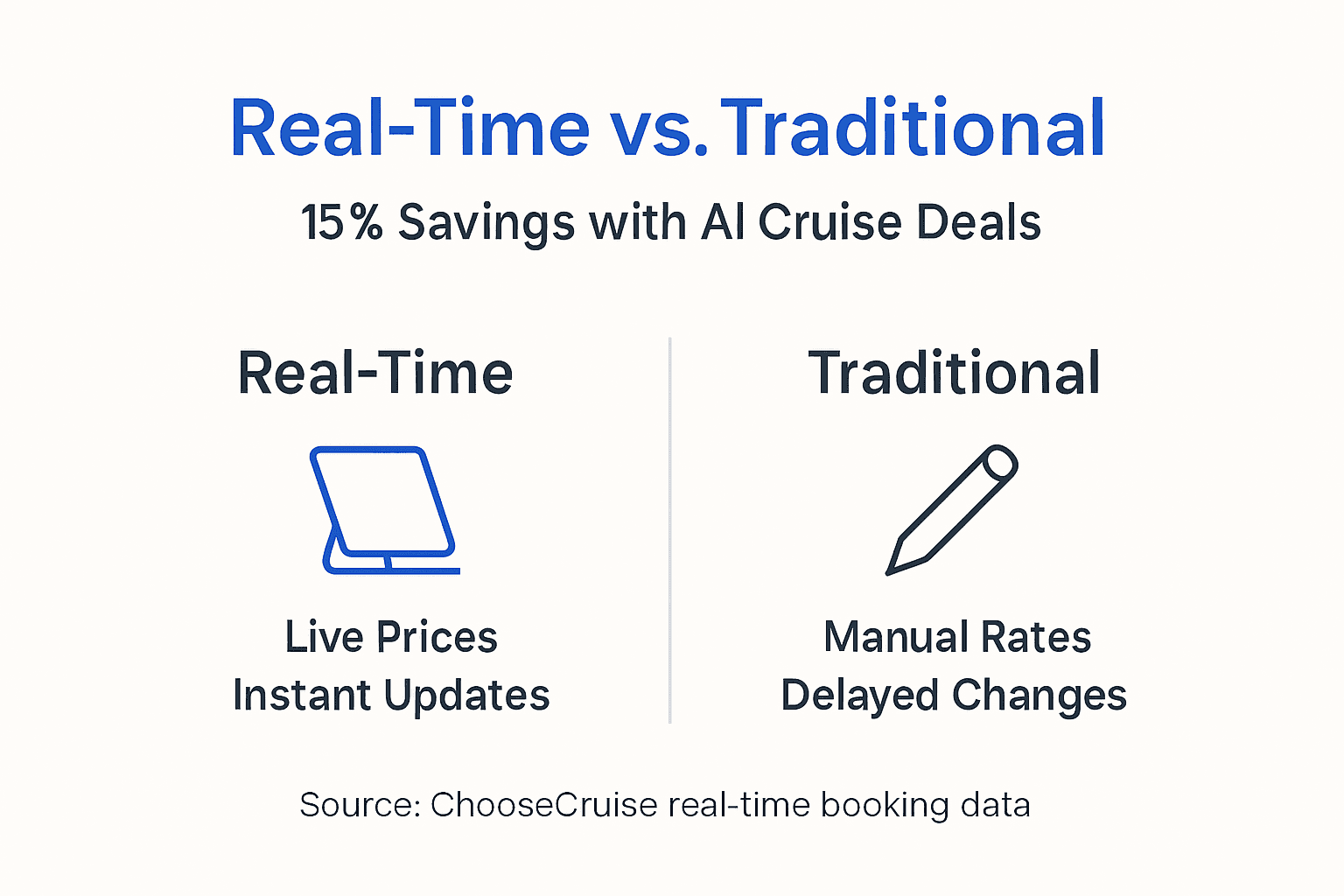
Traditional cruise booking relies on static pricing updated manually by travel agents or cruise line staff. Prices might change weekly or when promotions launch, but you’re looking at snapshots, not live data. Real-time platforms refresh continuously, showing current availability and competitive positioning.

This difference impacts your booking confidence significantly. With static pricing, you wonder if calling back tomorrow might reveal a better rate. Real-time systems show you what’s available now, reducing second-guessing.
| Feature | Real-Time Platforms | Traditional Booking |
|---|---|---|
| Price Update Frequency | Multiple times daily | Weekly or less |
| Transparency | Live market rates visible | Limited price history |
| Personalization | AI-powered recommendations | Manual agent suggestions |
| Alert Capabilities | Automated price drop notifications | Manual follow-up required |
| Booking Speed | Instant confirmation | Often requires phone calls |
| Average Savings | 15% through timing optimization | Variable, depends on agent skill |
Savings potential differs too. Real-time platforms let you act immediately when prices drop, capturing opportunities before they disappear. Traditional methods require contacting an agent, who must check availability and pricing, often missing fleeting deals. You can compare cruise pricing methods to see how timing affects final costs.
Decision-making becomes faster and more confident with real-time data. You’re not wondering if better deals exist elsewhere because you’re seeing aggregated market pricing. Modern booking system features demonstrate how real-time capabilities transform customer experiences across industries.
Traveler satisfaction improves when uncertainty decreases. Knowing you booked at a genuine market rate, confirmed instantly, beats the anxiety of wondering if your agent got you the best deal or just an adequate one.
Benefits of Real-Time Cruise Deals for First-Time Cruisers
First-time cruisers face overwhelming choices: cruise lines, ships, itineraries, cabin types, and departure dates. Real-time platforms with AI personalization cut through this complexity by learning your priorities and surfacing relevant options. AI personalization reduces search time by up to 40% for cruise bookings, transforming a daunting research project into a guided experience.
Transparency builds confidence when you’re unfamiliar with cruise pricing norms. Real-time systems show you how rates fluctuate, helping you recognize genuine deals versus inflated “sales.” You develop pricing literacy quickly, understanding what represents good value for your desired experience.
Key benefits for newcomers:
- Automated recommendations eliminate need to understand complex cruise industry terminology
- Price tracking alerts you to opportunities without constant manual checking
- Comparison tools show multiple options side by side with clear value propositions
- Instant booking confirmation reduces anxiety about securing reservations
Decision fatigue diminishes when AI narrows thousands of options to a personalized shortlist. Instead of comparing 50 Caribbean cruises manually, you review five that match your budget, preferred activities, and travel dates. This makes the booking process feel manageable rather than overwhelming.
Pro Tip: Set your preferences once, then let the system work for you. Cruise deals for first-time cruisers often include onboard credits or upgrades that AI systems automatically highlight, adding value beyond just the base fare.
Time savings matter when you’re learning. Traditional booking requires researching cruise lines, understanding deck plans, comparing itineraries, and negotiating pricing. Real-time platforms with strong AI handle the heavy lifting, presenting curated options with clear explanations. Check first-time cruiser tips to maximize your maiden voyage experience.
Practical Tips to Maximize Savings Using Real-Time Cruise Deals
Monitoring price trends strategically beats passive waiting. Set up tracking for your target cruises at least 90 days before desired departure dates. This window captures early booking promotions and gives you baseline pricing to evaluate later deals.
Follow these proven strategies:
- Enable alerts for multiple sailing dates to increase deal opportunities
- Track both your ideal cruise and acceptable alternatives for comparison leverage
- Act quickly when alerts trigger: real-time deals can vanish within hours
- Understand seasonal patterns: repositioning cruises and shoulder seasons offer steeper discounts
- Combine real-time monitoring with flexible travel dates for maximum savings potential
- Review complete pricing including taxes, fees, and port charges, not just base fares
Timing your booking requires balancing early-bird incentives against potential future drops. Smart cruise savings tips suggest booking when you find a price you’re comfortable with rather than chasing theoretical perfect timing. Real-time cruise deal alert systems help by notifying you of significant movements.
Common pitfalls to avoid:
- Waiting for last-minute deals on popular sailings that sell out early
- Ignoring total package value in favor of lowest base fare
- Failing to factor in cancellation policies when booking deeply discounted rates
- Overlooking included amenities that reduce onboard spending
AI-powered recommendations become more valuable when you provide accurate preferences. Update your profile with genuine priorities rather than what you think will generate deals. The system works best when it understands your actual desires. Explore budget cruise booking steps for comprehensive planning guidance.
Supply and demand patterns vary by region and season. Caribbean cruises peak during winter; Alaska sailings concentrate in summer; Mediterranean routes surge in spring and fall. Understanding these cycles helps you anticipate when prices soften. Similar to how coupon management features optimize retail timing, cruise pricing follows predictable seasonal rhythms.
Discover Your Best Real-Time Cruise Deals with ChooseCruise
You’ve learned how real-time technology and AI personalization transform cruise booking from overwhelming to effortless. ChooseCruise brings these capabilities together in one intuitive platform designed specifically for modern travelers like you.
Our AI engine learns your preferences and monitors thousands of cruises simultaneously, alerting you only when genuine deals match your criteria. No more manual price checking or wondering if you’re missing better options. Find and book cruise deals effortlessly with tools built for speed and confidence.
Whether you’re planning your first cruise or your tenth, ChooseCruise simplifies every step. Our AI-powered cruise recommendations surface personalized options instantly, while real-time price tracking ensures you book at optimal moments. Compare our approach with other top cruise booking platforms to see the difference modern technology makes.
Frequently Asked Questions
What defines a real-time cruise deal platform?
A real-time platform updates pricing continuously throughout the day by connecting directly to cruise line inventory systems via API. These systems refresh rates as bookings occur and market conditions shift, showing you current availability rather than cached historical data. True real-time capability means prices reflect actual market status within minutes.
How often do real-time cruise prices typically update?
Leading platforms refresh pricing multiple times daily, with some updating every few minutes during peak booking periods. Traditional sites might update weekly or only when manually refreshed by staff. The frequency depends entirely on the platform’s technical infrastructure and API integration sophistication with cruise suppliers.
Can I rely solely on real-time alerts for the best prices?
Real-time alerts significantly improve your chances of catching optimal pricing, but they work best combined with flexible travel dates and understanding of seasonal patterns. Alerts notify you of price movements but can’t predict every market shift. Use them as powerful tools within a broader booking strategy rather than guaranteed lowest-price finders.
Are real-time cruise deals good for last-minute bookings?
Real-time platforms excel at last-minute bookings by showing exactly what’s available now at current market rates. However, last-minute doesn’t always mean cheapest. Popular sailings often sell out weeks early, while less-demanded cruises offer genuine last-minute bargains. Real-time visibility helps you identify which scenario applies to your target cruise.
How does AI improve my cruise deal recommendations?
AI analyzes your search patterns, budget, preferred destinations, and travel style to predict which cruises you’ll value most. Instead of showing every available option, it surfaces a personalized shortlist matching your priorities. The system learns continuously, refining recommendations as you interact with it and improving accuracy over time.
Recommended
Related reading
7 Smart Ways to Save on Cruises for Modern Travelers
Discover 7 smart ways to save on cruises with easy, practical tips designed for today’s digital cruise travelers. Learn to maximize value and minimize costs.
Understanding Why Choose River Cruises for Travel Fun
Discover why choose river cruises as your next adventure. Explore their benefits, unique experiences, and how they enhance travel enjoyment.
Understanding the Best Cruise Lines for Beginners
Discover the best cruise lines for beginners, understanding what they offer and why they matter for first-time cruisers.