Early Cruise Booking Advantages: A First-Timer’s Guide

TL;DR:
- Booking a cruise early secures the lowest fares, best cabins, and valuable onboard perks. It also provides more planning time and reduces stress by allowing families and groups to reserve preferred rooms and activities in advance.
Booking a cruise early is the single most effective way to secure lower fares, better cabins, and valuable perks before they disappear. The advantages of early cruise booking extend well beyond price. You gain control over your cabin location, dining reservations, shore excursions, and even your flights. First-time cruisers who book 12–18 months in advance consistently get more for their money than those who wait. This guide breaks down exactly what you gain by planning ahead, and why the window to act is shorter than most people expect.
1. Advantages of early cruise booking: cabin selection
The best cabins go first. Popular suites, connecting family rooms, and accessible cabins sell out months before departure, often six months or more before the ship leaves port. By the time a last-minute deal appears, those options are long gone.

Booking 12–18 months ahead is the industry standard for the widest cabin selection and the lowest base fares. For world voyages or specialty sailings, that window stretches to 18–24 months. That timeline exists because demand for premium inventory builds fast.
Cabin location matters more than most first-timers realize. Midship cabins on lower decks feel less motion at sea. Cabins near elevators are convenient but noisy. Balcony cabins on higher decks offer better views but cost more. Booking early means you choose, not the cruise line.
- Suites and family connecting rooms book out first, especially during school holidays
- Accessible cabins are limited on every ship and disappear quickly
- Balcony cabins on preferred decks go to early bookers before general inventory opens
- Specific ship sections (midship, aft, forward) are only available when inventory is full
Pro Tip: Make a short list of your top three cabin priorities before you book. Decide whether you want a balcony, a specific deck, or proximity to the pool. Lock in your first choice early rather than settling for what remains.
2. Lower fares and financial benefits
Early Saver fares are the lowest guaranteed prices cruise lines publish. These fares reward commitment. When you book early, you pay the introductory rate before demand pushes prices up. AI-driven pricing now adjusts cruise fares in real time based on inventory and demand, replacing the old promotional cycles many travelers still expect. Waiting for a “sale” is increasingly a losing strategy.
Early booking also unlocks bundled incentives. Early-bird packages can offset over $1,000 in typical add-on costs through perks like onboard credits, free Wi-Fi, and beverage packages. That is money you would otherwise spend at sea.
The financial benefits extend beyond the cruise fare itself:
- Onboard credits reduce what you spend on specialty dining, spa treatments, and excursions
- Free Wi-Fi packages typically cost $25–$35 per day when purchased onboard
- Beverage packages run $60–$100 per person per day at retail rates
- Free gratuities are sometimes included in early booking promotions, saving hundreds per cabin
One more protection worth knowing: most major cruise lines will match a lower fare if prices drop after you book, up until the final payment deadline. You get the early price and the safety net.
3. Better trip planning and less stress
Locking in your cruise early gives you a planning runway that last-minute bookers never have. Airfare prices rise as a cruise departure nears, so booking your sailing first gives you months to monitor flight deals and buy at the right time. That alone can save hundreds of dollars per person.
Families benefit most from this runway. Family cabins and suites sell out well in advance, especially during peak school travel periods. A family of four that waits until three months out will likely face a choice between splitting into separate cabins or paying a premium for whatever connecting rooms remain.
Early booking also opens up the onboard experience before you even board:
- Specialty dining reservations at popular restaurants fill up fast, especially on sea days
- Shore excursions with limited group sizes sell out months in advance
- Spa appointments on embarkation day and sea days book quickly
- Kids’ club enrollment and special programs require advance registration on many ships
Pro Tip: Use your cruise planning timeline to schedule each booking task. Reserve specialty dining and shore excursions as soon as your booking window opens, typically 90–120 days before departure for most cruise lines.
4. Why last-minute cruise deals are riskier than they look
Last-minute deals exist, but they come with real trade-offs. Last-minute bookings typically yield leftover inventory. You get whatever cabin the cruise line could not sell. That might mean an interior room near the engine, a forward cabin prone to motion, or a ship that was not your first choice.
The rising popularity of cruising makes genuine last-minute bargains increasingly rare. Higher ship occupancy rates mean cruise lines rarely need to slash prices to fill ships. When they do discount, it is usually on less desirable sailings or shoulder-season dates.
There is one group for whom last-minute booking makes sense: flexible solo travelers or couples who live near a major port, have no cabin preferences, and can leave within days. For everyone else, the risks outweigh the potential savings.
The key differences between early and last-minute booking come down to control and cost:
| Factor | Early booking | Last-minute booking |
|---|---|---|
| Cabin selection | Full inventory available | Leftover cabins only |
| Base fare | Lowest guaranteed rate | Variable, often higher |
| Airfare cost | Lower with advance planning | Higher as departure nears |
| Onboard perks | Credits, Wi-Fi, beverages | Rarely included |
| Cancellation terms | Stricter, deposits required | More flexible, less choice |
Early Saver fares are typically non-refundable and require deposits months in advance. That commitment is the price of access to the best inventory and pricing.
5. How to maximize your early booking once it is confirmed
Booking early is the first step. Getting the most from that booking requires a few follow-up actions. The most important is monitoring your fare. Most cruise lines will adjust your price downward if the same cabin category drops before your final payment date. Set a calendar reminder to check your fare every 30 days.
Travel advisors do not charge travelers for their service. They earn commissions from cruise lines and can hold cabins with minimal deposits, monitor bookings for better rates, and unlock exclusive perks unavailable through direct booking. Using one costs you nothing and often saves you money.
A few more ways to protect and build on your early booking:
- Review cancellation deadlines so you know exactly when your deposit becomes non-refundable
- Pre-pay gratuities at today’s rates before any price increases take effect
- Book pre- and post-cruise hotels early using the same logic as the cruise itself
- Apply onboard credits strategically toward excursions or specialty dining rather than spending them on impulse purchases at sea
Pro Tip: Some travel advisors can place a short hold on a cabin without an immediate deposit. This gives you 24–48 hours to confirm flights and budget before committing. Ask specifically for a courtesy hold when you first inquire.
6. Planning cruises ahead of time for groups and families
Group travel amplifies every advantage of booking early. When you need four connecting cabins, two accessible rooms, or a block of balconies near each other, inventory constraints hit harder. Families traveling during school holidays face the tightest availability windows of any traveler segment.
Groups of eight or more passengers often qualify for group pricing, which includes additional onboard credits and sometimes a complimentary cabin for the group organizer. These group rates require early commitment, typically 12 months or more before sailing. The first-timer’s planning guide on ChooseCruise walks through exactly how to coordinate multi-cabin bookings without losing track of deposits and deadlines.
Coordinating flights for a group is also far easier when you have a confirmed sailing date a year out. You can monitor airfare trends together, set price alerts, and book as a group when fares drop to an acceptable level.
Key Takeaways
Booking a cruise 12–18 months in advance secures the lowest fares, the best cabin selection, and the most valuable onboard perks before inventory disappears.
| Point | Details |
|---|---|
| Book 12–18 months ahead | This window delivers the lowest base fares and the widest cabin selection. |
| Early perks offset $1,000+ | Onboard credits, Wi-Fi, and beverage packages save real money on add-on costs. |
| Families must book earliest | Family suites and connecting rooms sell out months before departure, especially during school holidays. |
| Fare protection exists | Most cruise lines match lower prices if fares drop before the final payment deadline. |
| Last-minute deals are shrinking | Higher ship occupancy rates make genuine last-minute bargains increasingly rare. |
Why I tell every first-time cruiser to book before they feel ready
Most first-time cruisers wait too long because they are not sure what they want yet. They think more research will lead to a better decision. In my experience, the opposite is true. The longer you wait, the fewer good options remain, and the more you pay for what is left.
The anxiety around committing to a cruise a year out is understandable. It feels like a big decision with a lot of unknowns. But here is what I have seen consistently: travelers who book early end up more excited, better prepared, and less stressed in the weeks before departure. They have already sorted their flights, reserved their dining, and mapped out their excursions. The trip feels real and planned, not rushed.
The travelers who wait for a “better deal” often end up with a worse cabin, higher airfare, and no onboard perks. They save nothing and sacrifice a lot. The cruise industry’s pricing structure is built to reward early commitment. Fighting that structure by waiting is a losing bet for most people.
My honest advice for first-timers: pick a destination that genuinely excites you, check the early booking savings guide on ChooseCruise, and commit. You can always refine the details. You cannot get back the cabin that sold out while you were still deciding.
— Igor
ChooseCruise makes early booking simple
Finding the right cruise early should not require hours of research across a dozen websites. ChooseCruise brings real-time pricing, AI-powered recommendations, and a full catalog of sailings into one clean, mobile-friendly platform built for first-time cruisers.
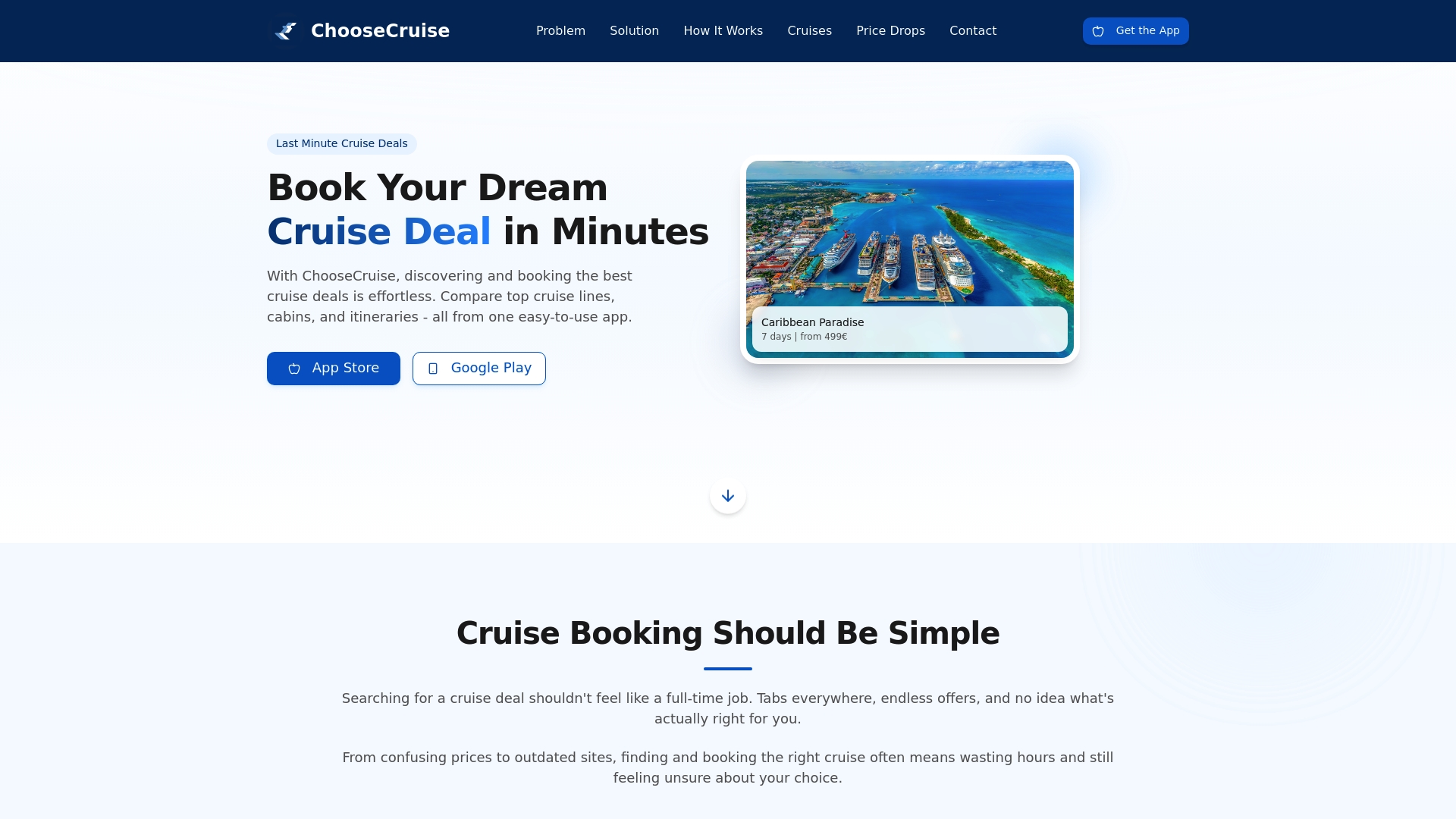
Early bird deals on ChooseCruise update in real time, so you see current fares and available perks the moment you search. Whether you are looking for a short getaway or a longer sailing, you can compare cruise deals across lines, dates, and cabin types without the noise. The platform also tracks price changes after you book, so you never miss a fare adjustment. Start your search early and let the inventory work in your favor.
FAQ
How far in advance should I book a cruise?
Booking 12–18 months ahead is the industry standard for the best fares and cabin selection. World voyages and specialty sailings require 18–24 months of lead time.
Do early cruise bookings include price protection?
Most major cruise lines will match a lower fare if prices drop before your final payment deadline. This means you get the early rate without the risk of overpaying if fares fall.
Is early booking worth it for a short cruise?
Yes. Even for 3-day cruise deals, popular cabin types and onboard perks sell out fast. Booking early secures your preferred cabin and any included incentives before inventory shrinks.
What happens if I need to cancel an early booking?
Early Saver fares are typically non-refundable and require deposits months in advance. Review the cancellation policy before booking and consider travel insurance to protect your deposit.
Can a travel advisor help with early cruise bookings?
Travel advisors do not charge travelers for their service and can hold cabins, monitor fares, and unlock exclusive perks. Using one costs nothing and often improves the early booking experience.
Recommended
Related reading
6 Best Cruise Destinations 2026 for Smart First-Time Travelers
Discover the 6 best cruise destinations 2026 with expert tips for tech-savvy first-time travelers, including personalized advice for easier cruise booking.
Cruise Package Explained: Stress-Free Vacation Booking
Cruise package means bundled travel with accommodations, meals, entertainment, excursions. Learn the types, inclusions, pros, costs, and mistakes to avoid.
7 Smart Ways to Save on Cruises for Modern Travelers
Discover 7 smart ways to save on cruises with easy, practical tips designed for today’s digital cruise travelers. Learn to maximize value and minimize costs.