How Technology Is Changing Cruise Travel in 2026

TL;DR:
- Technology enhances every stage of the cruise experience, reducing wait times and increasing personalization. Biometric verification streamlines embarkation, while onboard apps centralize services and improve connectivity. AI tools optimize bookings and increase revenue, making cruising more efficient and enjoyable for travelers.
Technology defines the modern cruise experience from the moment you search for a ship to the second you disembark. The role of technology in cruise travel now covers every touchpoint: AI-powered booking, biometric embarkation, onboard mobile apps, and real-time connectivity. SeaTrade Cruise’s 2026 outlook identifies mobile pre-boarding, biometric verification, and keyless cabin access as the forces reshaping how passengers move through a voyage. For travelers aged 25–45, this shift means less time in queues and more time actually enjoying the trip.
How digital tools are changing cruise booking and planning
Digital planning tools have replaced the traditional travel agent model for a growing share of cruise travelers. AI-powered platforms now analyze your preferences, past travel behavior, and budget to suggest itineraries you would not have found through a generic search. That kind of personalization was impossible at scale just five years ago.
Cruise line apps have become the central hub for pre-voyage logistics. You can complete online check-in, upload travel documents, reserve dining times, and book shore excursions before you ever step on the ship. Mobile cruise booking consolidates what used to require multiple phone calls or visits to a travel agency into a single app session.
The shift to direct digital booking also matters financially. Barclays analysts estimate that third-party commissions consume 3%–6% of cruise industry revenue. AI-driven direct booking channels reduce that cost, which creates room for better pricing and deals on the traveler’s end.
Key ways digital tools improve pre-cruise planning:
- AI recommendations match itineraries to your travel style, group size, and budget automatically.
- Centralized apps handle check-in, documentation, dining reservations, and excursion bookings in one place.
- Real-time price tracking alerts you when fares drop on routes you are watching.
- Digital document submission eliminates paper forms and speeds up terminal processing.
Pro Tip: Book shore excursions through the cruise line app at least two weeks before departure. Popular tours sell out fast, and pre-booking through the app often locks in the best available price.
For travelers who want to go deeper on this, AI-powered cruise recommendations explains how personalization engines work and what data they actually use.
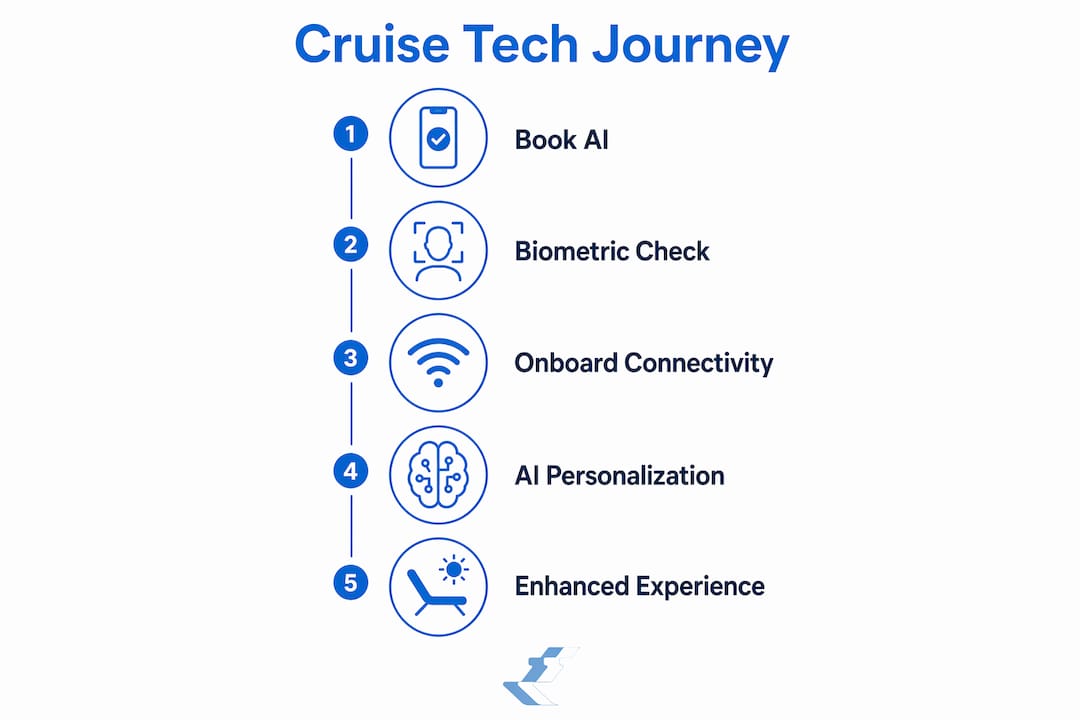
What role do biometric systems play in embarkation and security?
Biometric verification is the single biggest operational upgrade at cruise terminals in the past decade. Facial recognition and digital identity checks replace manual document inspection at multiple checkpoints, cutting embarkation times significantly. The result is a boarding process that feels closer to walking into a hotel than standing in an airport security line.
IDEMIA Public Security and Nevetal announced a 2026 partnership specifically to improve digital passenger processing across terminals, ships, and border checkpoints. Their goal is to balance fast guest flow with full compliance requirements. That balance is harder to achieve than it sounds.
The real breakthrough in biometric embarkation is not just speed at a single gate. The deeper value is integrated identity management that eliminates repeated manual identity checks across every checkpoint on a voyage. Without integration, a passenger might show a passport at the terminal, again at the gangway, and again at a port of call. A unified digital identity removes that friction entirely.
“The real benefit of biometrics on cruise journeys is minimizing repeated verifications through a unified digital identity.” — IDEMIA and Nevetal partnership statement, 2026
Security standards do not drop with biometric systems. They actually improve. Automated systems flag anomalies faster than manual checks and maintain a consistent audit trail across every passenger interaction. For travelers, this means faster boarding without any compromise on safety.
Benefits of biometric identity management at a glance:
- Reduces queue congestion at embarkation and disembarkation points.
- Prevents repeated manual document checks across multiple checkpoints.
- Supports regulatory compliance across international port authorities.
- Creates a consistent, verifiable passenger record throughout the voyage.
How do cruise apps and onboard connectivity improve your experience?
Onboard apps have changed what it means to be a passenger. The Princess Cruises app, for example, supports keyless cabin access, OceanNow contactless ordering, real-time ship navigation, dining reservations, and 24/7 chat support, all from your phone. That range of features reduces the need to visit guest services for routine requests.
Here is how a typical app-connected cruise day works in practice:
- Morning: Check the daily schedule and reserve a specialty dining table for dinner, all before leaving your cabin.
- Midday: Use the ship map to navigate to the pool deck or spa, then order a drink directly to your location via OceanNow.
- Afternoon: Browse shore excursion options for the next port and book directly through the app.
- Evening: Receive a real-time notification that your dinner table is ready, then check your onboard account balance without visiting the front desk.
Onboard Wi-Fi has improved considerably, but it still operates differently from home broadband. Modern satellite and cellular networks now support light browsing, messaging, and even video calls, but speeds vary based on weather, ship location, and how many passengers are online simultaneously. Shared bandwidth is the core constraint.
| Activity | Typical performance | Best time to try |
|---|---|---|
| Messaging and email | Reliable on most ships | Any time |
| Social media browsing | Generally good | Off-peak hours |
| Video streaming | Inconsistent | Late night or early morning |
| Video calls | Variable | Off-peak, near port |
| Large file downloads | Slow to very slow | Avoid during peak hours |

One important technical detail: app performance depends directly on a stable connection to the ship’s Wi-Fi network. If your credentials lose sync, real-time ordering and navigation features stop working even though the app interface remains visible. Reconnecting to the ship’s network resolves this in most cases.
Pro Tip: Treat cruise internet as a shared resource, not personal broadband. Time heavy browsing for early mornings or late evenings when fewer passengers are online, and you will notice a real difference in speed.
For a full walkthrough of getting the most from onboard apps, using cruise apps effectively covers navigation, ordering, and event booking in practical detail.
What impact is AI having on cruise profitability and guest discovery?
AI’s financial impact on the cruise industry is measurable and growing. Barclays analysts project that AI adoption could boost cruise line earnings per share by 12%–45% by reducing commission reliance and improving direct booking rates. That is a wide range, but even the lower end represents a structural shift in how cruise lines generate revenue.
The traveler benefit runs parallel to the business benefit. AI discovery tools surface cruise options that match your specific preferences rather than showing you the same popular routes everyone else sees. This matters most for first-time cruisers and younger travelers who do not have a travel agent relationship and need a faster way to find the right fit.
Key ways AI is reshaping cruise discovery and profitability:
- Direct booking channels cut out third-party commissions of 3%–6%, freeing budget for traveler incentives.
- Personalized discovery attracts tech-forward travelers aged 25–45 who expect recommendation quality similar to streaming platforms.
- Dynamic pricing tools adjust fares in real time based on demand, route popularity, and booking windows.
- Predictive analytics help cruise lines anticipate demand spikes and manage inventory more accurately.
The shift toward AI-driven direct booking also changes who gets to find great deals. Travelers who use AI-powered platforms gain access to real-time price drops and personalized offers that generic search tools miss entirely. Real-time cruise deals explains how AI deal optimization actually works and where the savings come from.
Key Takeaways
Technology shapes every stage of the modern cruise experience, from AI-powered booking and biometric embarkation to onboard apps and real-time connectivity, making cruises more personal, faster, and more accessible for travelers aged 25–45.
| Point | Details |
|---|---|
| AI booking drives direct savings | AI cuts 3%–6% commission costs and delivers personalized itinerary matches. |
| Biometrics speed up embarkation | Integrated identity management eliminates repeated manual checks across all checkpoints. |
| Onboard apps centralize services | Apps handle cabin access, ordering, navigation, and reservations from one device. |
| Wi-Fi is shared bandwidth | Time heavy internet use for off-peak hours to get consistently better speeds. |
| AI boosts cruise line EPS | Barclays projects 12%–45% EPS growth from AI-driven direct booking adoption. |
Technology should serve the trip, not run it
I have spent years watching the cruise industry add technology layer after layer, and the pattern I keep seeing is this: the best implementations are invisible. You do not notice biometric boarding because it just works. You do not think about the app because it answers your question before you finish asking it. That invisibility is the actual goal.
Where I see cruise lines go wrong is when technology becomes the feature rather than the tool. A ship that leads with its app over its destinations has its priorities backwards. The travelers I talk to do not want a tech demo. They want to spend less time waiting and more time at the pool bar.
The balance that works is what I call high-tech infrastructure with high-touch delivery. Let the biometrics handle boarding. Let the AI handle discovery. Let the app handle logistics. Then free the crew to do what no algorithm can: make a guest feel genuinely welcomed. That combination is what builds the kind of loyalty that brings people back for a second and third voyage.
The future of tech in cruising is not about adding more features. It is about making the features already in place so reliable that travelers stop noticing them entirely.
— Igor
ChooseCruise puts cruise tech to work for you
Planning a cruise in 2026 means you have more tools available than ever before. The challenge is finding a platform that actually uses those tools well rather than just listing ships.
ChooseCruise combines AI-powered recommendations, real-time price tracking, and a clean booking experience built for travelers who want the right cruise fast. Whether you are comparing itineraries for a week-long Caribbean voyage or checking out short cruise deals for a quick getaway, ChooseCruise surfaces the options that match your preferences without the noise. Find and compare cruise deals on ChooseCruise and see how much faster the right choice becomes when the technology actually works for you.
FAQ
What is the role of technology in cruise travel?
Technology shapes every stage of the cruise experience, from AI-powered booking and biometric embarkation to onboard apps and real-time connectivity. Its primary function is reducing friction and increasing personalization across the entire guest journey.
How do biometric systems improve cruise embarkation?
Biometric verification replaces repeated manual document checks with a unified digital identity, cutting queue times and maintaining security compliance across all checkpoints.
Do cruise ship apps work without internet?
Most cruise apps require a connection to the ship’s onboard Wi-Fi network for real-time features like ordering and navigation. Basic app functions may remain accessible offline, but live services depend on a stable ship network connection.
How does AI help travelers find better cruise deals?
AI recommendation engines analyze your preferences, travel dates, and budget to surface personalized itineraries and real-time price drops that generic search tools typically miss.
Is cruise ship Wi-Fi good enough for working remotely?
Cruise Wi-Fi supports messaging, email, and light browsing reliably. Video calls and streaming are inconsistent due to shared satellite bandwidth, and performance improves significantly during off-peak hours like early morning or late night.
Recommended
Related reading
6 Best Cruise Destinations 2026 for Smart First-Time Travelers
Discover the 6 best cruise destinations 2026 with expert tips for tech-savvy first-time travelers, including personalized advice for easier cruise booking.
Cruise Package Explained: Stress-Free Vacation Booking
Cruise package means bundled travel with accommodations, meals, entertainment, excursions. Learn the types, inclusions, pros, costs, and mistakes to avoid.
7 Smart Ways to Save on Cruises for Modern Travelers
Discover 7 smart ways to save on cruises with easy, practical tips designed for today’s digital cruise travelers. Learn to maximize value and minimize costs.