How to save on cruises: Guide for budget travelers

You’ve dreamed of a cruise vacation, but the price tag feels overwhelming. Between cabin fares, onboard expenses, and hidden fees, costs add up fast. The good news? Strategic planning can slash your cruise budget dramatically. Booking early saves up to 71%, and smart travelers who know when to book, what to compare, and how to manage onboard spending enjoy incredible vacations without breaking the bank. This guide delivers proven tactics to help first-time cruisers maximize savings on 2025 sailings.
Table of Contents
- Key takeaways
- Understand the cruise booking timeline and planning essentials
- Compare cruise options and choose the best value for your budget
- Execute smart booking strategies to lock in necessary discounts
- Manage your cruise expenses during the trip to maximize your budget
- Why choose ChooseCruise for your next budget-friendly vacation
- How to save on cruises 2025 frequently asked questions
Key Takeaways
| Point | Details |
|---|---|
| Early booking savings | Booking 12 to 18 months out unlocks the lowest fares and can save you up to 71 percent. |
| Flexible travel dates | Adjusting departure dates by a few days or choosing mid week can yield significantly lower fares. |
| Track total costs | Create a spreadsheet that compares all expenses from departure to return for different lines and cabin types. |
| Compare lines and itineraries | Evaluating duration, itineraries, and promotions helps find the best value rather than just the lowest price. |
| Off peak value | Off peak months and repositioning cruises can offer lower per day rates, though you should account for additional travel costs. |
Understand the cruise booking timeline and planning essentials
Timing transforms cruise affordability. Booking early saves up to 71% compared to last-minute purchases, making advance planning your most powerful savings tool. Cruise lines release inventory 12 to 18 months ahead, offering the lowest fares to early bookers who commit before cabins fill. As departure dates approach, prices typically climb as availability shrinks.
Flexibility multiplies your options. Travelers willing to adjust departure dates by even a few days access significantly better deals. Mid-week sailings cost less than weekend departures, and shoulder seasons between peak travel periods deliver substantial discounts. Consider these timing factors:
- Cruise during off-peak months when demand drops
- Avoid holiday weeks and school vacation periods
- Compare prices across multiple departure dates
- Monitor fare trends for your preferred destinations
Before booking anything, gather essential documentation and set realistic budgets. You’ll need a valid passport for international cruises, with at least six months validity remaining. Budget beyond the base fare to cover gratuities, excursions, specialty dining, beverages, and travel to the departure port. Many first-time cruisers underestimate total costs by focusing only on advertised cabin rates.
Pro Tip: Create a spreadsheet comparing total trip costs across different cruise lines, dates, and cabin categories. Include all expenses from departure to return, not just the cruise fare, to identify genuine value.
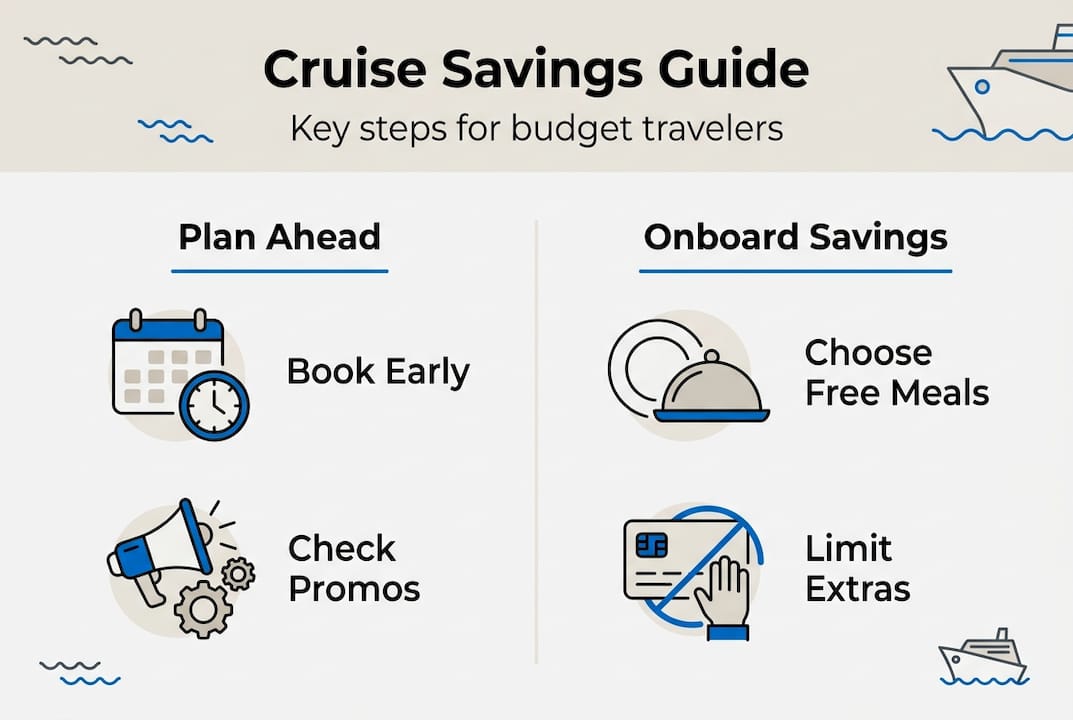
Research reveals critical differences between cruise lines that impact your bottom line. Compare these factors systematically:
| Comparison Factor | Why It Matters | What to Check |
|---|---|---|
| Base fare | Starting point for budget | Per-person, per-night cost |
| Included amenities | Reduces onboard spending | Dining, entertainment, activities |
| Gratuity policies | Mandatory daily charges | Prepaid vs. onboard billing |
| Port fees and taxes | Non-negotiable additions | Total added to base fare |
| Beverage packages | Major expense category | Included vs. purchase required |
Timing your booking around promotional periods amplifies savings. Cruise lines announce wave season sales from January through March, offering reduced deposits, onboard credits, and cabin upgrades. Black Friday and Cyber Monday deliver competitive deals, as do last-minute promotions for sailings departing within 90 days. Setting up price alerts through saving on cruises tips ensures you catch these limited-time offers before they expire.
Compare cruise options and choose the best value for your budget
Selecting the right cruise requires evaluating multiple dimensions beyond advertised prices. Duration significantly impacts total cost, with shorter sailings offering budget-friendly entry points. A three-day cruise costs substantially less than a seven-day voyage, yet still delivers the full cruise experience with dining, entertainment, and port visits. For first-timers testing whether cruising suits their travel style, shorter trips minimize financial risk.
Itinerary selection shapes both cost and value. Caribbean cruises typically cost less than European or Alaskan sailings due to proximity to major U.S. ports and year-round availability. Repositioning cruises, where ships move between seasonal home ports, offer exceptional value with longer durations at reduced per-day rates. However, these often require one-way flights, so calculate total transportation costs before booking.
Top cruise lines offer over 95 ships with varying price points and included amenities. Mass-market lines like Carnival and Royal Caribbean provide affordable base fares with many pay-as-you-go options. Premium lines such as Celebrity and Holland America charge higher fares but include more amenities, potentially reducing onboard spending. Ultra-luxury lines bundle nearly everything, eliminating surprise costs but commanding premium prices.
Package deals bundle services at discounted rates compared to purchasing individually. Evaluate these common packages:
- Beverage packages covering unlimited drinks
- Dining packages for specialty restaurants
- Internet packages for connectivity at sea
- Shore excursion bundles at multiple ports
- Spa and fitness packages for wellness services
Pro Tip: Calculate your typical daily consumption before buying beverage packages. If you drink fewer than five alcoholic beverages daily, paying per drink often costs less than unlimited packages.
Compare total value using this framework:
| Cruise Line Tier | Base Fare | Included Amenities | Typical Extra Costs | Best For |
|---|---|---|---|---|
| Mass-market | Lowest | Basic dining, entertainment | Drinks, specialty dining, WiFi | Budget-conscious travelers |
| Premium | Moderate | Enhanced dining, some drinks | Specialty dining, premium drinks | Value seekers |
| Luxury | Highest | Most dining, drinks, WiFi, tips | Limited extras needed | All-inclusive preference |
Upgrade opportunities deserve careful analysis. Interior cabins cost least but lack natural light and views. Oceanview cabins add windows at modest premiums. Balcony cabins command higher rates but provide private outdoor space. Suite upgrades include perks like priority boarding, concierge service, and exclusive areas. For budget travelers, interior cabins on newer ships with excellent public spaces deliver solid value.

Timing and loyalty programs create additional savings layers. Booking during wave season or targeting top cruise lines in 2025 promotional periods unlocks reduced deposits and onboard credits. Joining cruise line loyalty programs, even as a first-time cruiser, provides immediate benefits like discounted rates and priority access to sales.
Execute smart booking strategies to lock in necessary discounts
Price alerts transform passive browsing into active savings. Set up notifications through booking platforms to monitor fare fluctuations for your preferred sailings. Cruise prices change frequently based on demand, and catching a price drop can save hundreds per cabin. Many platforms offer price protection, refunding the difference if fares decrease after booking.
Last-minute cruises suit travelers with flexible schedules and nearby departure ports. Cruise lines discount unsold inventory as sailing dates approach, sometimes offering 50% or more off original fares. However, this strategy risks limited cabin selection and higher airfare costs if flying to the port. Balance potential cruise savings against total trip expenses.
Bundling airfare and hotel packages through cruise lines or travel agencies often costs less than booking separately. Cruise lines negotiate bulk rates with airlines and hotels, passing savings to customers. Pre- and post-cruise hotel stays become more affordable when bundled, and package deals typically include transfers between airport, hotel, and port.
Smart travelers leverage loyalty memberships and hospitality discounts throughout the booking process. Join your chosen cruise line’s loyalty program before booking to access member-only rates. AARP, AAA, military, and senior discounts stack with promotional offers on many cruise lines. Corporate partnerships and credit card rewards programs provide additional savings opportunities.
Follow this booking sequence to maximize discounts:
- Research and compare cruise options across multiple lines and dates
- Join loyalty programs and check eligibility for affiliation discounts
- Set price alerts for preferred sailings to monitor fare changes
- Book during promotional periods like wave season or Black Friday
- Consider bundling airfare, hotels, and transfers for package savings
- Review and purchase beneficial add-on packages before sailing
- Monitor prices post-booking and request adjustments if fares drop
Pro Tip: Book with a travel agent specializing in cruises at no extra cost. Agents access the same prices as booking direct but often secure additional onboard credits, cabin upgrades, or exclusive amenities through their agency relationships with cruise lines.
Promotional periods announced by cruise lines concentrate the best deals into specific windows. Wave season from January through March traditionally offers the year’s strongest promotions, including reduced deposits from $100 per person down to $50 or less, onboard credits up to $300 per cabin, and complimentary cabin upgrades. Black Friday and Cyber Monday sales rival wave season with aggressive discounting and bonus perks.
Exploring smart ways to save on cruises reveals insider strategies that experienced cruisers use repeatedly. Booking back-to-back cruises on the same ship eliminates repositioning costs and often qualifies for loyalty discounts. Guaranty cabins, where you book a category without choosing a specific cabin, cost less while offering potential upgrades if the cruise line assigns you to a better cabin.
Manage your cruise expenses during the trip to maximize your budget
Onboard spending spirals quickly without conscious control. Gift shops, casinos, specialty dining, spa services, and bar tabs accumulate charges to your cabin account that shock travelers at checkout. Controlling onboard spending prevents common budget overruns that can add 20% to 40% to your total cruise cost.
Shore excursions booked independently cost significantly less than cruise line offerings. Research port destinations before sailing and book tours directly with local operators. A cruise line excursion might charge $129 per person for a beach day, while the same beach charges $20 for chairs and umbrellas when you go independently. Ensure independent excursions return you to the ship with buffer time before departure.
Dining strategies control one of the largest discretionary expense categories. Stick with included main dining room meals and buffet options rather than specialty restaurants charging $25 to $75 per person. Attend early or late seating times in the main dining room for full-service meals at no extra cost. Skip room service charges by visiting the buffet for casual breakfast or late-night snacks.
Set daily spending limits and track expenses to avoid surprises. Many cruisers budget $50 to $100 per person daily for extras beyond the cruise fare. Check your cabin account balance every two days through TV systems or guest services to monitor spending patterns. Adjust behavior if tracking above budget rather than discovering overages at final checkout.
Maximize free onboard activities:
- Attend live shows, comedy performances, and musical entertainment
- Use fitness centers, pools, hot tubs, and sports courts
- Participate in trivia contests, dance classes, and enrichment lectures
- Enjoy movies under the stars and deck parties
- Take advantage of kids’ and teens’ clubs for family travelers
Pro Tip: Bring your own wine or champagne onboard to enjoy in your cabin. Most cruise lines allow one or two bottles per adult at embarkation, saving $25 to $50 per bottle compared to onboard purchases. Check your specific cruise line’s policy before packing.
Beverage costs represent major onboard expenses. Unlimited beverage packages seem attractive but require consuming significant quantities to break even. Calculate your typical daily consumption honestly. If you drink three cocktails daily at $12 each, that’s $36 daily or $252 for a seven-day cruise. A beverage package costing $65 daily totals $455, requiring seven drinks daily to justify the cost.
| Expense Category | Cruise Line Price | Independent/Free Option | Potential Savings |
|---|---|---|---|
| Shore excursion | $129 per person | $20-40 independent booking | $89-109 |
| Specialty dining | $45 per person | Included dining rooms | $45 |
| Beverage package | $65 per day | Bring allowed bottles, drink at ports | $50-65 daily |
| WiFi package | $20 per day | Wait for port WiFi | $20 daily |
| Spa services | $150 treatment | Skip or book port-side spas | $75-100 |
Casino gambling and art auctions create additional spending temptations. Set strict limits or avoid entirely to protect your budget. Duty-free shopping offers marginal savings on most items, with better deals available at home through online retailers. Focus spending on meaningful experiences rather than impulse purchases you’ll regret.
Following budget cruise tips helps first-time travelers avoid common financial pitfalls. Prepay gratuities before sailing to lock in rates and avoid thinking about tips daily. Decline automatic gratuity increases for specialty dining or spa services unless service truly warranted extra recognition. Bring your own snorkel gear, beach toys, and other equipment rather than renting at ports.
Why choose ChooseCruise for your next budget-friendly vacation
Finding the perfect cruise at the best price requires comparing dozens of options across multiple cruise lines, dates, and cabin categories. ChooseCruise simplifies this overwhelming process with comprehensive tools designed specifically for budget-conscious travelers planning their first cruise vacation. Our platform aggregates real-time pricing from major cruise lines, letting you compare true total costs including taxes, fees, and port charges in one place.
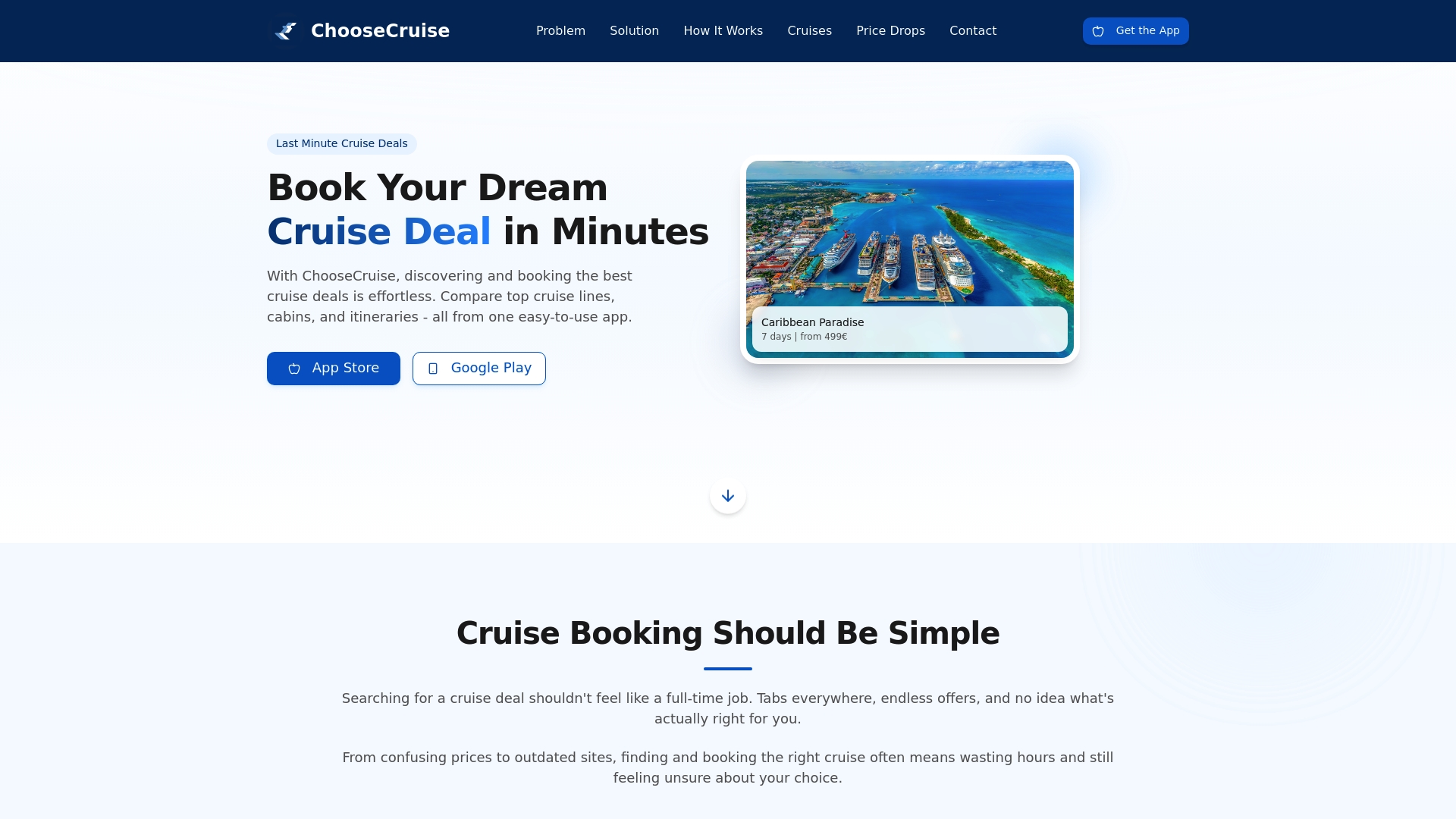
Our cruise deals comparison tools highlight limited-time promotions, wave season offers, and last-minute discounts automatically. Filter results by budget, destination, duration, and departure port to find sailings matching your exact preferences. First-time cruisers benefit from expert guidance and booking support throughout the process, ensuring you understand what’s included and what costs extra before committing.
Budget travelers especially appreciate our focus on shorter cruise options. Browse 3-day cruise deals perfect for testing cruise vacations without major time or financial commitments. These quick getaways deliver full cruise experiences with dining, entertainment, and port visits at substantially lower total costs than week-long voyages.
How to save on cruises 2025 frequently asked questions
First-time cruisers frequently ask about timing, upgrades, hidden costs, and flexibility when planning budget-friendly vacations. Understanding these common concerns helps you make informed decisions and avoid expensive mistakes. The following questions address the most important considerations for travelers seeking maximum value on their 2025 cruise bookings.
When is the best time to book a cruise to get the lowest price?
Optimal booking timing falls between 6 and 12 months before your desired sailing date, when cruise lines release inventory at introductory rates. Booking early saves up to 71% compared to waiting until closer to departure. However, last-minute deals within 90 days of sailing can work if you maintain flexible dates and destinations. Wave season from January through March consistently delivers the year’s strongest promotional offers with reduced deposits and onboard credits.
Are there ways to get free upgrades or additional perks on cruises?
Joining cruise line loyalty programs increases your chances for complimentary upgrades and additional amenities significantly. Even first-time members access exclusive rates and priority upgrade lists. Loyalty programs secure discounted or free upgrades in 2025 through systematic tier benefits. Booking during promotional periods or selecting guaranty cabins, where the cruise line assigns your specific cabin, also creates upgrade opportunities. Travel agents with preferred relationships sometimes negotiate upgrades and onboard credits as booking incentives.
How can I avoid hidden fees and extra charges on a cruise?
Carefully review all booking terms and conditions to understand which services are included in your base fare and which cost extra. Gratuities, beverage packages, specialty dining, shore excursions, spa services, and WiFi typically add to your final bill. Set firm daily spending limits for discretionary purchases and monitor your cabin account balance every two days. Prepaying gratuities and selecting all-inclusive beverage packages before sailing locks in costs and prevents surprise charges. Understanding your cruise line’s specific policies about automatic gratuities, minibar charges, and service fees helps you budget accurately.
Can booking a shorter cruise save me money without sacrificing the experience?
Shorter cruises absolutely deliver full cruise experiences at substantially lower total costs, making them ideal for budget-conscious travelers and first-timers. Three- to five-day sailings include all standard amenities like dining, entertainment, pools, fitness centers, and port visits. They visit popular destinations throughout the Caribbean, Mexico, and Bahamas with identical onboard service quality as longer voyages. Shorter cruises suit travelers with limited vacation time or budgets while providing complete introductions to cruise vacations. You’ll experience the same ships, service standards, and activities as week-long cruises at 30% to 50% lower costs.
Recommended
Related reading
6 Best Cruise Destinations 2026 for Smart First-Time Travelers
Discover the 6 best cruise destinations 2026 with expert tips for tech-savvy first-time travelers, including personalized advice for easier cruise booking.
Cruise Package Explained: Stress-Free Vacation Booking
Cruise package means bundled travel with accommodations, meals, entertainment, excursions. Learn the types, inclusions, pros, costs, and mistakes to avoid.
7 Smart Ways to Save on Cruises for Modern Travelers
Discover 7 smart ways to save on cruises with easy, practical tips designed for today’s digital cruise travelers. Learn to maximize value and minimize costs.