Real-Time Deals in Cruise Booking: Your 2026 Strategy

How real-time deals shape cruise booking decisions
Real-time deals in cruise booking are price adjustments and promotions that shift based on current cabin inventory, booking velocity, and live demand signals. Unlike the old brochure model where prices were set seasonally and stayed fixed, today’s cruise fares move the way airline tickets do: up when demand surges, down when cabins sit empty close to departure.
The practical impact on you as a traveler is significant:
- Pricing is no longer predictable by calendar alone. The same cabin on the same itinerary can cost dramatically different amounts depending on when you look.
- Savings windows are real but narrow. Price drops tend to cluster around two specific moments: 30–60 days before sailing and 1–5 days out.
- Promotions often replace fare cuts. When inventory is tight, cruise lines add onboard credit or dining packages rather than slashing the base fare.
- Flexibility is the entry fee. The travelers who benefit most from real-time deals are those who can commit quickly and adjust their plans on short notice.
- Technology now does the watching for you. AI-powered price alert systems track fare movements across hundreds of sailings simultaneously, so you don’t have to refresh pages manually.
The sections below break down each of these dynamics in detail, from the economics of cruise deals to the specific booking tactics that actually work in 2026.
What makes a cruise deal genuinely valuable?
A cruise deal is not just a lower fare. It can take the form of a reduced cabin price, added onboard credit, a free dining package, a cabin upgrade, or a combination of several perks bundled together. The economic value to you depends entirely on which of those you would have paid for anyway.

Cruise lines manage their ships like airlines manage seats: every empty cabin at departure is pure lost revenue. Their goal is to sail full, and they use a mix of early-booking incentives and last-minute promotions to get there. Value-add promotions like onboard credit and kids-sail-free offers let them fill cabins without training travelers to expect deep fare discounts every time.
What this means practically:
- Onboard credit has real value only if you spend it. A $200 credit on a sailing where you planned to spend $50 onboard is worth $50, not $200.
- Dining packages save money if you were going to book specialty restaurants anyway. If you prefer the main dining room, the package adds nothing.
- Cabin upgrades matter if location or category affects your experience. A balcony upgrade is genuinely valuable; a mid-ship interior to a forward interior is not.
- Fare discounts are the cleanest form of savings, but they require context. A “50% off” label means nothing without knowing the baseline fare.
Pro Tip: Before evaluating any promotion, write down what you would spend on that cruise without the deal. Then subtract the deal’s actual cash value from that number. If the result is lower than the next-best comparable sailing, you have a real deal. If not, keep looking.
What actually drives cruise prices up and down?
Cruise pricing is not random, even when it feels that way. Dynamic pricing models similar to those used by airlines and hotels are increasingly standard in the cruise industry, with fares adjusting in response to a combination of factors:
- Cabin inventory levels. As a ship fills up, remaining cabins get more expensive. When cancellations open inventory back up, prices can drop quickly.
- Booking velocity. If a sailing is selling faster than the cruise line projected, fares rise to capture that demand. Slower-than-expected sales trigger promotions.
- Seasonal demand patterns. Holiday sailings, spring break weeks, and peak summer departures command premium pricing. Shoulder seasons, particularly September through November and January, tend to produce the most accessible fares.
- Route popularity. Alaska, Europe, and Caribbean holiday itineraries stay expensive close to departure. Repositioning sailings, including transatlantic and transpacific crossings, often carry lower demand and better last-minute availability.
- Airfare and port access. A cheap cabin fare can be neutralized by expensive last-minute flights. Travelers who live within driving distance of a port have a structural advantage when chasing real-time discounts.
- Competitor pricing and market signals. Cruise lines monitor each other’s fares and adjust accordingly, especially on overlapping itineraries and departure dates.
The shift toward real-time data monitoring means cruise lines can now react to demand changes within hours rather than weeks. For travelers, that creates both opportunity and risk: prices can drop fast, but they can also rise fast.
How cruise lines use promotions instead of price cuts
When a ship is selling well, cruise lines rarely discount the base fare. Instead, they layer on value-add offers that preserve the perceived price of the cabin while giving travelers a reason to book now. This is a deliberate strategy, and understanding it helps you read promotions more clearly.
Common promotion types and what they actually signal:
- Onboard credit (OBC). The most flexible perk. Cruise lines use it to fill slower-selling categories without touching the published fare.
- Kids sail free. Targets families and fills cabins that would otherwise sit empty on sailings with lower adult demand.
- Specialty dining packages. Adds revenue to onboard spending while sweetening the booking decision.
- Drink packages. Similar logic: the cruise line captures beverage revenue upfront rather than gambling on per-drink sales.
- Free Wi-Fi. Increasingly standard as a value-add rather than a genuine differentiator, but still useful if you need connectivity.
- Cabin upgrades. Often offered when premium categories are underselling relative to interior and oceanview cabins.
Cruise lines focus on maintaining net yield by offering promotions that add value rather than deep discounting, which shapes what travelers see and expect. The practical implication: a sailing with a lot of promotional activity is often one where the cruise line is working to fill specific cabin categories, not one where the base fare is genuinely low.
Pro Tip: When you see a promotion stack (OBC plus dining plus Wi-Fi), check the base fare against comparable sailings on the same route. A heavily promoted sailing at a high base fare can cost more than a lightly promoted one at a lower fare, even after you account for all the extras.

When should you book to get the best price?
Booking timing is where most cruise travelers leave money on the table, in both directions. Book too early without monitoring, and you miss price drops. Wait too long, and you pay a premium or lose cabin choice entirely.
Last-minute cruise prices typically drop at two specific moments: 30–60 days before departure, when final payment deadlines trigger cancellations and release unsold cabins, and 1–5 days out, when the ship is leaving soon and empty cabins represent pure lost revenue. But this pattern is not guaranteed. Close-in demand has surged on popular routes, meaning more travelers are booking late at higher prices, which gives cruise lines less reason to discount.
Timing strategies that actually work:
- Book early for peak sailings. Holiday weeks, new ships, and high-demand routes like Alaska and Europe in summer rarely see last-minute discounts. Book as far in advance as possible.
- Target shoulder season for last-minute deals. September through november and january are consistently the best windows for finding genuine close-in discounts.
- Monitor from 60–90 days out, even if you plan to book early. Understanding what “normal” pricing looks like for a route lets you recognize a real drop when it appears.
- Watch the final payment deadline. This is when cancellations spike and new inventory appears. Set a calendar reminder for 60–90 days before any sailing you are tracking.
- Consider repositioning sailings. Transatlantic and transpacific crossings tend to have lower demand and better last-minute availability than Caribbean loops.
Who benefits most from last-minute booking: travelers who live near a port, have flexible schedules, are not traveling with school-age children, and are comfortable with limited cabin selection. Last-minute deals carry real trade-offs, including less choice on dining reservations, shore excursions, and embarkation times.
How price alerts help you catch real-time cruise deals
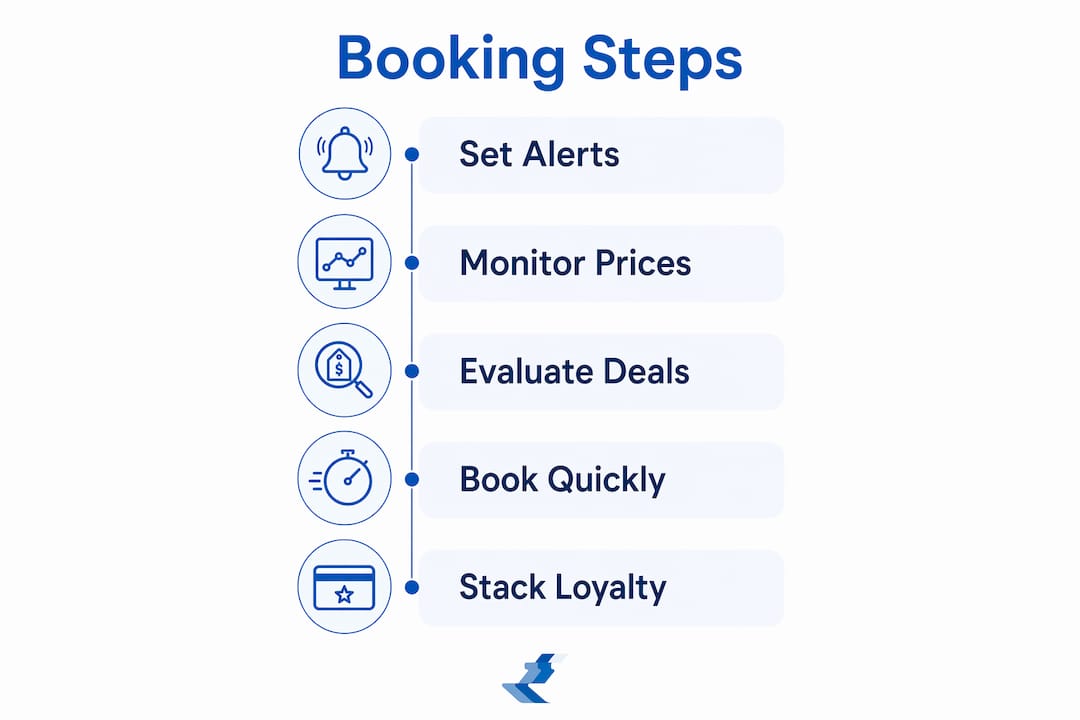
Price alert technology has changed the game for travelers who want to act on real-time discounts without spending hours refreshing booking pages. AI and big data-enabled alert systems monitor fare fluctuations across hundreds of sailings simultaneously and send notifications when prices drop to a target threshold or when a deal meets your specific criteria.
How to use price alerts effectively:
- Set alerts for specific routes and date ranges, not just ships. Fare drops often appear on one departure date while adjacent dates stay expensive.
- Define your target price before you start watching. Without a number in mind, every drop looks like a deal.
- Track fares for at least 60–90 days before your target travel window. This gives you a baseline so you can tell a genuine drop from a promotional reframe.
- Act fast when an alert fires. Real-time deals on desirable sailings can disappear within hours, especially close to departure.
- Combine alerts with flexible booking policies. Cruise lines often allow price adjustments or onboard credit if a lower fare appears after you book but before final payment, so booking early does not mean you are locked into the original price.
ChooseCruise’s real-time price tracking monitors fare movements and sends alerts when deals match your preferences, removing the manual work of watching multiple cruise line websites. The platform’s AI-powered recommendations also factor in your travel dates, cabin preferences, and budget, so alerts are relevant rather than generic.
Pro Tip: Don’t wait for a perfect price. Set a “good enough” threshold and book when the alert fires. Waiting for the absolute bottom of a price curve often means missing the deal entirely, since fares can reverse quickly when inventory tightens.
How ChooseCruise uses dynamic pricing data to find you better deals
Dynamic pricing in cruise booking means fares change continuously based on real-time inventory and demand data, not on a fixed seasonal schedule. Cruise lines have moved away from brochure-based pricing toward models that adjust rates in response to demand shifts, mirroring what airlines and hotels have done for years. For travelers, this creates both opportunity and complexity.
ChooseCruise integrates AI-powered analysis to cut through that complexity:
- Real-time price tracking monitors fare changes across sailings so you see current prices, not cached data from hours ago.
- Historical price context shows whether a current fare is genuinely low or just labeled as a deal against an inflated baseline.
- Personalized deal matching filters results by your cabin preferences, travel dates, and budget, so you are not sorting through irrelevant offers.
- Instant booking confirmation means you can act the moment a deal appears, without losing time to a slow checkout process.
The contrast between real-time deals and traditional advance booking prices is worth understanding clearly. Advance booking often secures better cabin selection and sometimes early-booking discounts, but it locks in a price that may or may not be the lowest available. Real-time deals can beat advance prices on shoulder-season sailings, but they come with less choice and more uncertainty. The best approach combines both: book early on peak sailings, and use real-time monitoring to reprice or find alternatives on flexible dates.
A practical example of how this plays out: a traveler books a balcony cabin 90 days out at a reasonable fare, then sets a price alert through ChooseCruise. When the fare drops at the 60-day final payment window, the platform flags the change. The traveler contacts the cruise line and receives onboard credit reflecting the price difference. The result is the original cabin at a lower effective cost, with no disruption to the booking.
For travelers who want to find and compare cruise deals across multiple lines and sailing dates, having a platform that surfaces real-time pricing data in one place removes the biggest obstacle: knowing whether what you are looking at is actually a good price.
How to stack loyalty programs with real-time deals
Loyalty programs and real-time deals are not mutually exclusive. With the right approach, you can use both simultaneously to reduce your total cost or increase the value of a sailing.
Most major cruise lines run tiered loyalty programs that reward repeat sailings with perks like priority boarding, cabin upgrades, onboard credit, and discounted fares. The key is knowing which benefits apply to promotional fares and which do not.
Strategies that work:
- Check whether your loyalty tier unlocks a discount on top of a promotional fare. Some cruise lines allow loyalty discounts to stack with existing promotions; others apply only one discount at a time. Read the terms before assuming they combine.
- Use loyalty points or credits for onboard spending rather than fare reduction when a real-time deal already covers the fare. If a last-minute deal brings the cabin price down significantly, your points go further applied to specialty dining or shore excursions.
- Book through the cruise line’s loyalty desk when a real-time deal appears. Loyalty agents sometimes have access to unadvertised rates or can apply member benefits that the general booking flow does not surface automatically.
- Track your points balance alongside fare alerts. When a price drop coincides with a points redemption opportunity, the combined savings can be substantial.
- Book on-ship for your next sailing. Cruise lines typically offer loyalty members additional perks, including reduced deposits and onboard credit, when booking a future sailing while still aboard. This is one of the most underused deal-stacking opportunities available.
The broader principle: loyalty programs reward consistency, while real-time deals reward flexibility. Travelers who build a history with one or two cruise lines gain access to benefits that make real-time deals even more valuable when they appear. Mobile-optimized booking platforms have made it easier to act on these combined opportunities quickly, since you can check your loyalty status, compare current fares, and complete a booking from your phone in minutes.
Key Takeaways
Real-time deals give cruise travelers a genuine pricing advantage, but only when combined with baseline fare knowledge, flexible timing, and the right technology tools.
| Point | Details |
|---|---|
| Two price-drop windows | Fares often fall in certain periods before departure, such as near final payment deadlines and when unsold cabins remain, but timing and magnitude vary. |
| Promotions over fare cuts | Cruise lines prefer adding onboard credit or dining packages to filling cabins rather than cutting the base fare. |
| Peak sailings rarely discount | Holiday weeks, new ships, and high-demand routes like Alaska and Europe see little to no last-minute price reduction. |
| Alerts require a baseline | Price alerts work best when you have tracked a route for 60–90 days and know what a genuinely low fare looks like. |
| Loyalty and deals can stack | Loyalty tier discounts, onboard credits, and real-time fare drops can combine, but only if you check the terms before booking. |
ChooseCruise tracks real-time fare movements across hundreds of sailings and sends you alerts when prices drop to your target. Whether you are planning months ahead or ready to sail next week, the platform’s AI-powered recommendations match deals to your specific dates, cabin preferences, and budget. Compare cruise deals now and see what is available at today’s prices.
Recommended
Related reading
6 Best Cruise Destinations 2026 for Smart First-Time Travelers
Discover the 6 best cruise destinations 2026 with expert tips for tech-savvy first-time travelers, including personalized advice for easier cruise booking.
Cruise Package Explained: Stress-Free Vacation Booking
Cruise package means bundled travel with accommodations, meals, entertainment, excursions. Learn the types, inclusions, pros, costs, and mistakes to avoid.
7 Smart Ways to Save on Cruises for Modern Travelers
Discover 7 smart ways to save on cruises with easy, practical tips designed for today’s digital cruise travelers. Learn to maximize value and minimize costs.