Round Trip Cruises: How They Work and How to Pick One
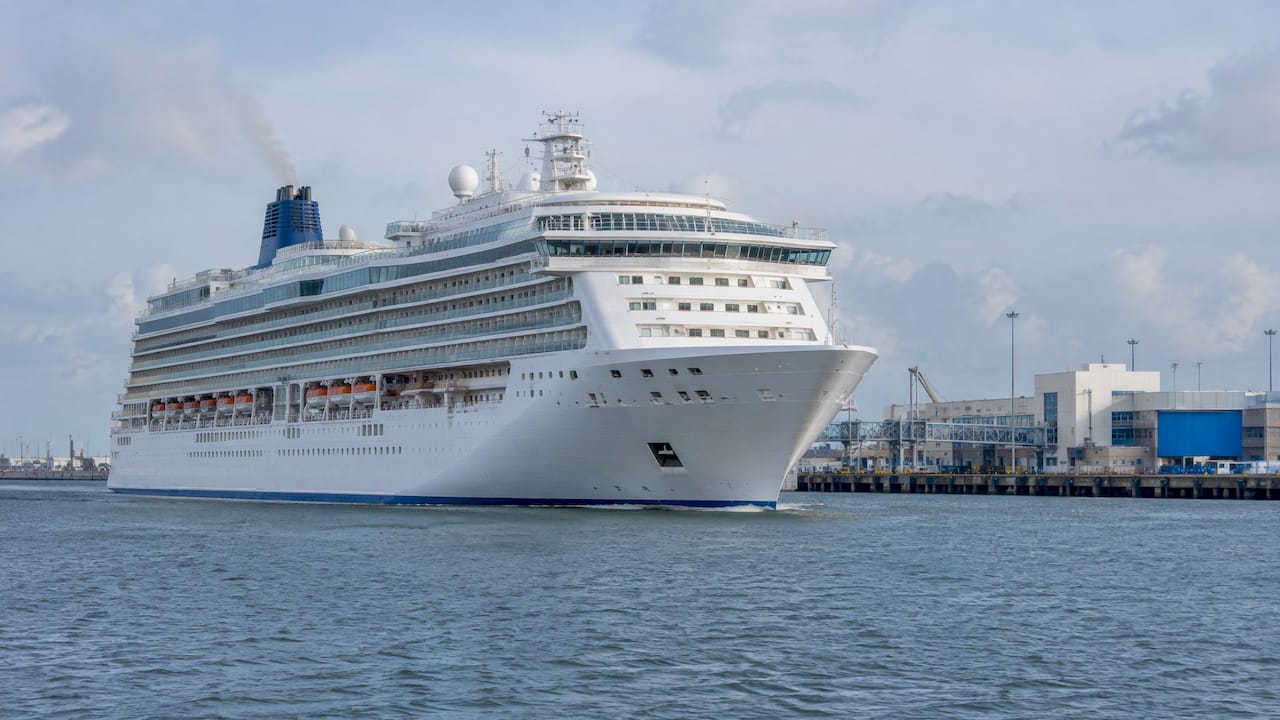
A round trip cruise leaves from one port and returns to that same port at the end of the voyage. That is why it is the easiest format for a first cruise: you book one set of flights or drive to one terminal, and you head home from the same place you started. The real work is choosing the right port, the right length and the right fare. On ChooseCruise you can search round trip sailings from one catalog, compare cabin fares across cruise lines and set alerts that watch for price changes on the sailings you like.
TL;DR
- A round trip (closed-loop) cruise starts and ends at the same port, so you need only one airport, one parking lot or one drive.
- From U.S. ports, round trips usually call at foreign ports in the Caribbean, Mexico, Canada or Bermuda because of a federal cruise law.
- Fares cover the cabin, meals and most onboard entertainment. Flights, drinks, Wi-Fi, excursions and tips are extra, and Consumer Reports says extras can add more than $1,000 per person.
- U.S. citizens on a closed-loop cruise within the Western Hemisphere can usually re-enter with a birth certificate and photo ID, but a passport is the safer choice.
- Pick the port first, then the length, then compare the total cost, not just the fare.
Table of Contents
- What a round trip cruise is, and how it differs from a one-way cruise
- Why round trips from U.S. ports stop where they do
- Round trip ports and itineraries worth knowing
- How to choose your first round trip cruise
- What the fare includes and what to budget for
- Documents: what to check before you sail
- Where ChooseCruise fits in
- Our perspective
- FAQ
- Sources
What a round trip cruise is, and how it differs from a one-way cruise
A round trip cruise, also called a closed-loop cruise, is a sailing where the ship returns to its starting port. A seven-night Caribbean loop from Miami that ends back in Miami is a round trip. A one-way cruise, such as Vancouver to Seward in Alaska, ends somewhere else. Travelers sometimes call a sailing that ends in a different U.S. port, for example one that starts in Fort Lauderdale and finishes in Miami, an open-jaw cruise.
The difference shows up in your budget and your planning:
| Round trip | One-way (open-jaw) | |
|---|---|---|
| Start and end | Same port | Different ports |
| Flights | One airport, one set of tickets | Fly into one city, home from another |
| Driving | Park at the terminal and return to your car | Needs a one-way rental, shuttle or train |
| Best for | First cruises, families, short trips | Longer routes where geography allows |
| Planning effort | Low | Higher |
One-way sailings make sense when you want to cover a lot of ground without backtracking, as on some Alaska and Europe routes. For a first cruise, a round trip keeps the moving parts to a minimum, and a slightly pricier round trip can easily be the cheaper total trip once you count the second airfare, transfers and hotel night that open-jaw plans often need.
Why round trips from U.S. ports stop where they do
If you search for round trip cruises from the U.S., you will notice the same destinations: the Bahamas, the Caribbean, Mexico, Canada and Bermuda. This is not a coincidence. Under the Passenger Vessel Services Act, a U.S. cabotage law, foreign-flagged cruise ships that carry passengers between U.S. ports must also stop at a foreign port. Most large cruise ships sail under foreign flags, so a loop that begins and ends in the U.S. includes at least one international call.
In practice that gives you a predictable map:
- Florida (Miami, Fort Lauderdale, Port Canaveral, Tampa): Bahamas, Eastern and Western Caribbean, and the Panama Canal on longer sailings.
- Texas (Galveston): Western Caribbean and Mexico.
- California (Los Angeles, San Diego, San Francisco): Mexico, plus some Panama Canal and Alaska itineraries.
- Seattle: Alaska loops that include a Canadian call, often in Victoria, British Columbia.
- Boston and New York: Canada and New England, plus Bermuda.
The same rule is why many Alaska one-way sailings start or end in Vancouver instead of a U.S. port. If you want a straight loop from a U.S. city, a round trip is usually the format cruise lines build for it.
Round trip ports and itineraries worth knowing
Length varies a lot by port, so decide how many days you can take off before you fall for a destination.
Florida and the Caribbean
Florida is the center of the round trip market. Most sailings from Miami, Fort Lauderdale and Port Canaveral run from 3 to 14 nights. A short 3 to 5 night loop suits a first-timer who wants to test the experience. A 7 night loop gives you time for two or three islands and several sea days. If you like to compare, you can browse Miami to Eastern Caribbean and Miami to Western Caribbean sailings side by side.
Eastern itineraries tend to focus on beaches and island hopping, while Western ones lean toward Mexico and Central America, often with ruins, snorkeling and jungle excursions. Either works as a first cruise.
Alaska from Seattle and Vancouver
Alaska is the classic round trip for travelers who want scenery. Princess Cruises’ 2027 Alaska brochure lists round trip Inside Passage cruises of 4 to 16 days from Seattle, Vancouver, San Francisco and Los Angeles, with calls such as Skagway, Ketchikan, Juneau, Sitka and Glacier Bay National Park. Seattle is the simplest option for most U.S. travelers because the loop starts and ends in the U.S. Vancouver adds a border crossing but is a popular alternative. You can compare Seattle to Alaska and Vancouver to Alaska sailings in one place.
When you read an Alaska itinerary, look at the day-by-day plan: does it include a glacier day (such as Glacier Bay), and what time does the Canadian stop happen? An evening call is mostly a legal formality, while a daytime call gives you a real port day.
Panama Canal loops
The canal is a bucket-list route, and you can do it as a round trip. Princess’s 2026–2027 Panama Canal program lists 31 departures from five ports, with roundtrip sailings from Fort Lauderdale featuring partial transits and ocean-to-ocean voyages for the full crossing. If you want to see what is available, start with Fort Lauderdale to Panama Canal or Miami to Panama Canal. Know that a partial transit is a loop that goes into the canal and turns back, while a full transit ends at a different ocean and usually a different port.
Canada, New England and very long loops
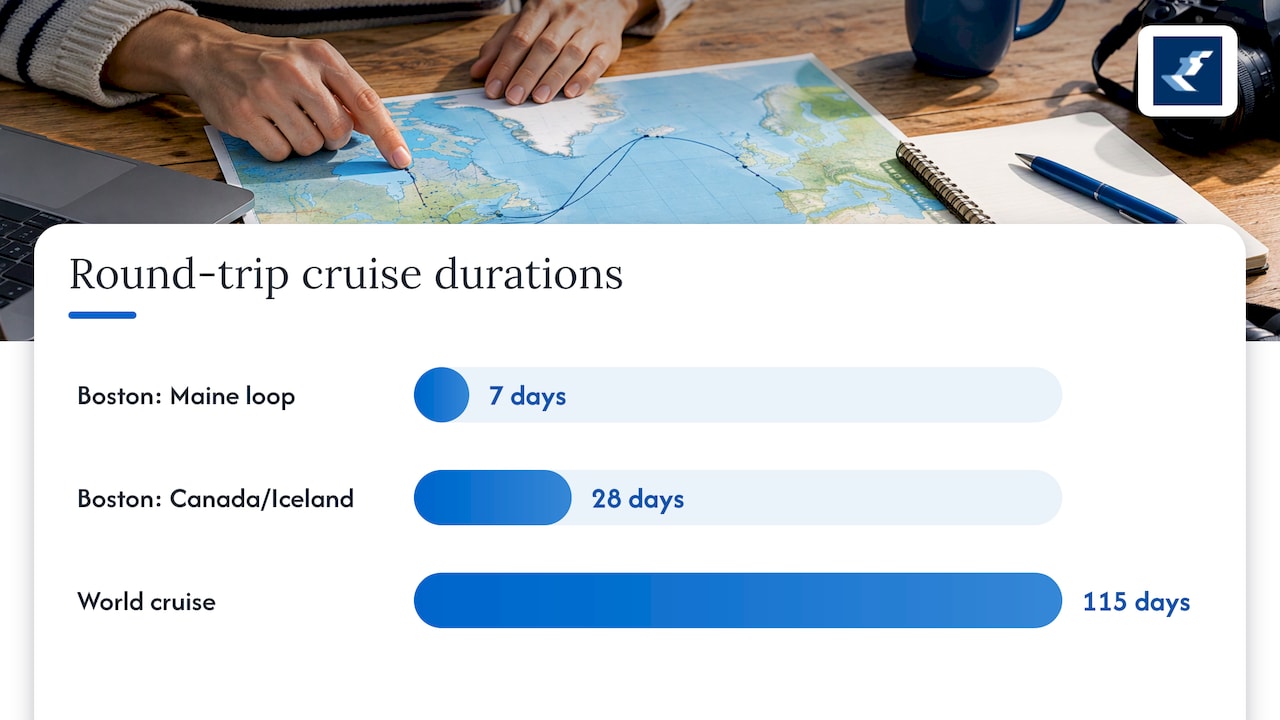
Boston is a strong round trip port for fall foliage and Maritime Canada. Holland America Line’s 2026 Canada and New England planner features roundtrip Boston sailings, including a 7-day Maine and Maritimes circle and a 28-day Canada, New England and Iceland roundtrip. At the far end of the scale, Princess’s 2028 World Cruise is a 115-day roundtrip from Fort Lauderdale or Los Angeles. Most travelers will never need that, but it shows that closed-loop does not mean short.
How to choose your first round trip cruise
Use this order. It prevents the common mistake of picking a ship and then discovering the logistics do not work.
- Pick the port you can reach cheaply. A port within driving distance can save hundreds of dollars on flights for a family. If you must fly, check airfare to the port city before you look at cruise fares.
- Pick the length. For a first cruise, 4 to 7 nights is typical. Fewer than that, and you spend a large share of the trip boarding and disembarking. More, and sea days start to dominate.
- Pick the region. Warm water and beaches point to the Caribbean or Mexico. Glaciers and wildlife point to Alaska. History and engineering point to the Panama Canal.
- Read the port list, not just the headline. Look at how many sea days there are, how long you stay in each port and whether any calls are late evening or very short.
- Compare the cabin fare, then the total. Inside, ocean-view, balcony and suite categories can differ by hundreds of dollars. Compare the same cabin type across sailings.
- Time your booking. Fares change, and the same cabin on the same sailing can move up or down. A tracker that watches the sailing for you saves you from checking daily.
On ChooseCruise, the Cruise Search Engine pulls offers from travel agency partners into one searchable catalog, so you can filter by departure port and compare cabin-by-cabin fares across cruise lines instead of opening a dozen tabs. If you are not sure where to start, the AI Cruise Chat gives recommendations based on what you tell it about your trip.
What the fare includes and what to budget for
A cruise fare looks cheap until you add up what it leaves out. According to Consumer Reports, a typical 7 to 10 day cruise costs about $2,750 per adult. Fares generally cover the cabin, meals, most entertainment and access to pools, hot tubs, fitness centers and classes. Flights, pre- and post-cruise hotels, trip insurance, Wi-Fi, drinks, specialty dining, shore excursions, spa treatments, photos and tips are extra, and together they can add more than $1,000 per person. Consumer Reports also found that over 90% of cruisers in its survey paid for something beyond the fare.
A simple budget for two people on a 7-night round trip should have these lines:
- Cruise fare for both passengers, including taxes and port fees
- Transportation to the port, which is flights or fuel plus parking
- A hotel night before departure, so a delayed flight does not cost you the sailing
- Gratuities, which are often charged daily per person
- Drinks, Wi-Fi and specialty dining, based on your honest habits
- Shore excursions at each port
- Travel insurance
Frommer’s notes that mainstream and premium lines almost always charge extra for Wi-Fi, drinks, gratuities, specialty dining, excursions and spa, while luxury lines bundle much more into a higher upfront fare. A low headline fare and a more inclusive sailing can end up close in price once you add what you will actually use. Our guide to what is included in cruise fare costs walks through the categories in more detail.
A worked example
Say you are a couple choosing between two 7-night loops. One has a lower fare, but you plan to have a drink each evening, buy Wi-Fi for a work check-in and book one excursion per port. The other costs more but includes some of those items. Add your real extras to the lower fare and compare the two totals. That is the number to compare, and it is why a comparison tool that shows fares cabin by cabin is more useful than a list of starting prices.
Documents: what to check before you sail
This is the part that catches first-timers off guard. The rules depend on your citizenship and on whether the cruise is truly closed-loop.
U.S. Customs and Border Protection says U.S. citizens on closed-loop cruises, meaning cruises that begin and end at the same U.S. port, can enter the United States with a birth certificate and a government-issued photo ID. That is the rule for re-entry to the U.S. Foreign countries set their own entry rules, and a cruise line may require a passport for its own reasons. If a flight is part of your trip, for example to reach the port or to get home after a missed ship, you will need a passport to fly internationally. For that reason, a valid passport is the safest document to carry on any cruise. One-way cruises, even between two U.S. ports, may require a passport.
Check these items before you book:
- Your name on your ID and booking match exactly.
- Your passport is valid for the period the cruise line requires. Many lines ask for at least six months beyond your return date.
- Children have the right proof of citizenship for their age.
- Non-U.S. citizens, including Europe-based travelers sailing from U.S. ports, check visa and entry requirements for the U.S. and each port of call with the relevant embassy or the official U.S. government pages.
Where ChooseCruise fits in
The hard part of booking a round trip is not finding one. It is comparing dozens of near-identical loops and knowing whether the price you see is a good one. ChooseCruise gathers offers from travel agency partners into one catalog, tracks fare changes and sends alerts when a sailing you watch changes price. You can compare cabin fares across lines, ask the AI Cruise Chat for recommendations and book in the app. Access is free for travelers.
If you already know your port, start at the Cruise Search Engine and filter by departure. To follow fare movement on a sailing you like, use Price Drops.
To browse before you decide, the cruise deals page lists current offers, and the ChooseCruise homepage is where you can open the chat and get a shortlist.
Our perspective
Most cruise shopping goes wrong because people compare starting prices. A fare is only the first line of a trip budget, and a round trip is the format that keeps every other line small: one airport, one car, one hotel night.
We built ChooseCruise for people who are tired of old-style cruise sites with too many choices and not enough guidance. Our catalog brings offers from travel agency partners into one place, and we compare fares cabin by cabin so you see the same cabin type across sailings instead of a vague “from” price.
Our advice to a first-timer is simple. Choose the port you can reach easily, choose a 5 to 7 night loop, watch the fare for a while and let the alerts tell you when it moves. You do not need to refresh a page every morning to do that.
Igor
FAQ
Is a round trip cruise cheaper than a one-way cruise?
Not always on the fare itself, but often in total. A round trip means one airport and one set of tickets, while a one-way cruise usually adds a second flight, transfers and possibly a hotel. Compare the full trip cost, not only the cruise fare.
Do I need a passport for a round trip cruise from the U.S.?
U.S. citizens on a closed-loop cruise can generally re-enter the U.S. with a birth certificate and government-issued photo ID, according to CBP. A passport is still the safest document to carry, because it covers flights home if something goes wrong and satisfies any cruise line or port rule.
Which U.S. port is best for a first round trip cruise?
The best port is the one you can reach most cheaply. Florida ports such as Miami, Fort Lauderdale and Port Canaveral offer the most sailings and the widest range of lengths. Seattle is the simple choice for an Alaska loop, and Galveston and Los Angeles work well if you live nearby.
How long should my first cruise be?
Four to seven nights suits most first-timers. A shorter sailing gives you a taste, while seven nights gives you time for several ports and a few sea days without feeling rushed.
Why do round trip cruises from the U.S. always stop in another country?
The Passenger Vessel Services Act requires foreign-flagged ships carrying passengers between U.S. ports to call at a foreign port. A loop that starts and ends in the U.S. therefore includes a stop in places like the Bahamas, Mexico, Canada or the Caribbean.
Sources
- The Passenger Vessel Services Act and America’s Cruise Tourism Industry (University of Hawaii, UHERO)
- Western Hemisphere Travel Initiative (U.S. Customs and Border Protection)
- How to Book the Best, Cheap(ish) Cruise (Consumer Reports)
- The True Cost of a Cheap Cruise (Frommer’s)
- 2027 Alaska by Princess
- Panama Canal 2026-2027 by Princess
- World Cruise 2028 by Princess
- Holland America Line 2026 Canada and New England Planner
Recommended
Related reading
6 Best Cruise Destinations 2026 for Smart First-Time Travelers
Discover the 6 best cruise destinations 2026 with expert tips for tech-savvy first-time travelers, including personalized advice for easier cruise booking.
Cruise Package Explained: Stress-Free Vacation Booking
Cruise package means bundled travel with accommodations, meals, entertainment, excursions. Learn the types, inclusions, pros, costs, and mistakes to avoid.
7 Smart Ways to Save on Cruises for Modern Travelers
Discover 7 smart ways to save on cruises with easy, practical tips designed for today’s digital cruise travelers. Learn to maximize value and minimize costs.