Flexible cruise fares explained: Book confidently in 2026

You’ve heard flexible cruise fares offer freedom, but they don’t let you cancel anytime without penalties. Many first-time cruisers believe flexible fares provide unlimited changes, leading to confusion when fees appear. This guide clears up misconceptions and explains how flexible fares actually work so you can book your cruise with confidence and avoid surprises.
Table of Contents
- Understanding Flexible Cruise Fares
- How Flexible Cruise Fares Impact Pricing And Booking Behavior
- Common Misconceptions About Flexible Cruise Fares
- Comparing Flexible Cruise Fares: What You Get And What You Trade Off
- Practical Tips For Booking Flexible Cruise Fares With Confidence
- Summary: Navigating Flexible Cruise Fares For First-Time Travelers
- Discover Your Perfect Cruise Fare With ChooseCruise
- Frequently Asked Questions
Key takeaways
| Point | Details |
|---|---|
| Flexible fares require partial deposits | Typically 10-20% upfront with later full payment deadlines |
| Premium cost is moderate | Expect 5-15% more than standard fares for added flexibility |
| Change windows are limited | Penalty-free modifications usually apply 30-60 days before sailing |
| Booking confidence increases | First-time cruisers gain 20% more confidence with flexible options |
| Understanding terms prevents fees | 35% of new cruisers face unexpected charges from misreading policies |
Understanding flexible cruise fares
Flexible cruise fares give you breathing room when booking. Unlike standard fares that demand full payment upfront, flexible fares require partial deposits of around 10-20% of the total cost. You’ll pay the balance later, typically 60-90 days before your cruise departs.
These fares include penalty-free cancellation or change options within specific windows, usually 30-60 days before sailing. If your plans shift early enough, you can modify your booking without losing money. Standard fares lock you in immediately with strict penalties for any changes, creating stress if uncertainty exists.
The later payment schedule reduces your immediate financial burden. You secure your cabin without committing thousands of dollars months in advance. This breathing room matters especially when coordinating travel with family or waiting for work schedules to finalize.
Key differences between fare types:
- Flexible fares: partial deposit, later full payment, penalty-free changes within windows
- Standard fares: full payment upfront, strict change penalties, lower base price
- Flexible fares: higher total cost but reduced booking anxiety
- Standard fares: best for travelers with locked-in plans and tight budgets
Understanding these cruise fare types helps you set realistic expectations. You’ll know exactly when penalties kick in and when your money becomes non-refundable. This clarity reduces the anxiety many first-time cruisers feel when making their initial booking.
How flexible cruise fares impact pricing and booking behavior
Flexible fares aren’t drastically more expensive. The 5-15% price premium reflects the value of later payment deadlines and change options. For a $2,000 cruise, you might pay an extra $100-300 for flexibility, which many travelers find worthwhile.

This pricing structure serves both you and the cruise line. You get financial protection against unexpected life changes. The cruise line fills cabins earlier while managing revenue through staggered payment collection. Everyone wins when the model aligns incentives properly.
Booking confidence among first-time cruisers rises by approximately 20% with flexible fares. That confidence translates to earlier bookings, better cabin selection, and reduced last-minute scrambling. When you’re not worried about losing your entire deposit, you can commit to dates sooner.
Pricing factors that affect your decision:
- Base fare difference: typically $100-400 depending on cruise length
- Risk tolerance: high uncertainty justifies premium cost
- Booking timeline: earlier bookings may offset flexibility costs through better base prices
- Travel party size: flexibility value multiplies with more travelers
Cruise lines use these fares strategically to smooth demand. By offering flexible options, they capture bookings from hesitant travelers who might otherwise wait. This improves occupancy rates and allows better resource planning. You benefit from understanding cruise fare costs when evaluating whether the premium matches your needs.
Consider your personal situation carefully. If your job involves unpredictable scheduling or you’re coordinating multiple families, flexible fares provide peace of mind worth far more than 10% extra. If your dates are locked and nothing will change them, standard fares save money without sacrificing value. Check out why booking early matters to understand timing strategies that work with different cruise fare types.
Common misconceptions about flexible cruise fares
Many travelers believe flexible fares allow unlimited free changes anytime before sailing. This misconception causes frustration when reality hits. Flexible fares provide penalty-free modifications only within specific windows, typically 30-60 days before departure. After these deadlines pass, you’ll face the same fees as standard fares.
Another myth suggests flexible fares cost dramatically more. As we covered earlier, premiums run 5-15%, not 50-100%. Some travelers avoid flexible options thinking they’re budget-busters when the actual cost difference is modest. About 35% of first-time cruisers misunderstand these key terms, leading to unexpected fees.
Misconceptions that trip up new cruisers:
- Unlimited changes myth: Flexible fares have defined penalty-free windows, not open-ended flexibility
- Cancellation confusion: Full refunds typically require canceling 60-90 days out, not weeks before sailing
- Price panic: Moderate premiums get exaggerated in traveler discussions online
- Fine print neglect: Many skip reading actual policy terms until problems arise
- Amenity assumptions: Some flexible fares restrict onboard credits or upgrades
“I thought my flexible fare meant I could cancel two weeks before and get everything back. When I tried, I lost half my deposit because I’d passed the penalty-free window.” — Common first-time cruiser experience
Reading cancellation deadlines carefully prevents these issues. Your booking confirmation lists exact dates when penalties begin. Mark these in your calendar immediately. If life throws a curveball, you’ll know precisely how much time you have to modify plans without losing money.
The term “flexible” creates expectations that policies don’t always match. Think of these fares as “more flexible” rather than “completely flexible.” You get meaningful advantages over standard fares, but absolute freedom doesn’t exist at any price point. Visit cruise booking tips for 2026 to learn how savvy travelers navigate these nuances successfully.
Comparing flexible cruise fares: what you get and what you trade off
Choosing between flexible and standard fares requires weighing concrete differences. This comparison clarifies what you’re actually paying for and what you’re giving up with each option.
| Feature | Flexible Fare | Standard Fare |
|---|---|---|
| Upfront deposit | 10-20% of total | 100% of total |
| Payment deadline | 60-90 days before sailing | At booking |
| Price premium | 5-15% higher | Base price |
| Penalty-free changes | 30-60 days before departure | Rarely available |
| Cancellation refund | Partial to full within window | Minimal or none |
| Onboard credits | Sometimes restricted | Often included |
| Cabin upgrades | May have limitations | Standard availability |
Flexible fares shine when uncertainty exists. You’re coordinating schedules with others, waiting on work approvals, or dealing with family situations that might shift. That 10% premium buys genuine peace of mind because you can adjust without financial penalty if you act early enough.
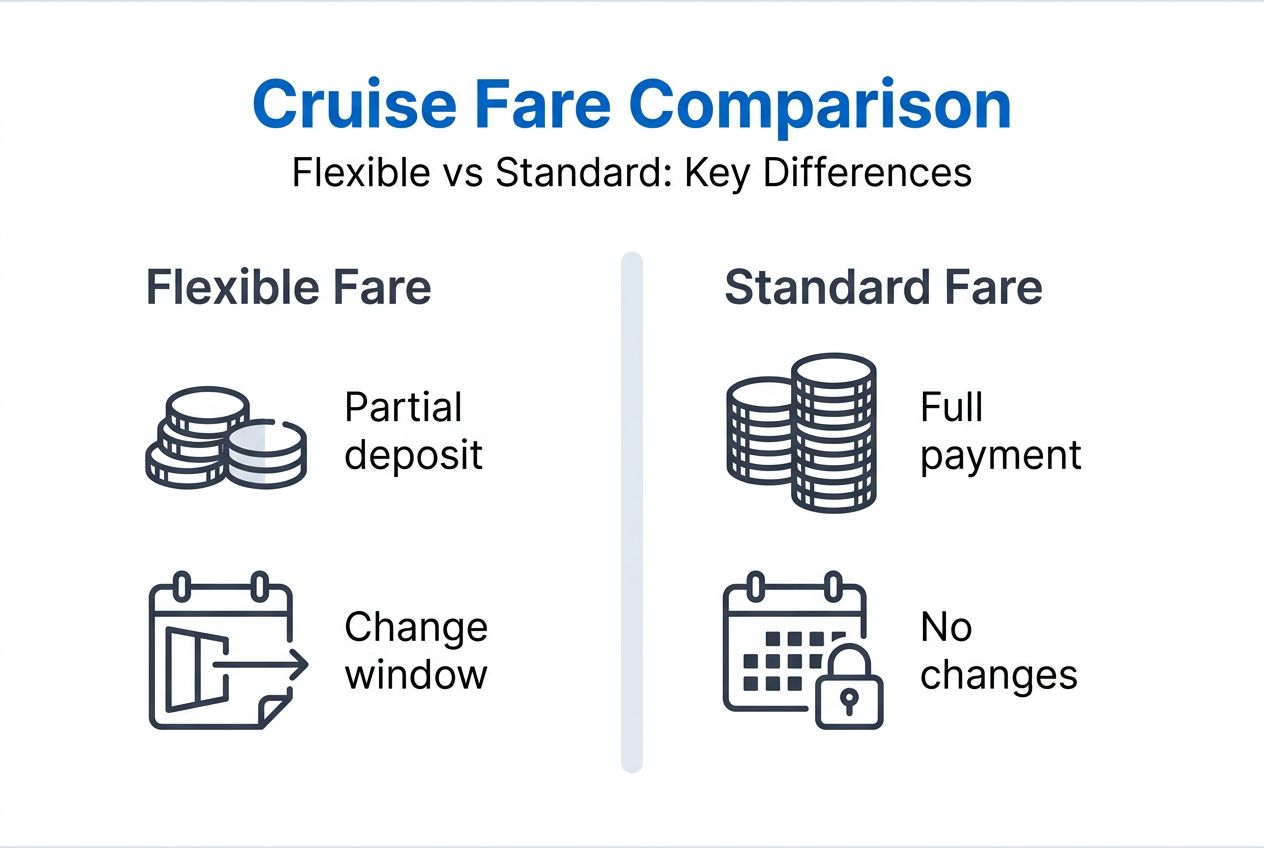
Standard fares work beautifully for locked-in plans. Your dates are firm, your travel party is committed, and nothing will change your schedule. Why pay extra for flexibility you won’t use? The money saved can fund shore excursions or cabin upgrades instead.
Key trade-offs to consider:
- Financial flexibility vs immediate savings: Pay more now for change options or lock in lower base price
- Booking timeline freedom vs budget constraints: Flexible fares ease payment pressure but cost extra
- Risk mitigation vs amenity maximization: Standard fares often include better onboard perks
Pro Tip: Always check the fine print for onboard amenity differences before booking. Some flexible fares exclude specialty dining credits or beverage packages that standard fares include. Calculate the total value, not just the base fare difference.
Understanding what’s included in cruise fares helps you evaluate true costs. A standard fare with $200 in onboard credits might deliver better overall value than a flexible fare without perks, even if the flexible option costs only $150 more. Compare total packages, not just ticket prices.
Your decision ultimately depends on personal circumstances. First-time cruisers often benefit from flexible fares because everything feels uncertain initially. Experienced cruisers with established preferences might prefer standard fares to maximize amenities. Review different cruise fare types to see where you fit.
Practical tips for booking flexible cruise fares with confidence
Applying your knowledge effectively requires strategic thinking. These actionable steps help you evaluate flexible fare options based on your specific situation and make decisions you won’t regret.
-
Use AI-based booking platforms to match fares with your travel needs. AI-powered tools analyze your preferences, budget constraints, and flexibility requirements to recommend optimal fare types. These systems save hours of manual comparison.
-
Monitor deadlines carefully to avoid penalties. Create calendar reminders for payment due dates and penalty-free cancellation windows. Missing these by even one day can cost hundreds of dollars.
-
Evaluate your travel date certainty honestly. If there’s a 30% chance your plans will change, flexible fares usually make financial sense. If you’re 95% certain, standard fares save money.
-
Balance budget constraints with flexibility benefits. Calculate what peace of mind is worth to you personally. For some travelers, sleeping well at night justifies any premium. For others, locked-in savings matter more.
-
Book early when possible to secure flexible fares at better prices. Early booking combines why booking early matters advantages with flexibility benefits, giving you both lower base prices and change options.
-
Compare total package value instead of focusing solely on base fare differences. Factor in onboard credits, amenity restrictions, and upgrade availability.
Pro Tip: Set calendar reminders for payment deadlines and cancellation windows immediately after booking to avoid unexpected fees. Your phone can save you hundreds of dollars with a simple alert.
Consider using cruise booking tips for 2026 to refine your strategy. Technology makes comparison shopping easier than ever. You can evaluate dozens of options in minutes rather than spending hours on phone calls with travel agents.
The right choice depends entirely on your situation. A family coordinating four people’s schedules needs more flexibility than a retired couple with open calendars. A business traveler subject to last-minute work demands values change options differently than someone on a planned anniversary trip. Learn how to save on cruises while maintaining the flexibility level you actually need.
Summary: navigating flexible cruise fares for first-time cruisers
You now understand how flexible cruise fares actually work. These options require partial upfront deposits of 10-20% and allow penalty-free changes within defined windows before your sailing date. The flexibility comes with a moderate price premium of 5-15%, which many travelers find worthwhile for reduced booking anxiety.
Common misconceptions cause unnecessary confusion and fees. Flexible fares don’t provide unlimited changes at any time. They offer specific penalty-free windows, typically 30-60 days before departure. Understanding these terms prevents the surprise charges that frustrate 35% of first-time cruisers who misread policies.
Comparing fare types clarifies trade-offs you’re making:
- Flexible fares: higher cost, partial deposits, change flexibility, sometimes restricted amenities
- Standard fares: lower cost, full upfront payment, strict penalties, often better onboard perks
- Your choice depends on travel certainty, budget, and personal risk tolerance
Practical tools and strategies support confident decisions. AI-powered platforms match fares to your needs automatically. Calendar reminders prevent deadline mishaps. Early booking combines flexibility with better base prices. Honest assessment of your situation guides you toward the option that delivers maximum value.
Flexible cruise fares serve a specific purpose. They provide genuine financial protection for travelers facing uncertainty without breaking the bank. When you understand exactly what you’re buying and what restrictions apply, these fares become powerful tools for stress-free cruise planning.
Discover your perfect cruise fare with ChooseCruise
Ready to apply everything you’ve learned? ChooseCruise makes fare selection effortless with AI-powered recommendations tailored to your travel style and budget. Our platform compares flexible and standard fares across hundreds of cruises, showing you exactly what you get with each option.
Stop wasting hours comparing confusing fare structures on outdated booking sites. Our best cruise booking platforms guide shows why modern tools save time and money. Get instant access to flexible fare comparisons, real-time price tracking, and expert resources that simplify every booking decision. Find and book your ideal cruise today with confidence, knowing you’ve chosen the fare type that matches your needs perfectly.
Frequently asked questions
What are flexible cruise fares?
Flexible cruise fares allow you to pay a partial deposit upfront, typically 10-20% of the total cost, with the balance due later. These fares include penalty-free change or cancellation options within specific windows before sailing, usually 30-60 days out. They cost about 5-15% more than standard fares but reduce financial risk and booking anxiety for travelers facing schedule uncertainty.
Are flexible cruise fares always more expensive?
Flexible cruise fares typically cost 5-15% more than non-flexible options. For a $2,000 cruise, you might pay an extra $100-300 for flexibility benefits. This moderate premium reflects the value of later payment deadlines and change options, making it worthwhile for many travelers despite the higher base price.
Can I change or cancel my cruise booking anytime with a flexible fare?
No, flexible fares allow penalty-free changes or cancellations only within defined windows, typically 30-60 days before your sailing date. After these deadlines pass, you’ll face fees similar to standard fares. Always check your booking confirmation for exact penalty-free windows and mark them on your calendar immediately.
How can I decide which flexible fare is right for me?
Consider your travel date certainty and budget constraints when choosing between flexible and standard fares. If there’s significant chance your plans might change, flexible fares provide valuable peace of mind. Use AI tools to compare total package value including amenities, and review early booking advantages to potentially secure flexible fares at better base prices. Set calendar reminders for all deadlines to maximize your flexibility benefits.
Recommended
Related reading
6 Best Cruise Destinations 2026 for Smart First-Time Travelers
Discover the 6 best cruise destinations 2026 with expert tips for tech-savvy first-time travelers, including personalized advice for easier cruise booking.
Cruise Package Explained: Stress-Free Vacation Booking
Cruise package means bundled travel with accommodations, meals, entertainment, excursions. Learn the types, inclusions, pros, costs, and mistakes to avoid.
7 Smart Ways to Save on Cruises for Modern Travelers
Discover 7 smart ways to save on cruises with easy, practical tips designed for today’s digital cruise travelers. Learn to maximize value and minimize costs.